Some Electric Powered Radio Control Models
To see a larger version of any photo, just click on the thumbnail photo
|
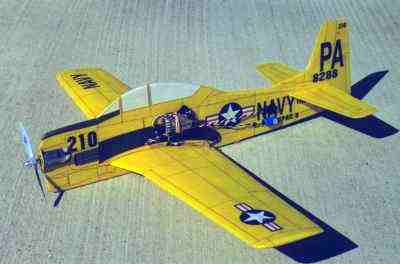
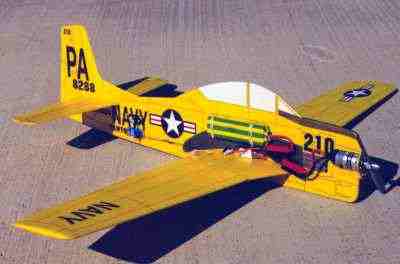
This is a Graupner Speed 400 powered profile North American T-28 Trojan. This model was derived from the "No-Cal" T-28 shown in the Free Flight section. The wing span is 34" and the flying weight is 16 ounces. It is covered with tissue paper that had the color and markings printed by a color ink jet printer. A construction article for this model and a full size plan (for purchase) can be found at the Ezone. |
|
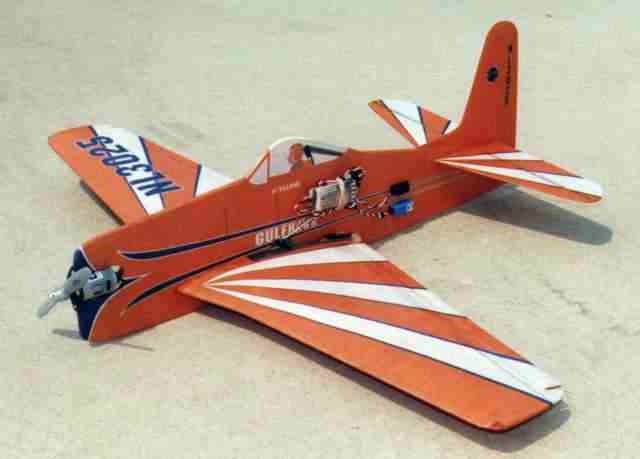
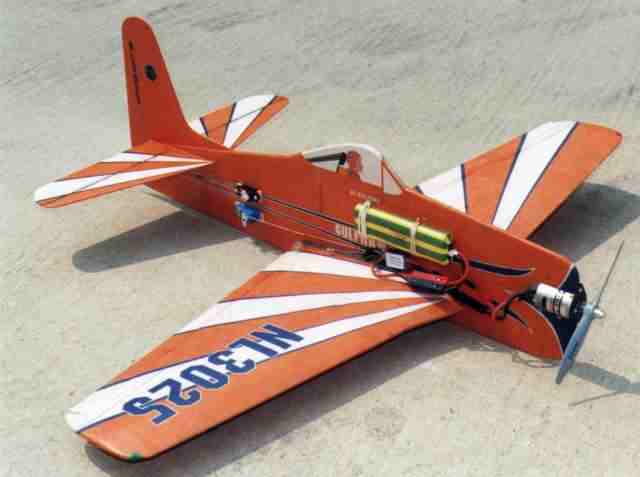
This is a Graupner Speed 400 powered profile Grumman F8F Bearcat done in the Gulfhawk IV markings. This model was derived from the "No-Cal" Bearcat shown in the Free Flight section. The wing span is 31" and the flying weight is 16 ounces. It is covered with tissue paper that had the color and markings printed by a color ink jet printer. A construction article for this model and a full size plan (for purchase) can be found in the Feb 1999 issue of Flying Models. |
|
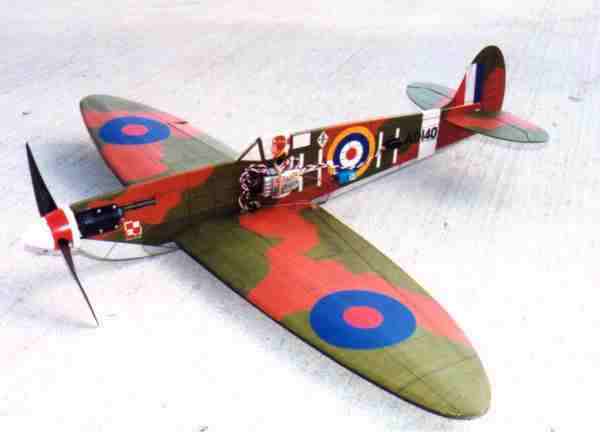
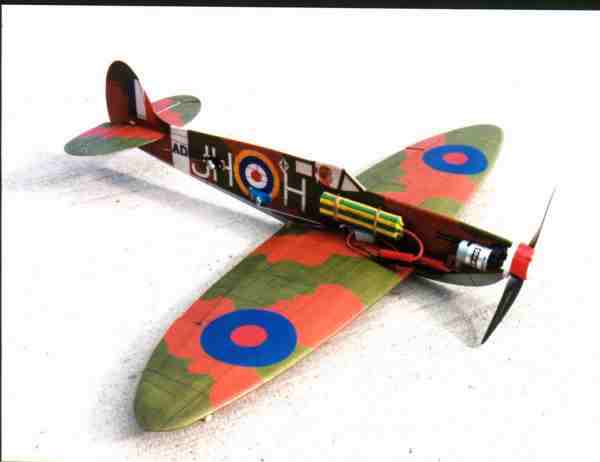
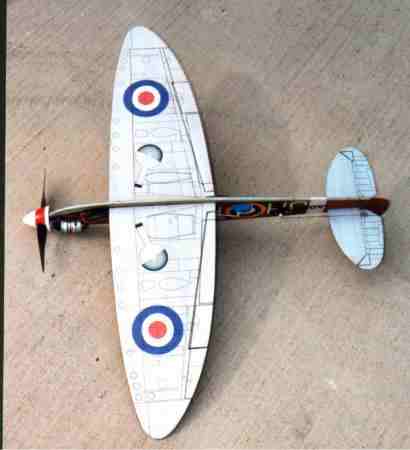
This is a Graupner Speed 400 powered profile Spitfire Mk Vb done in the markings of the Polish Squadron 317 (Wilenski). This model was derived from the "No-Cal" Spitfire shown in the Free Flight section. The wing span is 32" and the flying weight is 17 ounces. This models differs from the T-28 and Bearcat in its use of a gearbox (2.3:1). This allows a larger prop to be used (9x5) that perfroms better with the 2" spinner. The Spitfire is covered with tissue paper that had the color and markings printed by a color ink jet printer. A construction article for this model and a full size plan (for purchase) can be found in the Nov 1999 issue of Flying Models. |
|
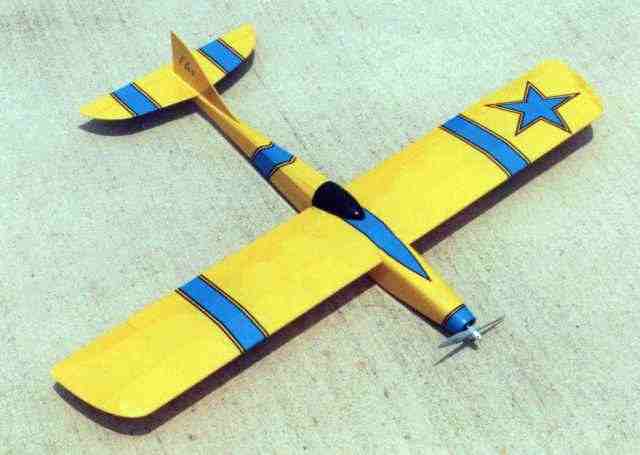
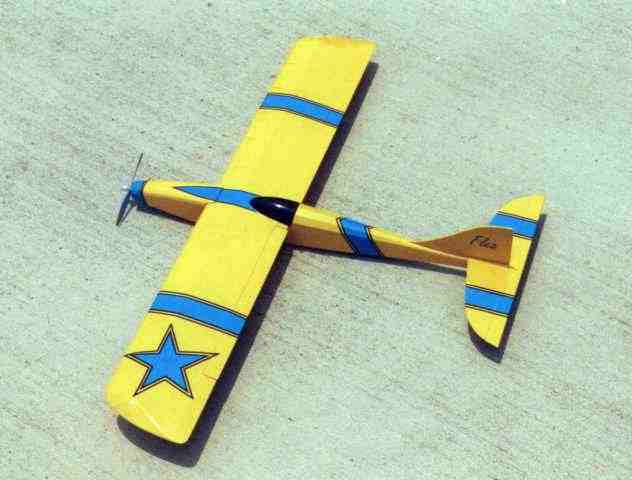
This is pylon racer/sport aerobatic model. It is called the Flea and was built from a kit offered by Diversity Model Aircraft. The model is powered with a Graupner Speed 300 electric motor. It has excellent performance and does great aerobatics. It has a wing span of 31" and weighs 13 onces ready to fly. A more complete review of this model can be found at the Ezone. |
|
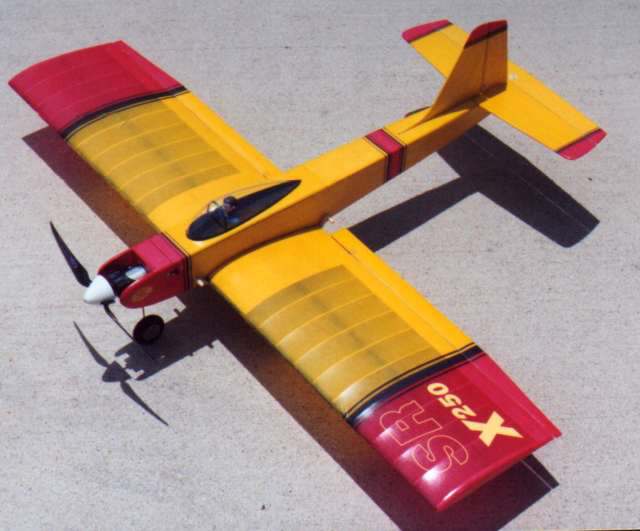
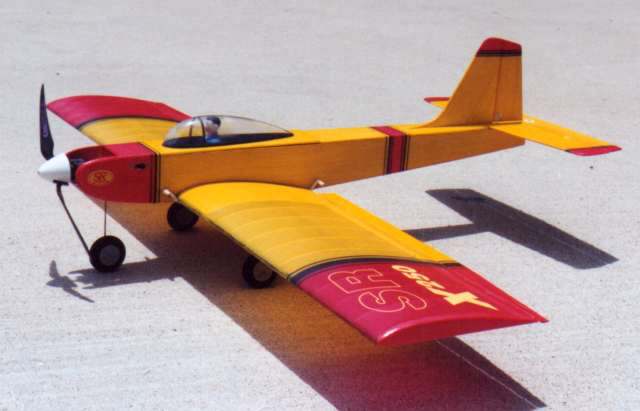
This is the SR Batteries X250. It is powered with a 7.2v Speed 400 and Graupner 2.33:1 gear drive. Energy is provided by a 10 cell pack of 500AR nicad cells from SR Batteries. Total flying weight is 24 ounces. It has a 36" wing span with an area of 266 square inches.The model features all controls (rudder, elevator, and ailerons) along with throttle. This is a very aerobatic model that can fly in fairly small areas such as school yards and parks. A full review of the model and kit can be found at the Ezone. |
|
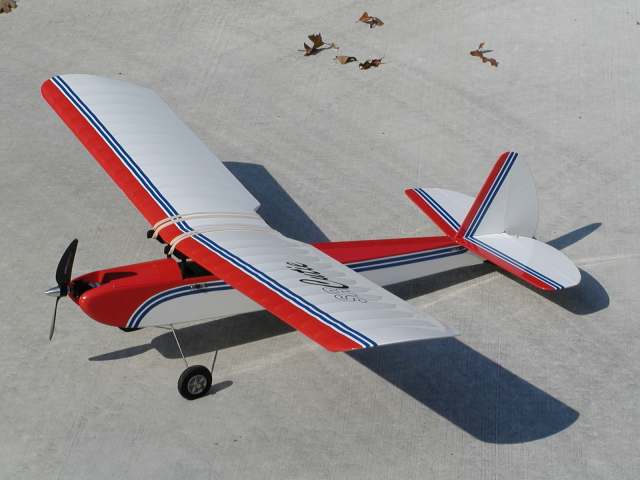
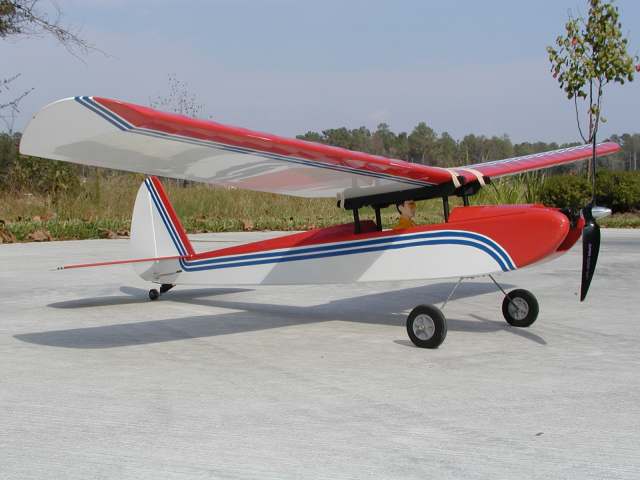
This is the SR Batteries Cutie. It uses the same Speed 400 power set up as the X250. The Cutie has a 46" wing span with 360 square inches of area. Also like the X250 it uses a 10 cell 500AR battery pack for power. Control functions are rudder and elevator. The model is a great small field flyer and is capable of rudder/elevator aerobatics. A review of the model and kit can be found at the Ezone. |
|
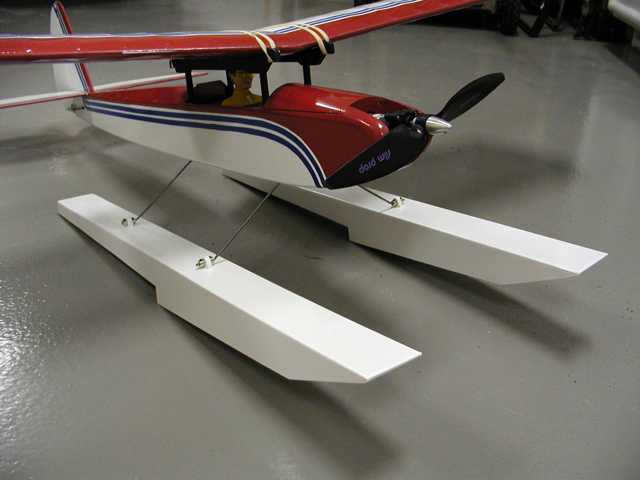
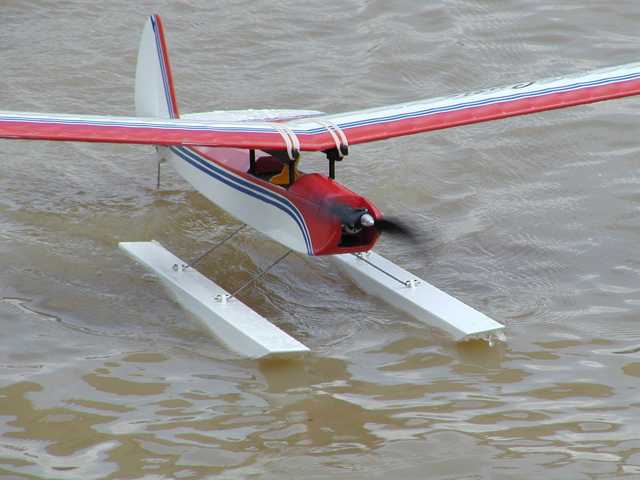
This is the SR Batteries Cutie on floats. The floats are my own design and are built up from balsa with a plywood keel. The floats add 4 ounces to the model's flying weight. Flight performance is not diminished by the floats. A PDF drawing of the float dimensions can be obtained by clicking here. A zipped DXF CAD drawing of the built up float and a pictorial assembly guide can be obtained by clicking here. |
|
|
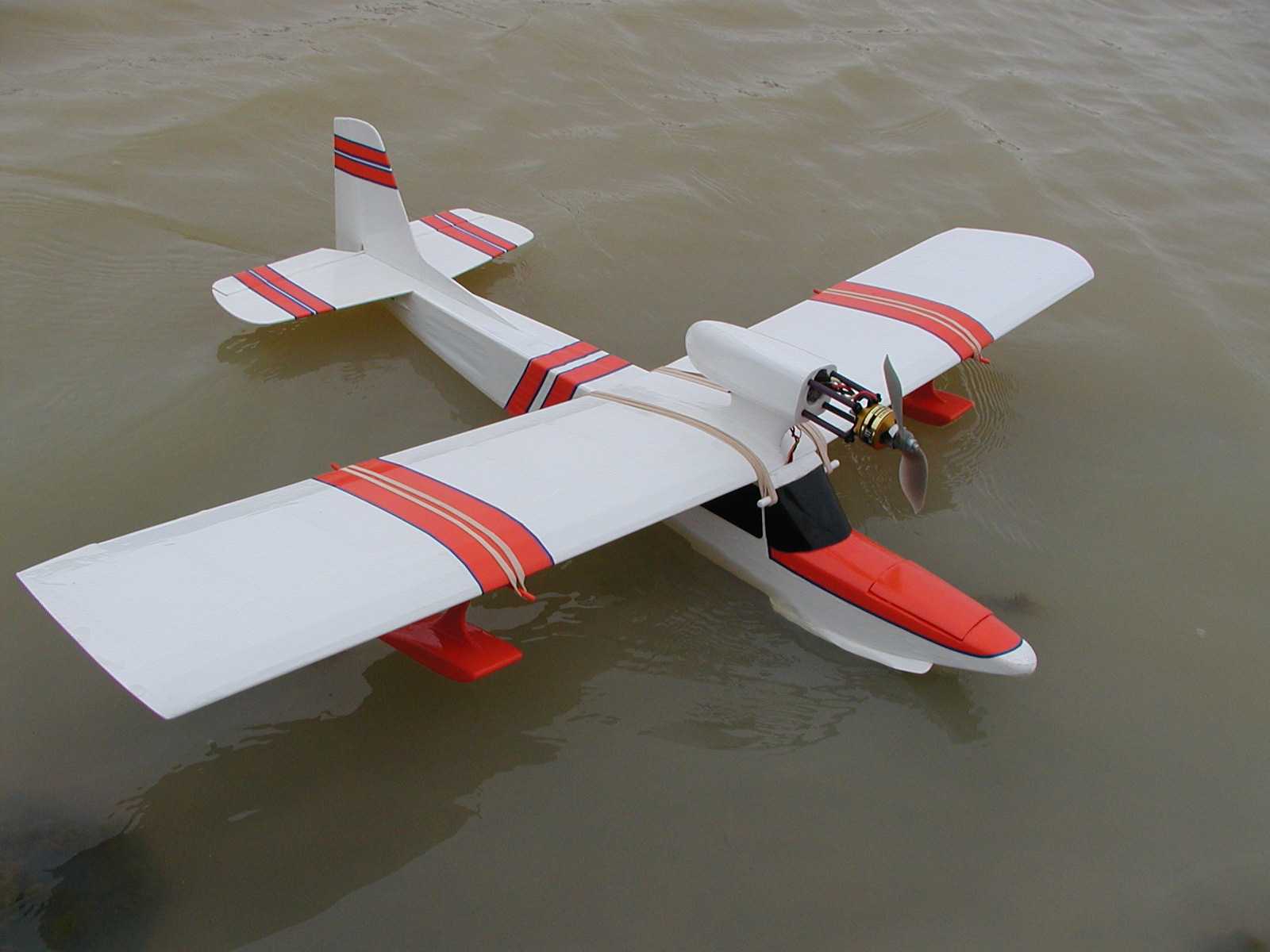
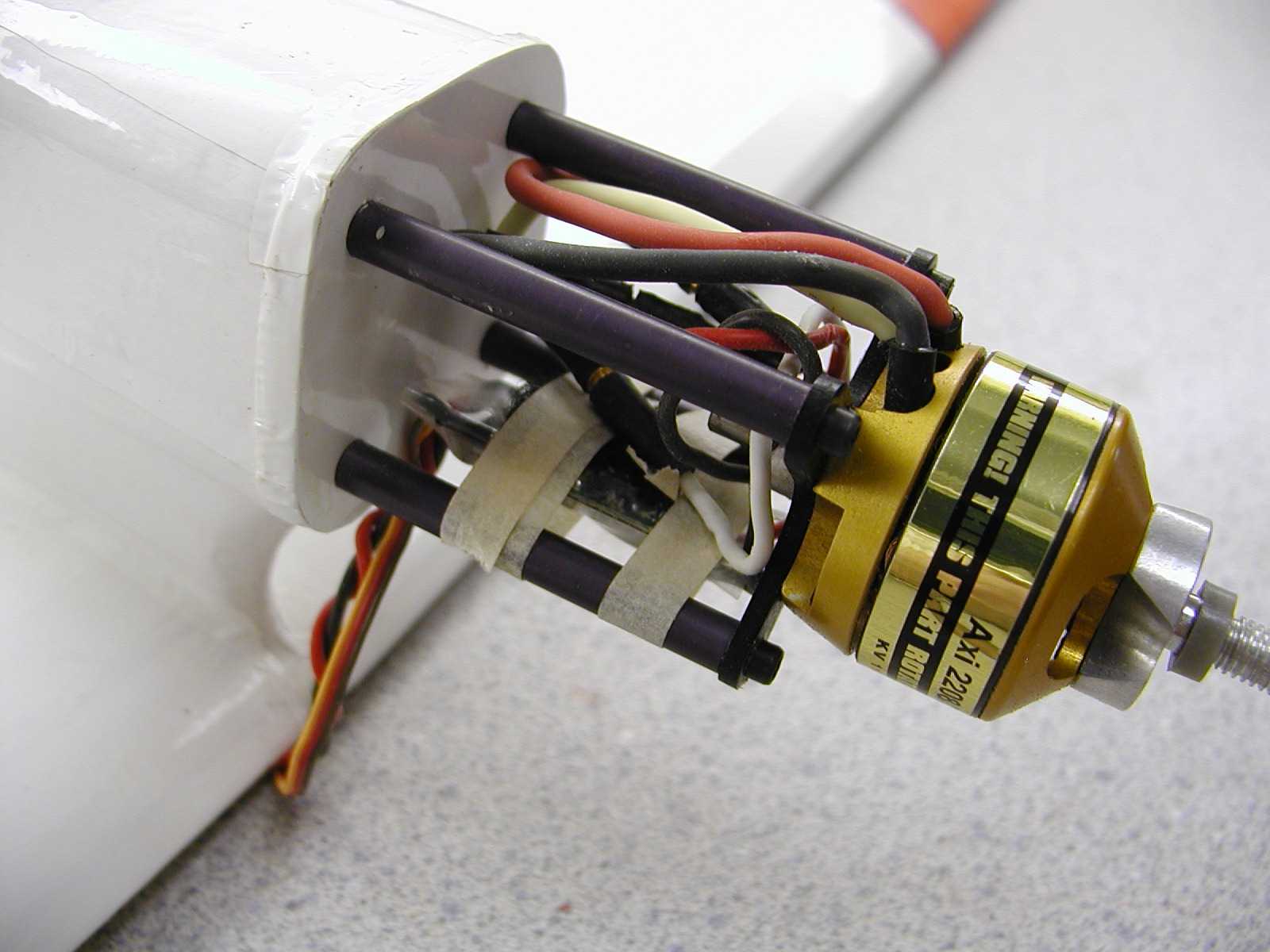
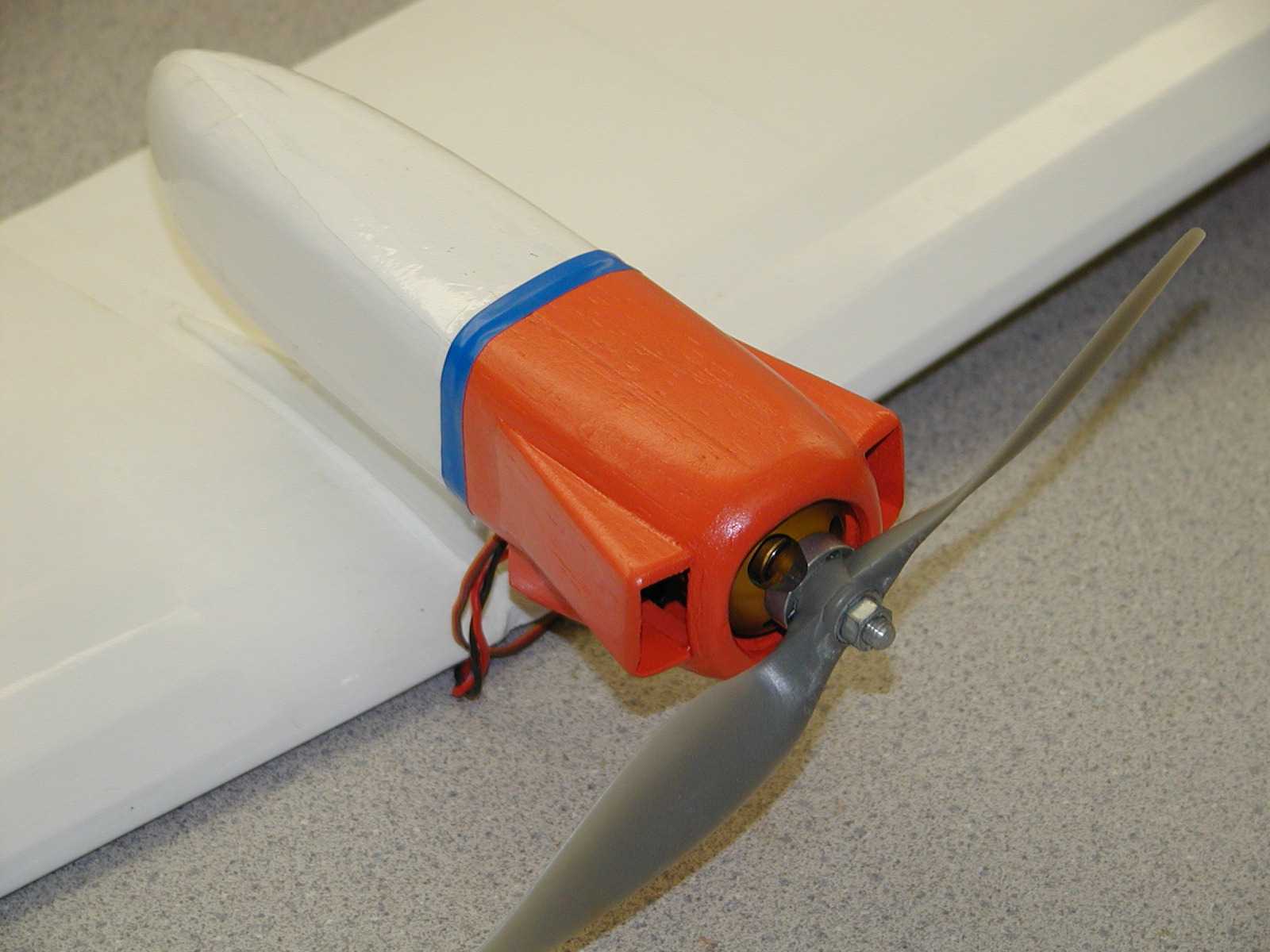
For flying off water I also have a Herr (SIG) Aqua Star. The kit is quite nice and is reasonably priced. While intended for 1/2A glow power, I used an electric motor to power mine. The motor I chose is the AXI 2208/34 turning a 7x5 electric prop. The battery is a three cell 1320 mah Lipo pack. I have also flown the model with an Atlas 2308/34 with an 8x7 electric prop that was cut down in diameter to 7.5 inches. Both motor options provide plenty of power. Flying is normally done at half throttle. Full power is used for taking off from water. This is a very nice flying model with relaxed flying qualities. |
|
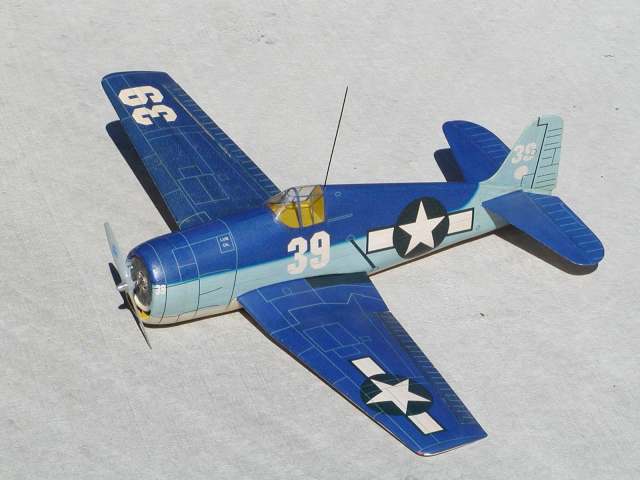
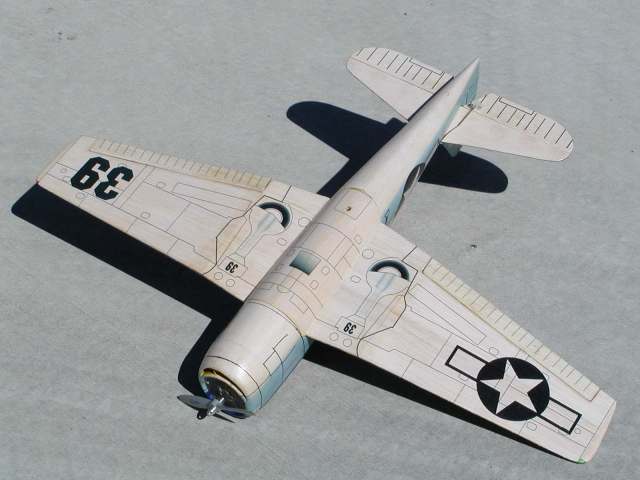
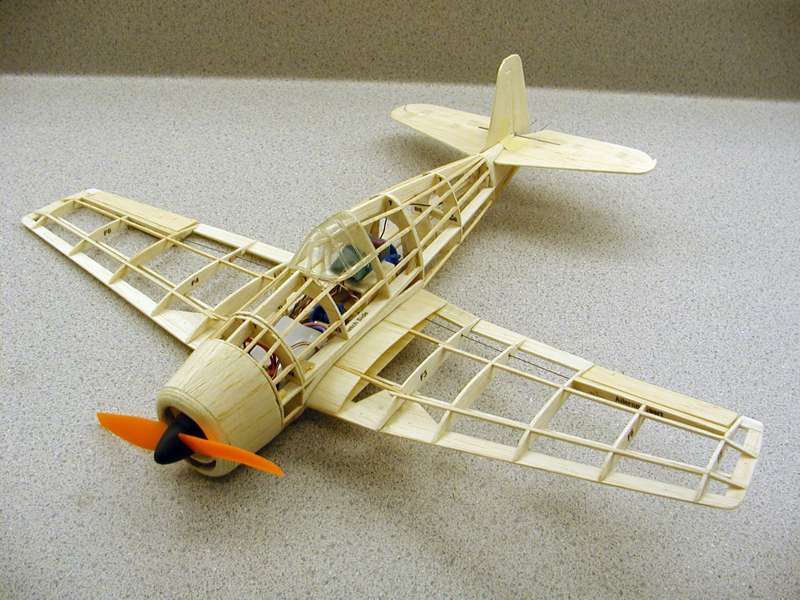
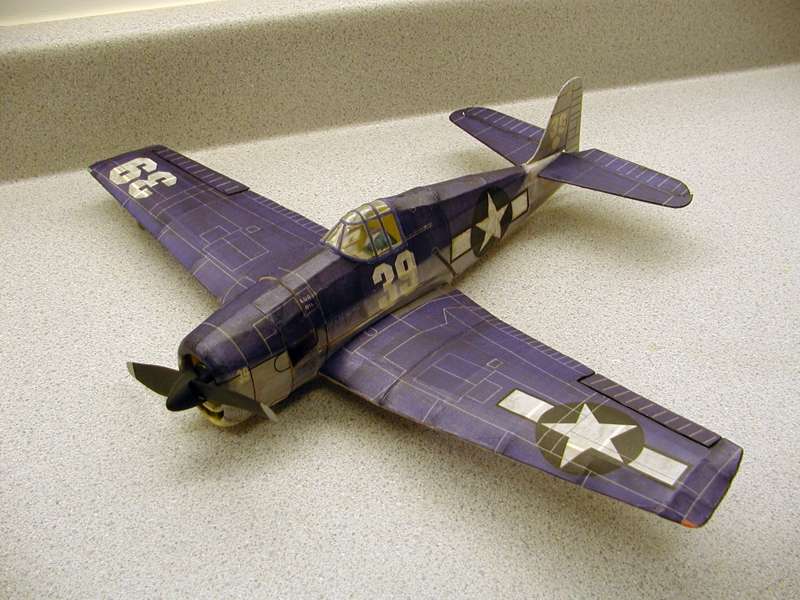
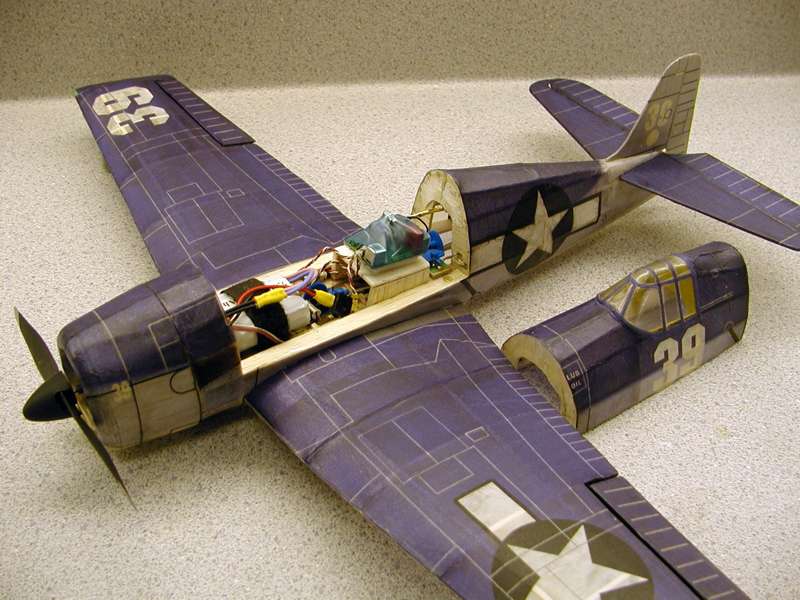
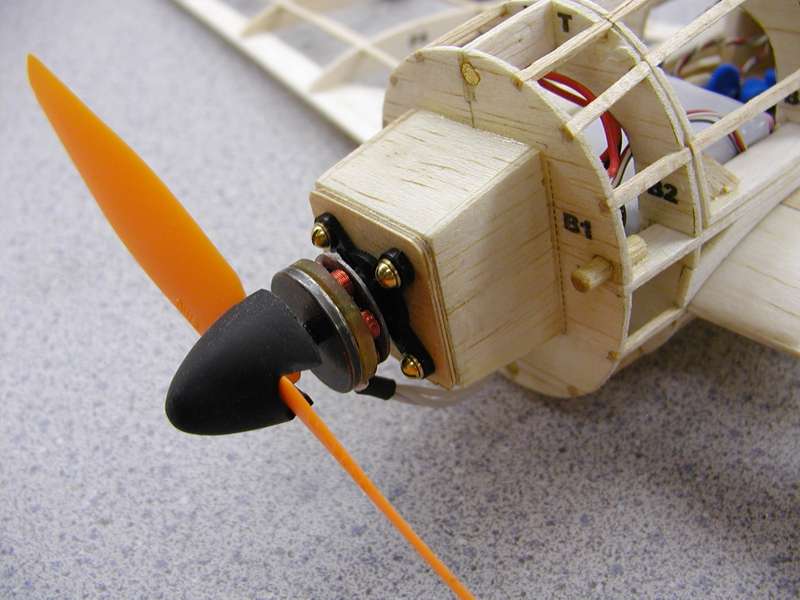
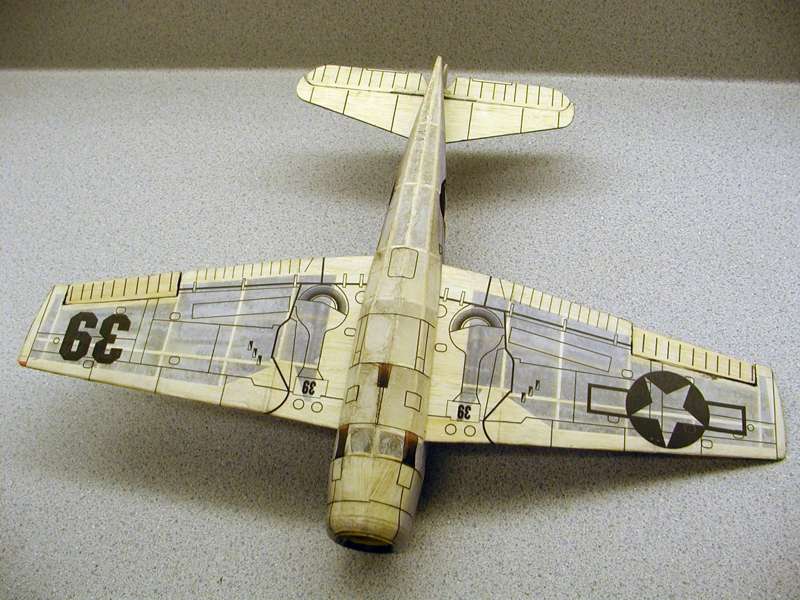
This is a model of the F6F Grumman Hellcat. It is powered with a direct drive 6v Speed 400 motor. The model was built from a kit by Jim Ryan. Flying weight with 8 500 AR nicad cells is 18 ounces. The finish is white art tissue that has the color and markings applied with an inkjet printer. The tissue is attached and sealed with clear dope. The wing span is 31". |
|
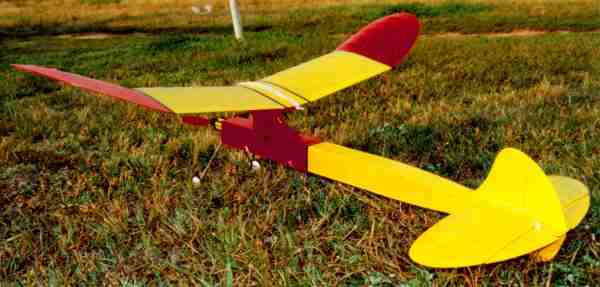
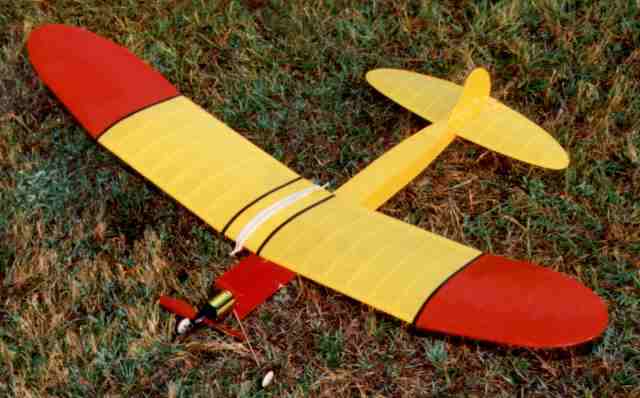
This is an "old timer" model. It is called the Kerswap and was built from a kit produced by Balsa Products. The kit was intended to be powered by a 1/2A glow engine. This model is powered by a Graupner Speed 300 driving a VL Products 4.2:1 planetary gearbox. |
|
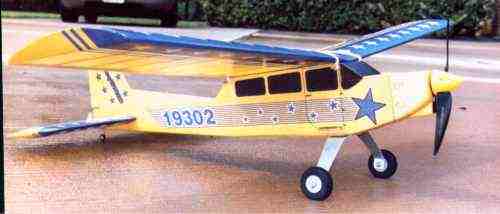
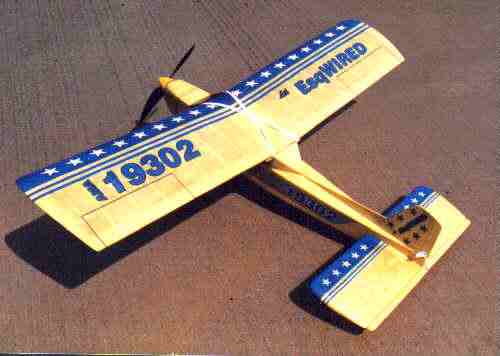
This is a Midwest Lil Esquire. It has a wing span of 40" and a wing area of 320 in2. The original model was intended to be powered with a glow .049 engine and flown only with rudder control. The model in the picture was built in1995 from a kit that had been purchased in 1964. Elevator and throttle control were added. When first built, the model was powered with a Cox .051 RC glow engine. It was flown many times in that configuration. During the summer of 1998 the model was stripped and converted to electric power. The electric power plant consists of a Graupner 6v Speed 400 and a Mini Olympus 2.3:1 gear drive. The model was recovered using tissue with the color and markings printed by an ink jet printer. The finish is clear dope over the printed tissue. Using an 8 cell battery pack of 500AR cells, the model is capable of 5 minute flights which involve aerobatics. |
|
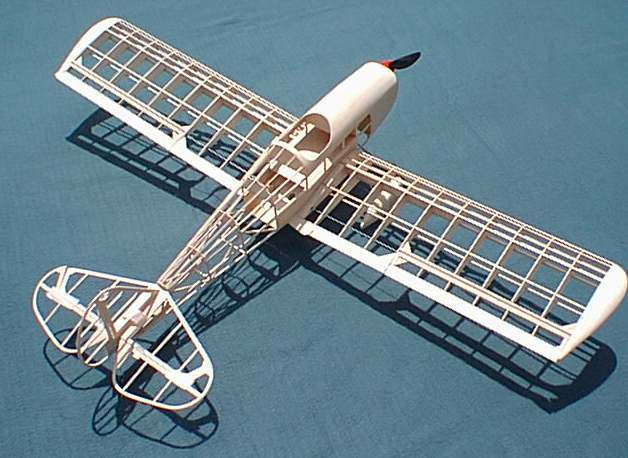
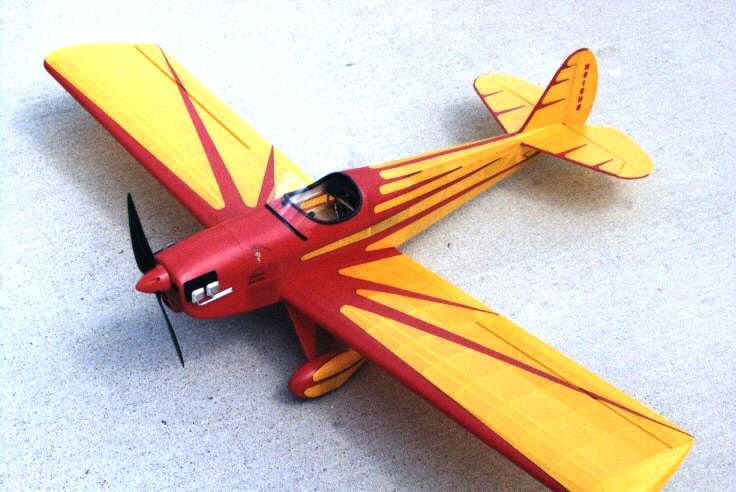
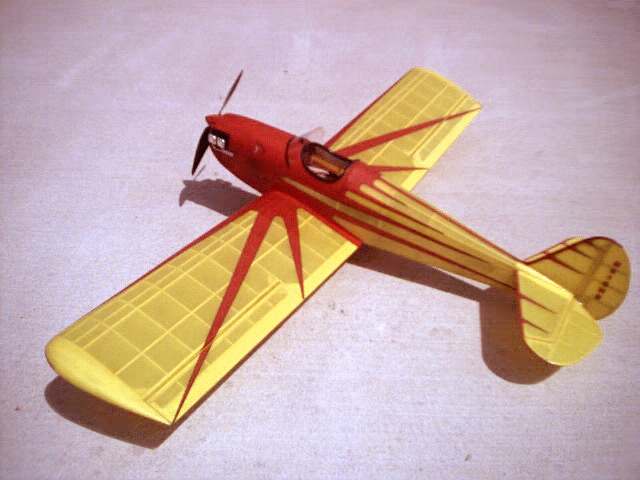
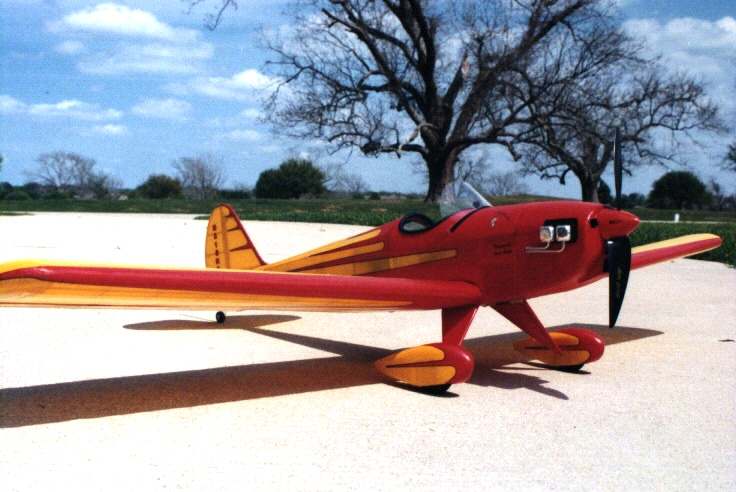
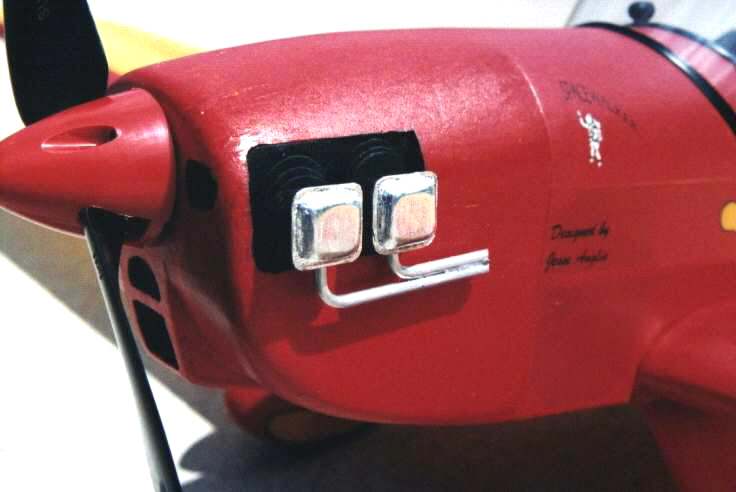
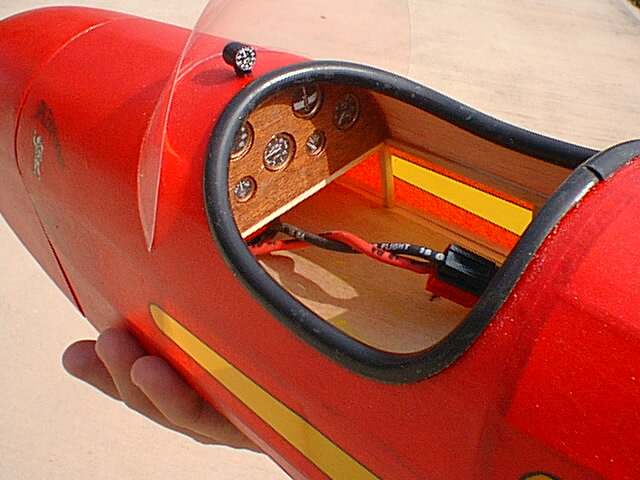
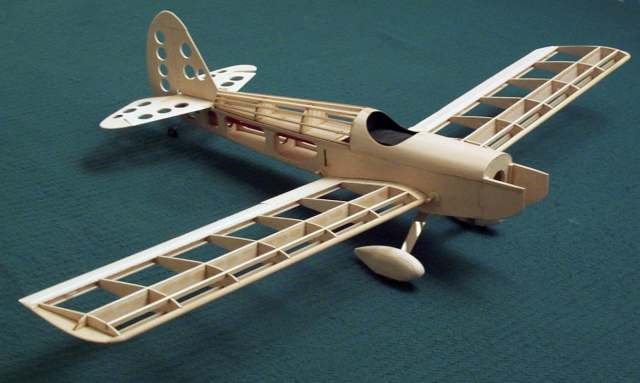
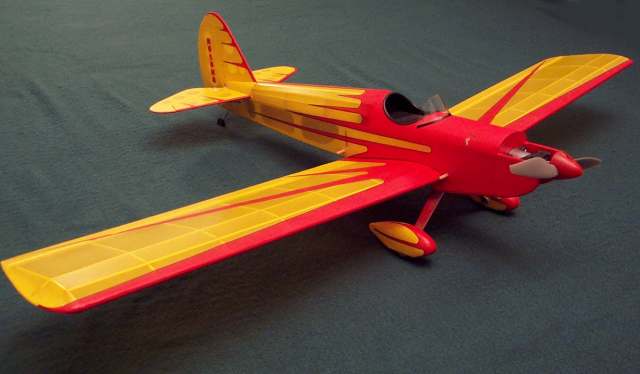
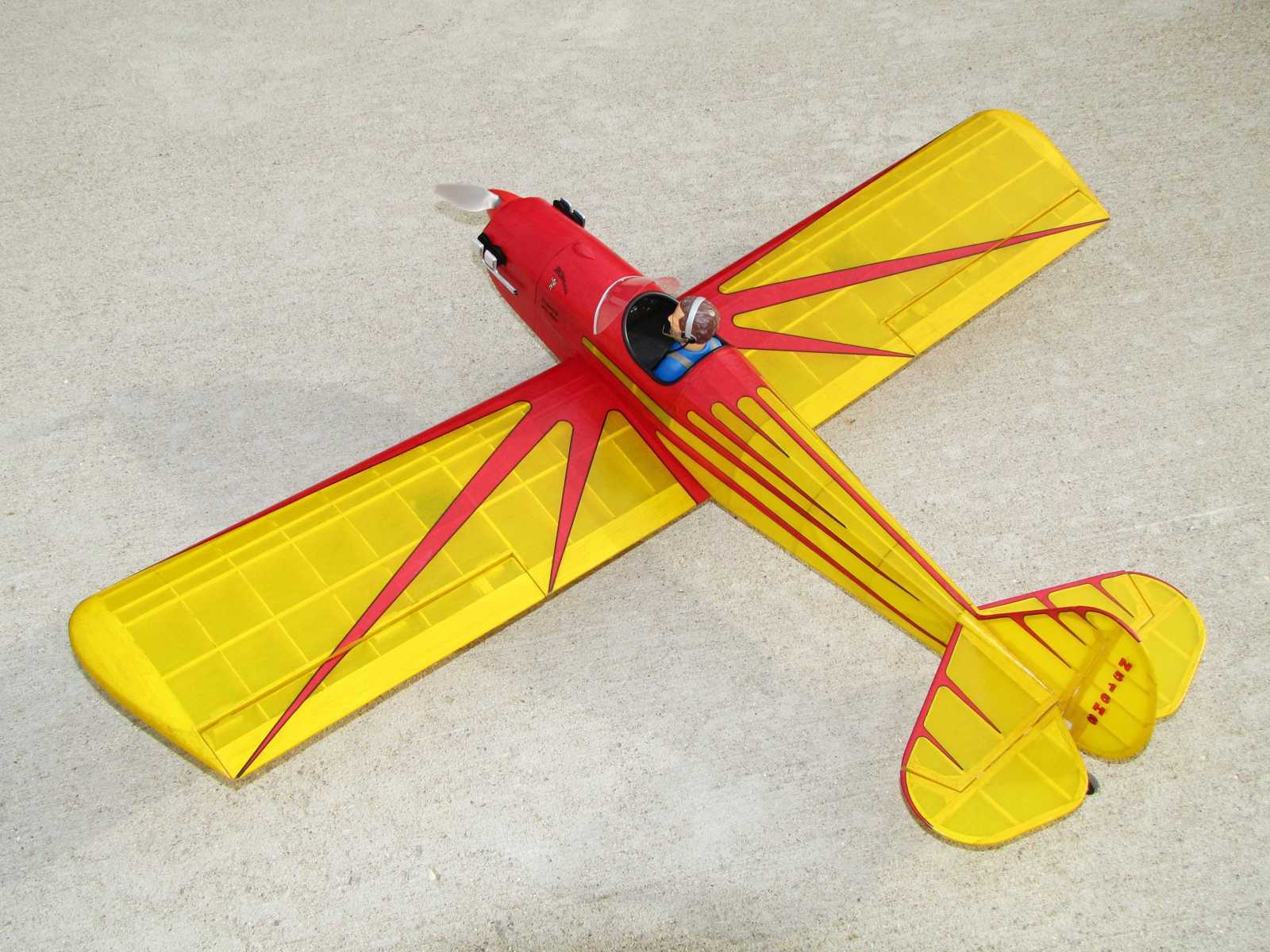
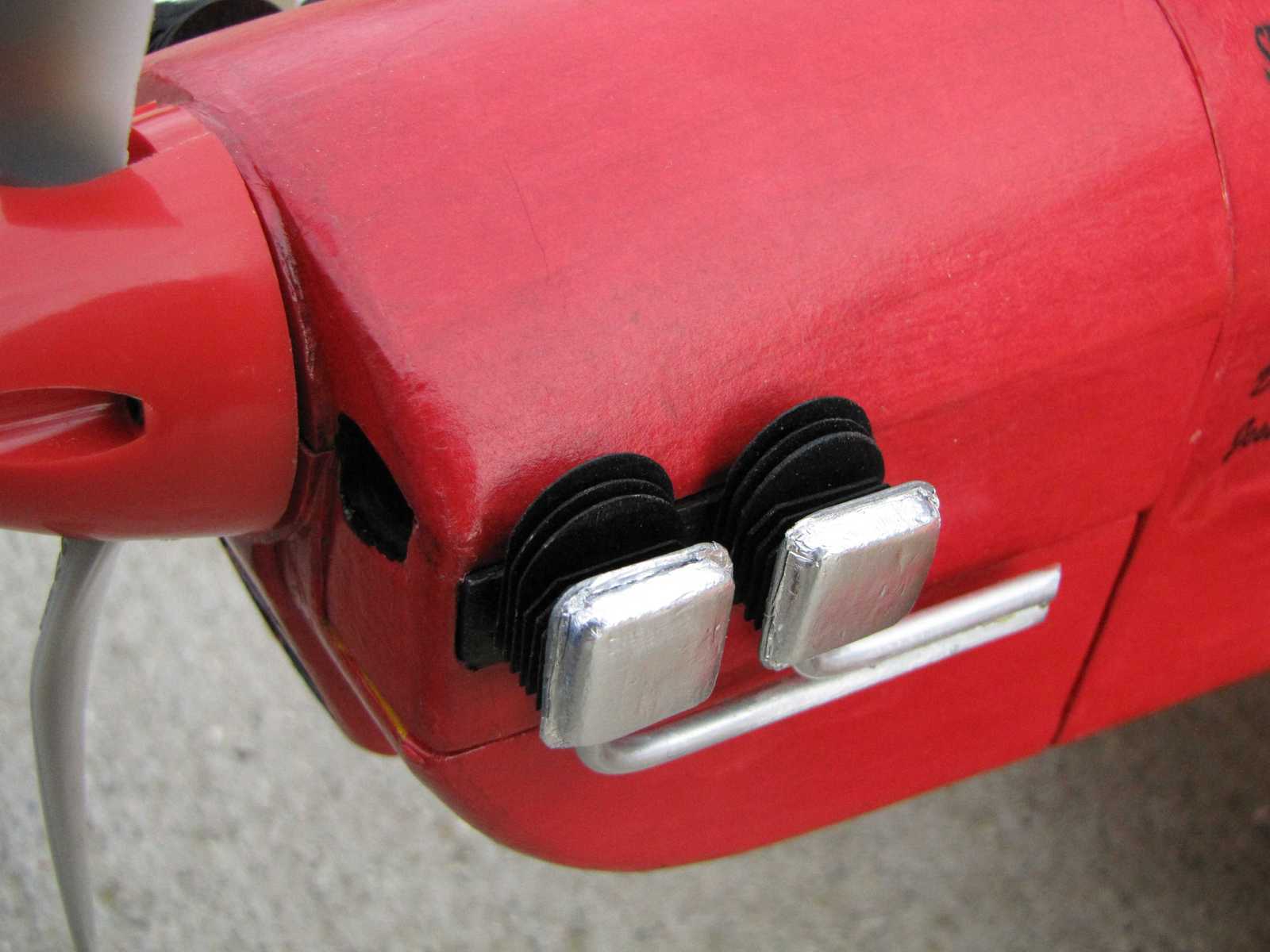
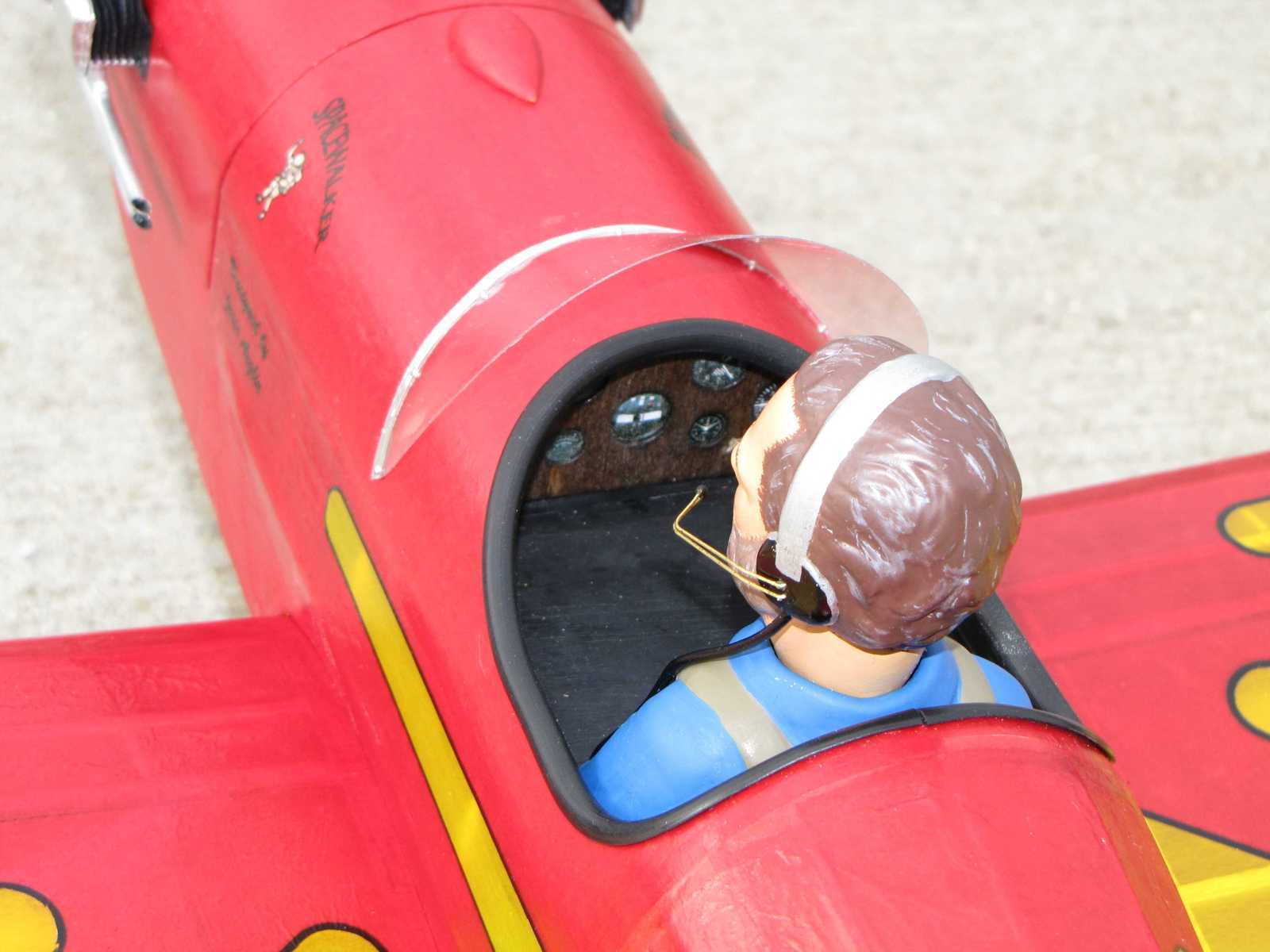
This is a model of a homebuilt airplane called the Spacewalker. The design of the full size airplane appears to come from the early days of aviation, but was actually done in 1986. The model was built from my own plans. It has a 48" wing span that gives 360 square inches of area. All control surfaces are used (rudder, elevator, ailerons). It is powered by a 6 volt Speed 400 and 2.3:1 Olympus gear drive getting energy from an 8 cell 500AR battery pack. Covering is yellow LiteSpan with inkjet printed tissue trim that has been applied with clear dope. The markings are those used by Hazel Sig on her personal Spacewalker. Total flying weight is 30 ounces. |
|
For comparison to my version of the Spacewalker, this one was built from a House of Balsa "School Yard Scale" kit. This model has a 47" wing span where mine is 48". Deviations from scale include a higher aspect ratio wing, and enlarged tail surfaces. The kit is intended for glow engine power (.10 displacement). I converted the model to electric power. The electric set-up consists of a 7.2 volt Speed 400 coupled to a Graupner 2.33:1 gear drive that turns an APC electric 10"x7" prop. Power is supplied by 10 SR Batteries 500AR cells. The model flies very nicely on this set-up. Total flying weight is 28.3 ounces. A more complete review of this model can be found at the Ezone. |
|
|
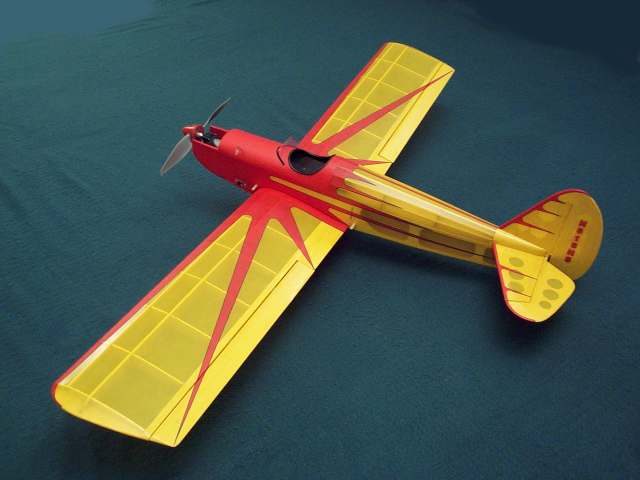
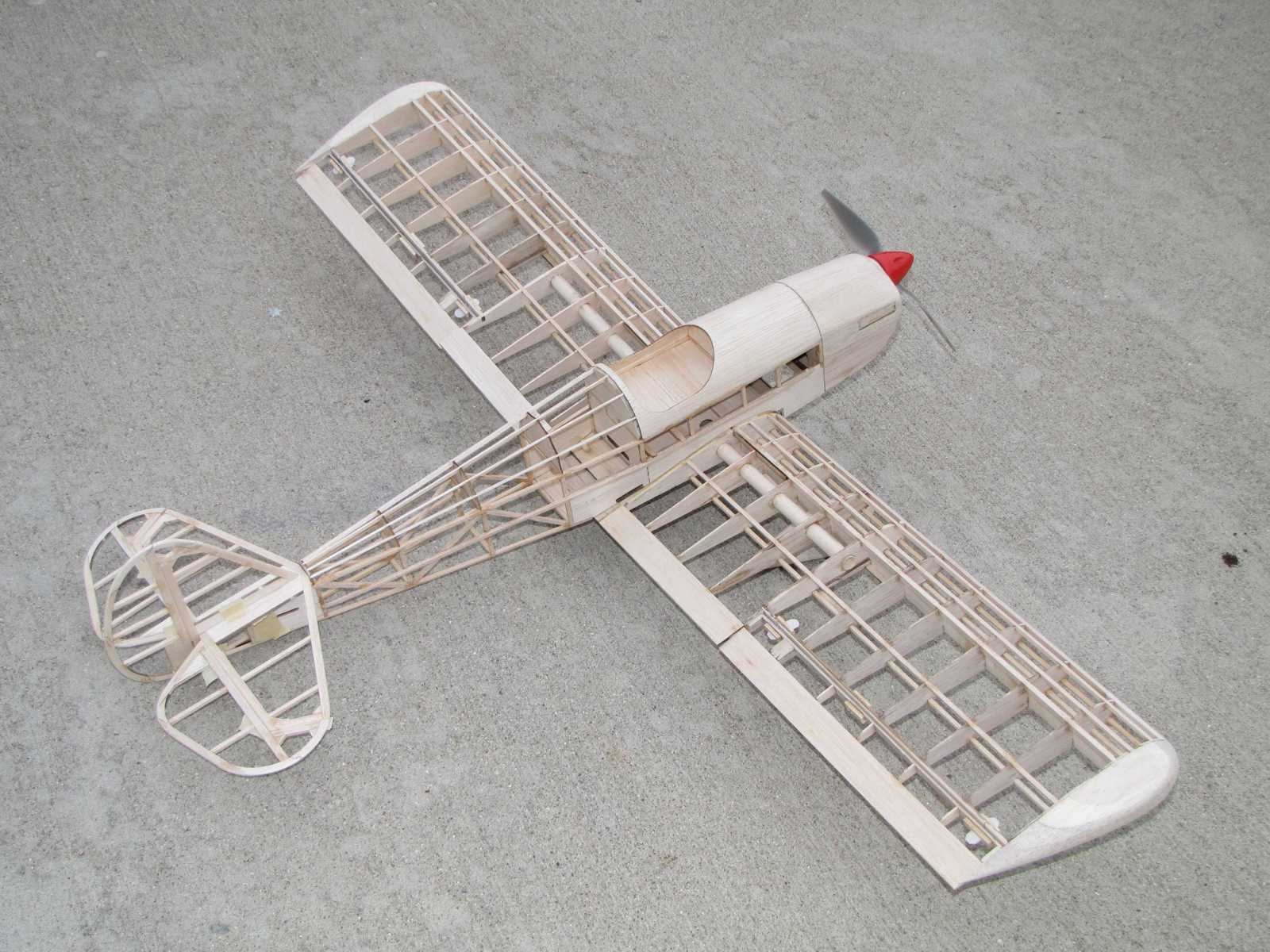
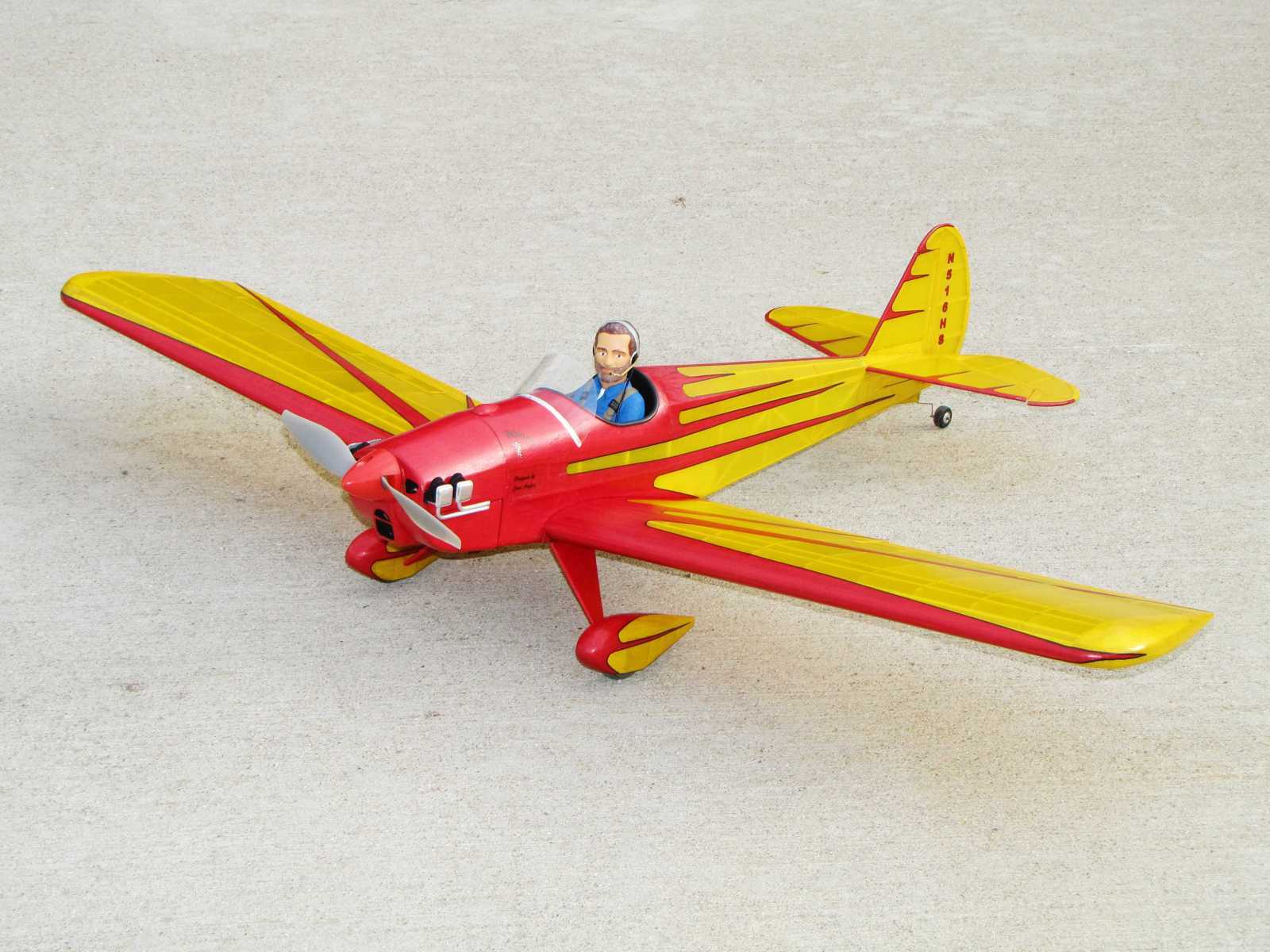
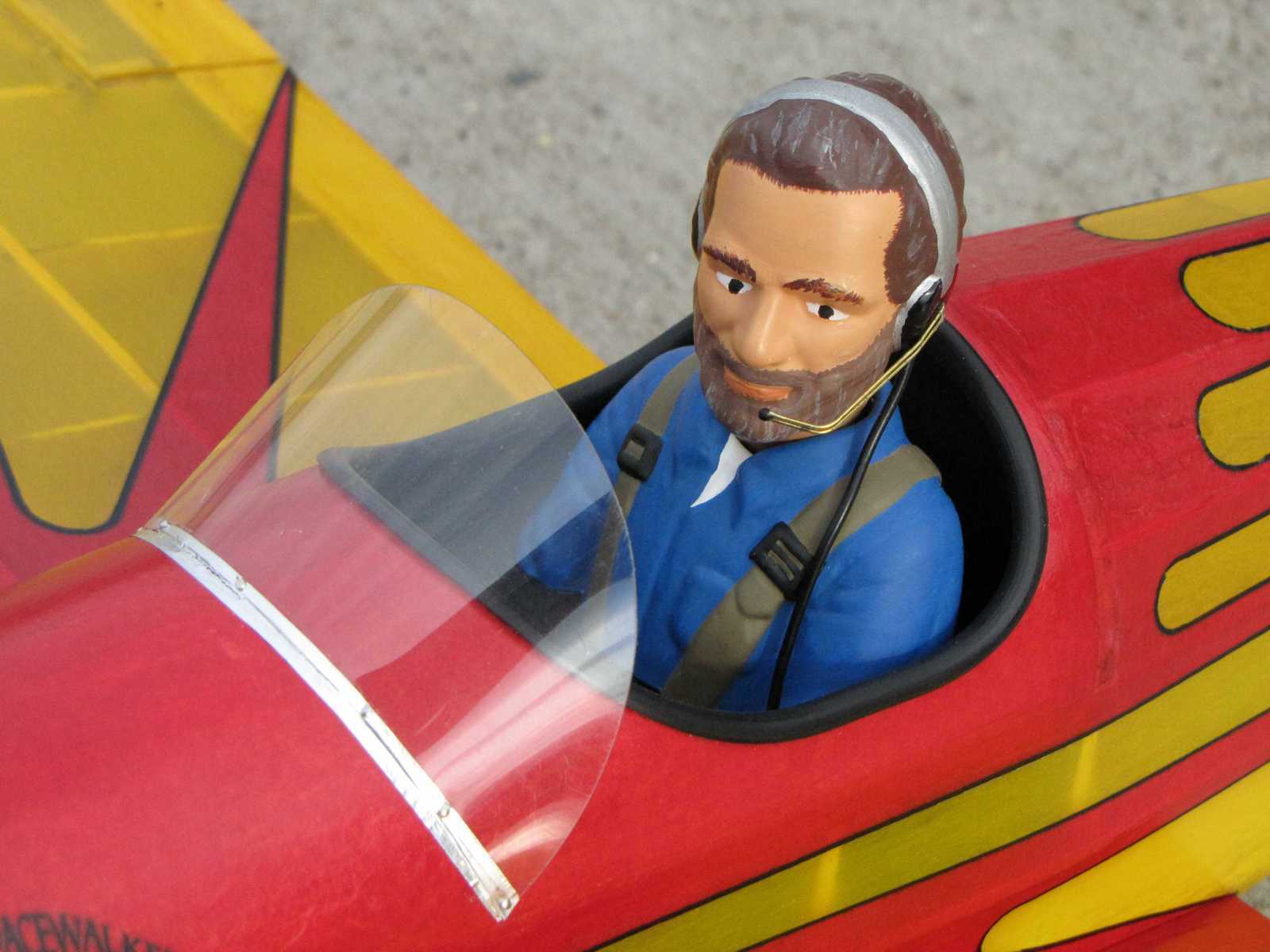
The 48" Spacewalker shown above was developed in 1999. Powered by a brushed Speed 400 set-up it was a good flier but could have used a bit more power. Roll the clock forward to October 2010. It was time to re-visit my original Spacewalker project. This time around I decided the wing span should be 42". That would allow use of the same motor and battery set-up as used in my half size vintage pattern models. The original 48" model was re-drawn with many changes to the internal structure. This model is powered with a brushless outrunner motor capable of at least 100 watts power. Specifically I am using an Atlas 2308/34 turning an electric 8x6 prop powered by a three cell 980 lipo battery pack. Flying weight is 20 ounces. Performance is very good. The model can be flown in a scale manner (slow and level), or doing very unscale aerobatics. Aerobatic performance is very similar to my half size vintage pattern models. This model is available as a kit from BMJR Model Products. The pilot figure came from Keith Sparks at Park Flyer Plastics (http://www.parkflyerplastics.com). |
|
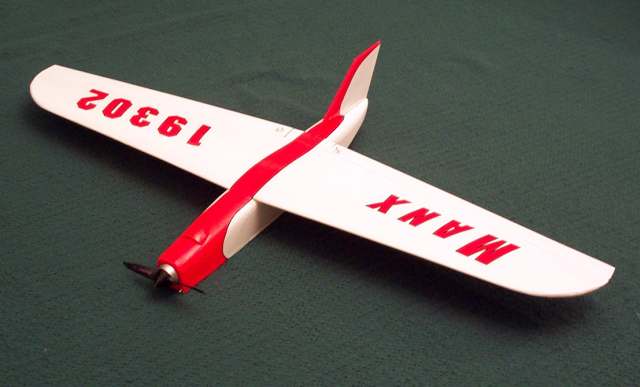
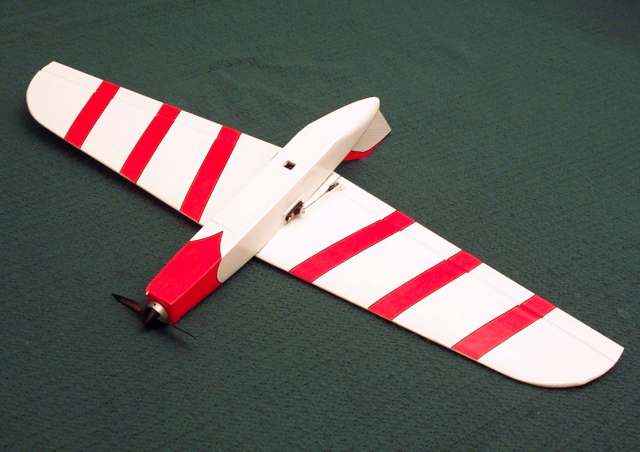
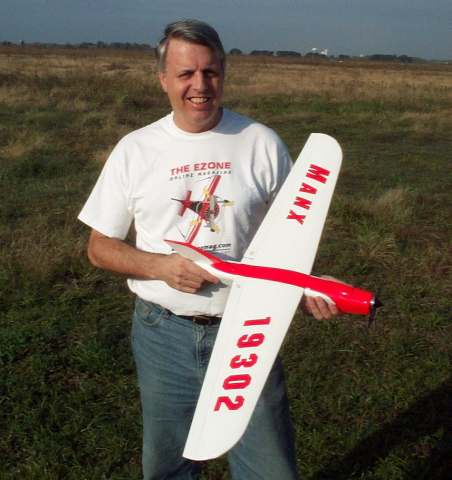
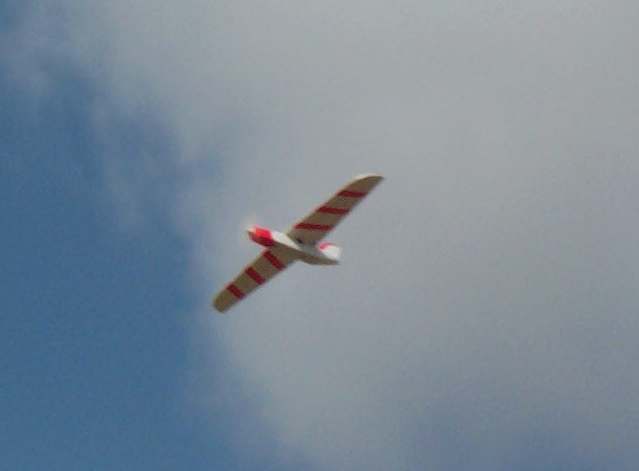
This model is the Garrison Aerodrome Manx. Construction of this model is EPP foam and strapping tape. The model is covered with white Goldberg Ultrakote with Neon Red Monokote trim. Power is a direct drive 6 volt Speed 400. Power is supplied by an 8 cell pack of 500AR cells. The model is fast and very aerobatic. It is also very crash resistant. This particular model has hit the ground in a nearly vertical dive from about 100 feet up and suffered almost no damage. This kit would make an excellent Speed 400 pylon racer trainer. A more complete review of this model can be found at the Ezone. |
|
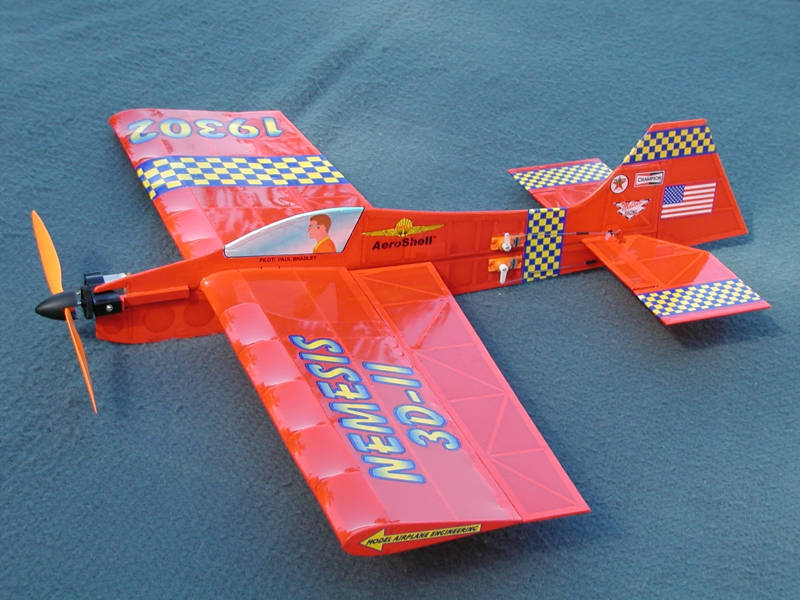
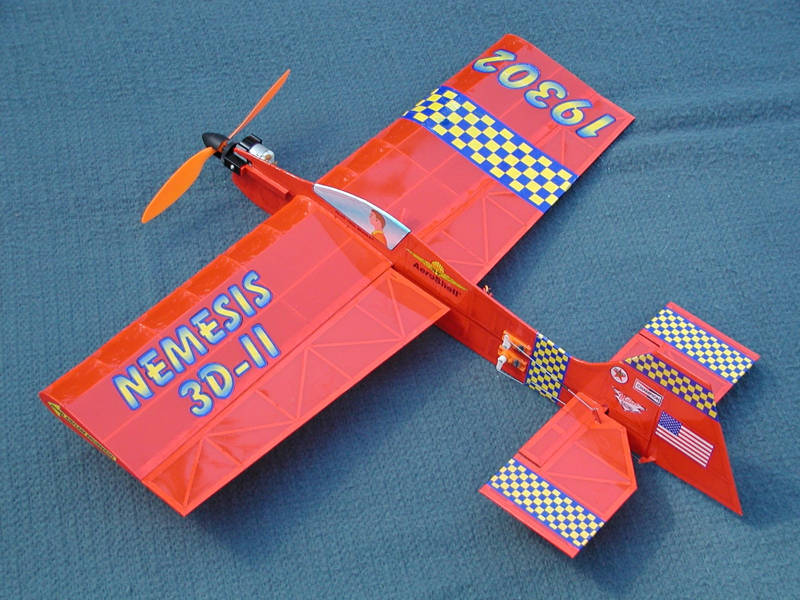
This is the Nemesis 3D-II from Model Airplane Engineering built from a laser cut balsa kit. The wing span is 27" with and area of 200 square inches. It is capable of 3D aerobatics using low cost brushed motors as well as the smaller brushless motors. With lightweight radio gear and lithium polymer cells the model flying weight falls in the range of 4.5 to 6.5 ounces. It can be flown in very tight spaces including indoors. The markings on the model in the picture are my own. They were made using ink jet printer decal paper. |
|
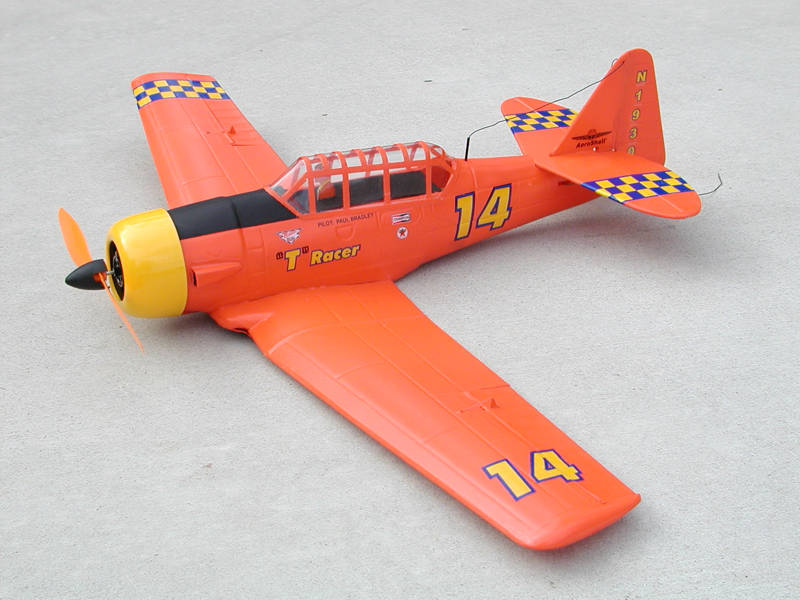
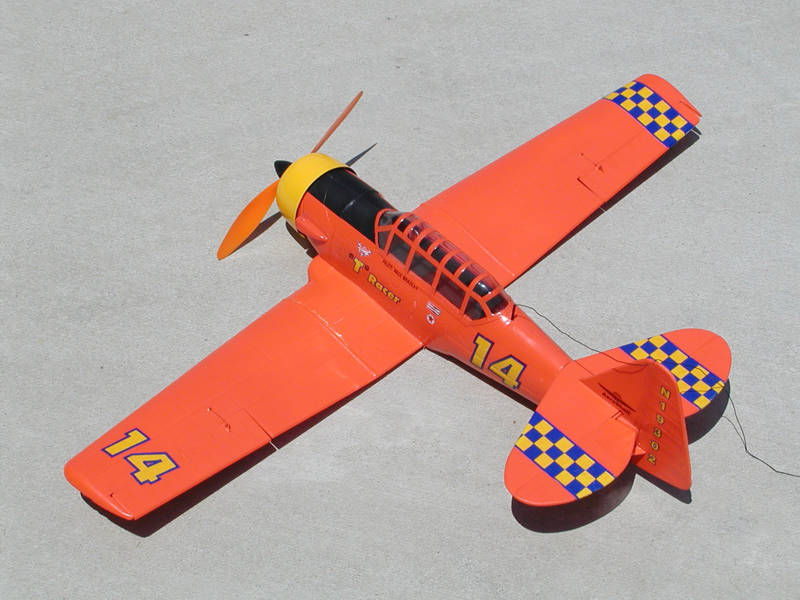
This is a North American AT-6 Texan from Fantastic Models. It has a 31.5" wing span. The model is assembled from molded foam components. Power comes from the common GWS IPS DX-A motor/gear drive (Lite Stik). Flying weight is in the 7 ounce range. Using a two cell lithium polymer batter pack (2s), the model can be used for small field racing or sport aerobatics. The kit is set up for elevator, ailerons, and throttle. The model in the picture also has an operational rudder. It is a nice flyer providing long flights on a 1200 mah LiPo pack. The markings on the model in the picture are my own rather than those supplied in the kit. They were made using ink jet printer decal paper. |
|
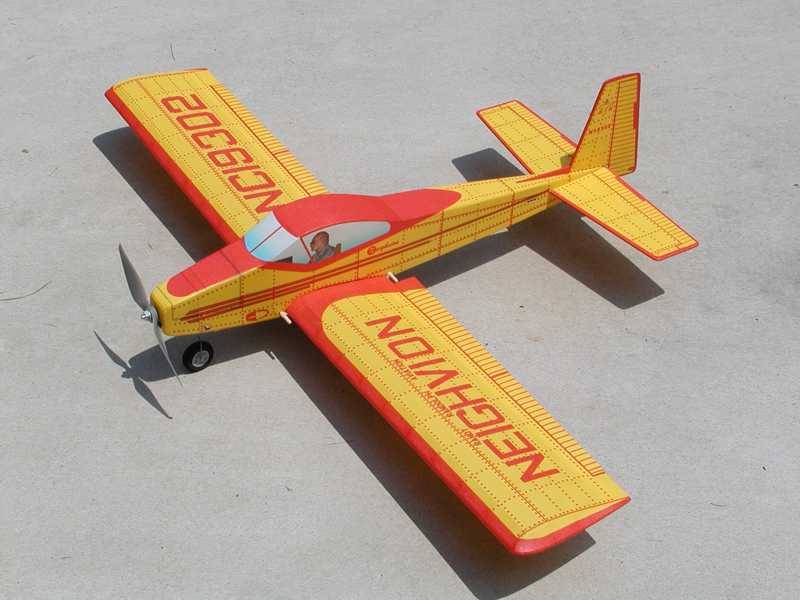
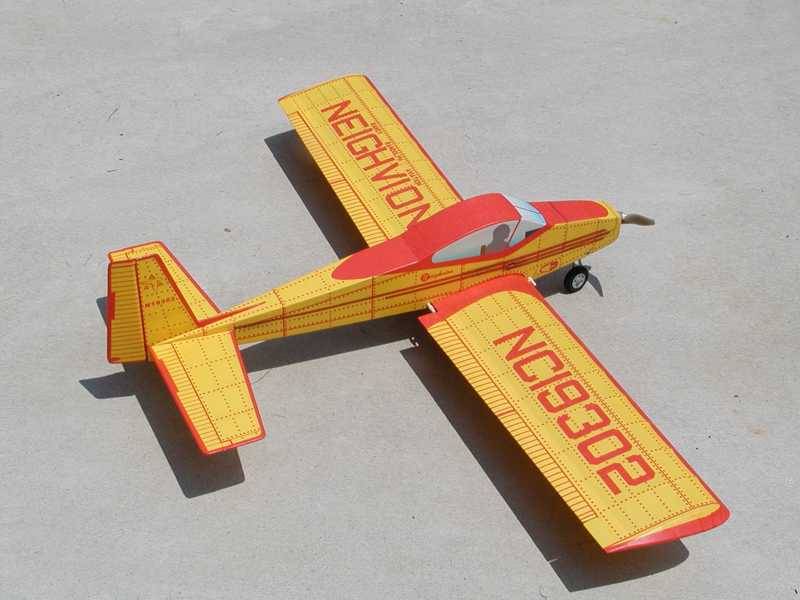
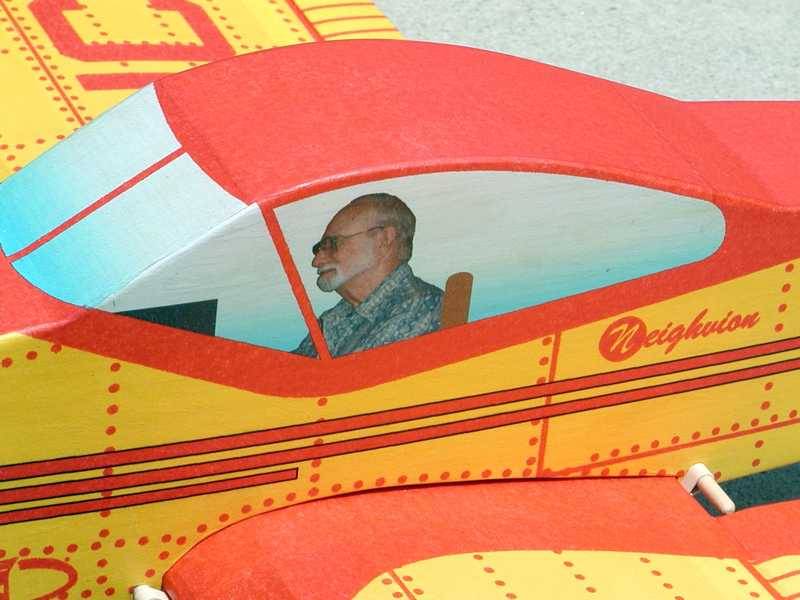
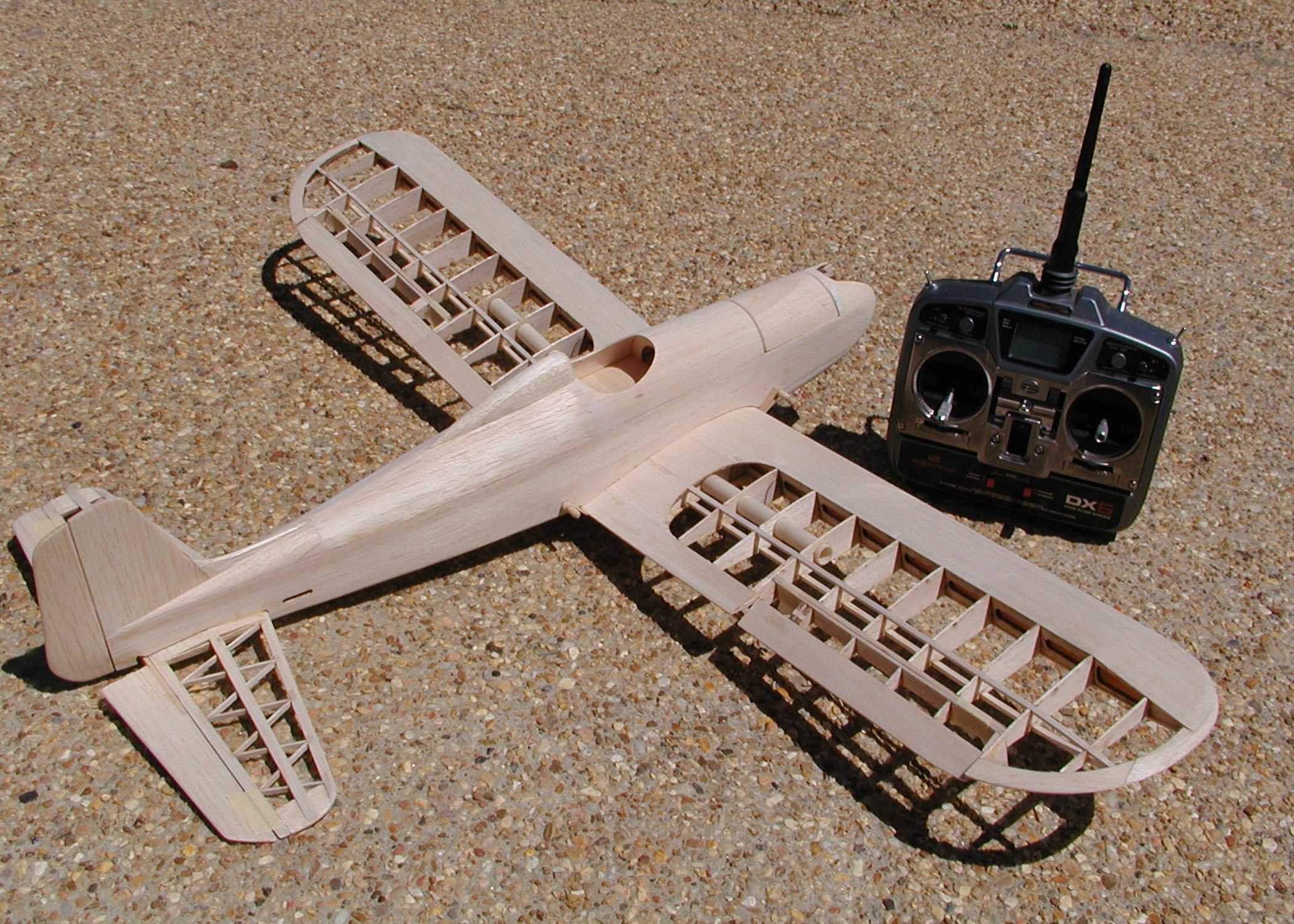
Well known modeler and designer Randy Randolph published a design called the Neighvion in the July 1982 issue of Model Aviation. The design is based on the North American Navion. It was designed to be powered with a throttled 1/2A glow engine. Randy left this world in the Spring of 2005. One of the clubs he belonged to, the Dallas Electric Aircraft Fliers (DEAF), has an annual fly-in each October. For the 2005 gathering they organized an event to honor Randy. This memorial event involved building any of Randy's designs using electric power. I chose the Neighvion. My example is shown here. It is powered with a PJS 800 brushless outrunner motor and three lithium polymer cells. The covering is a combination of white Solite followed by tissue paper that has had color and markings applied via an inkjet printer. The tissue is applied using clear dope. The markings are based on the Free Flight Jigtime Navion seen in the Free Flight section of this site. Total flying weight with a 1320 Lipo three cell pack is 21.6 ounces. |
|
|
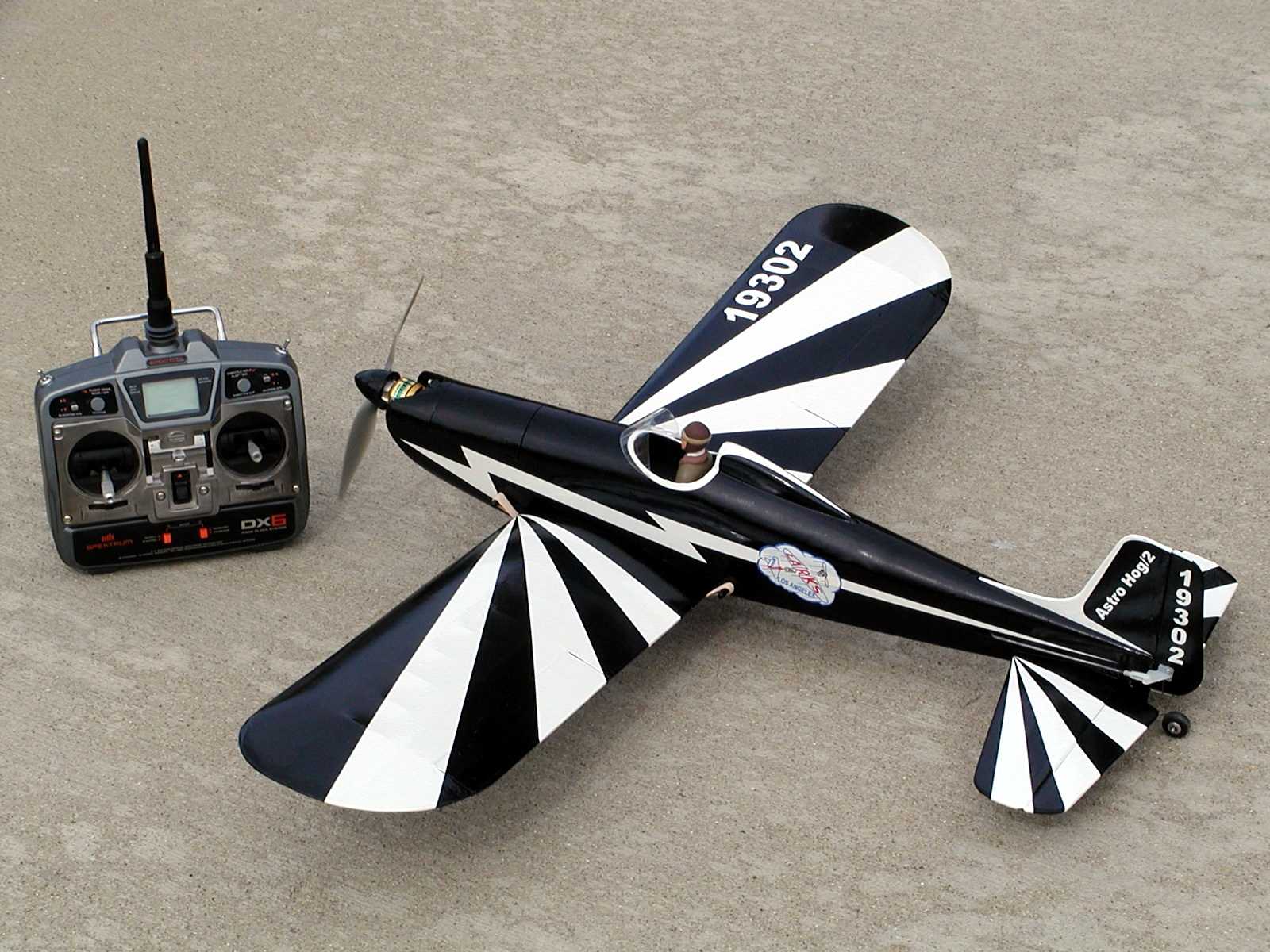
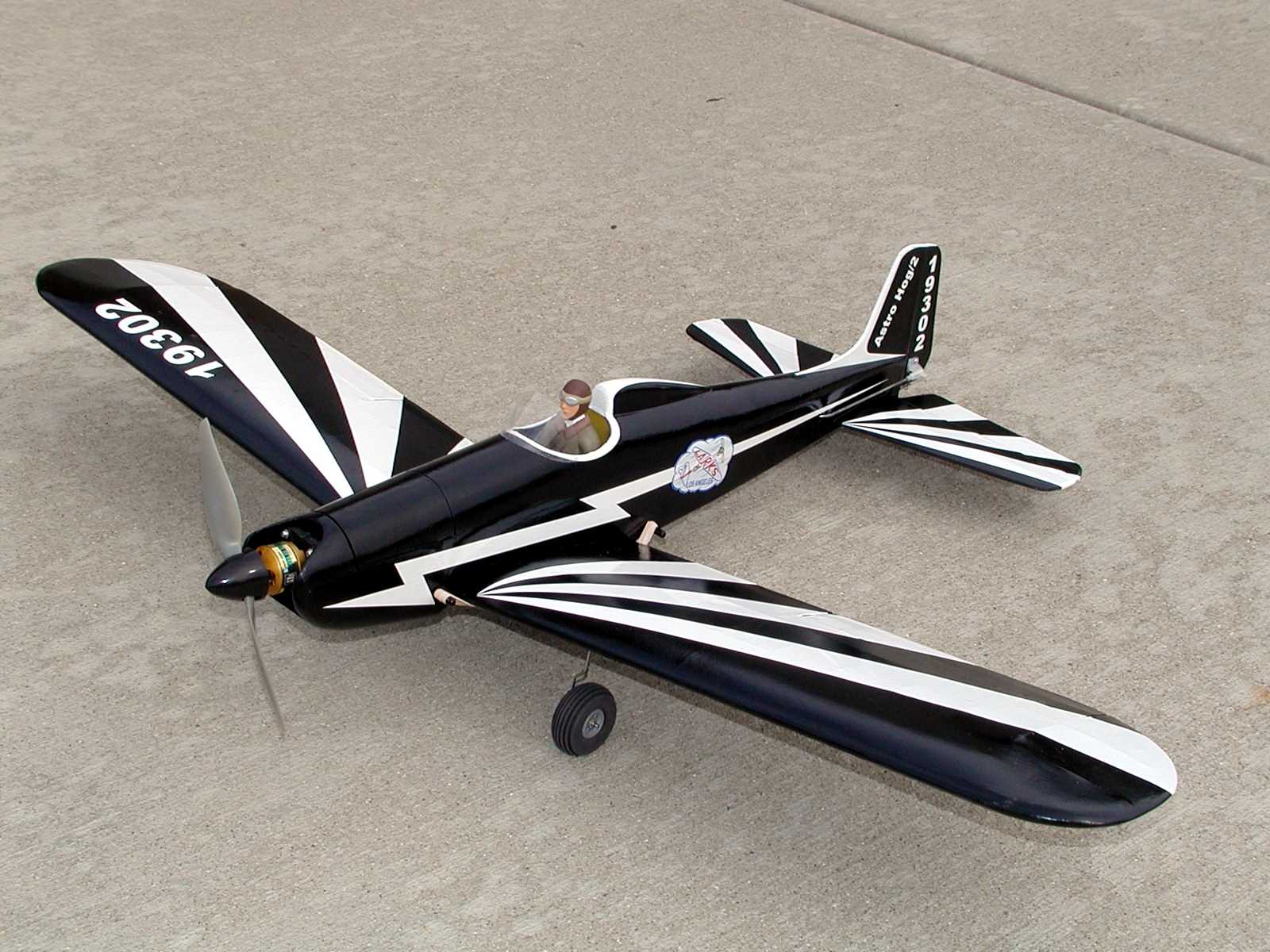
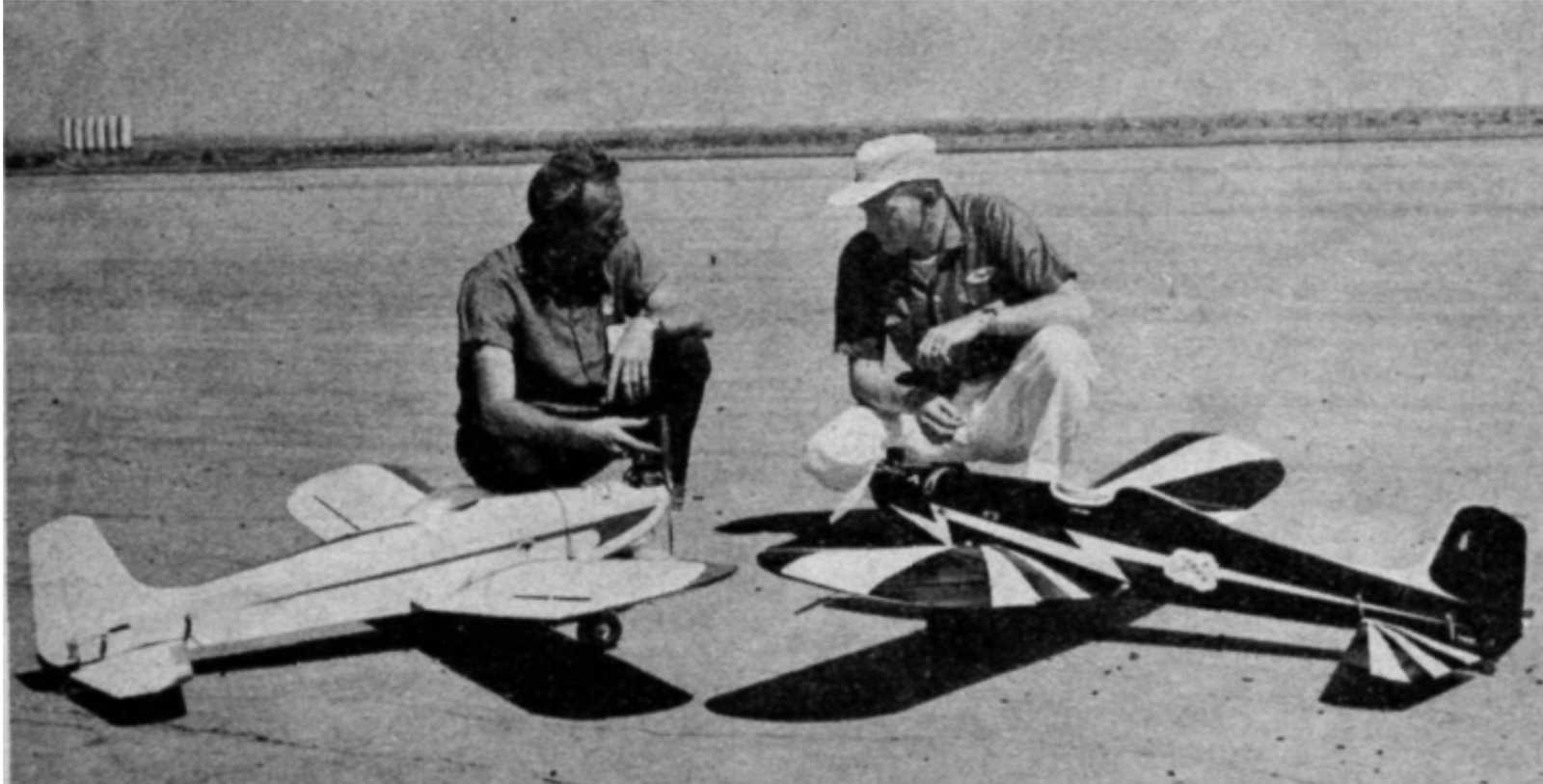
The April 1958 issue of Model Airplane News presented the Astro Hog as a construction article. This model established the design foundation for future competition radio control aerobatic models. The Astro Hog was designed by Fred Dunn and became the model to have almost over night. The Astro Hog design was based heavily on the high wing Smog Hog design of Howard Bonner. SIG Manufacturing offers a kit of this 40 year old design, but it differs in several areas from the original. For example, the original used "barn door" style ailerons rather than the more modern strip ailerons. The original was a tail dragger rather than tricycle landing gear, and the location of the horizontal stabilizer was at the bottom of the fuselage rather then the top. The model shown here is a half scale version of the original Astro Hog as presented in the April 1958 Model Airplane News construction article. The color and markings of the model shown here are those of the original prototype including home made decals representing the LARKS club (Los Angeles Radio Kontrol Society) that Fred Dunn had on his model. The model has a 36 inch wing span, weighs 17 ounces ready to fly, and is powered by an AXI 2208/34 motor turning an APC 7x5 electric prop. Energy comes from a three cell 1320 mah Lipo battery pack. The model is a great performer and a lot of fun to fly. A photo from the construction article of the prototype with Fred Dunn on the right is presented for reference. On the left side of the photo is Bob Dunham and his Astro Hog that he used to win the 1957 Nationals. This model is now available as a kit from BMJR Model Products. |
|
|
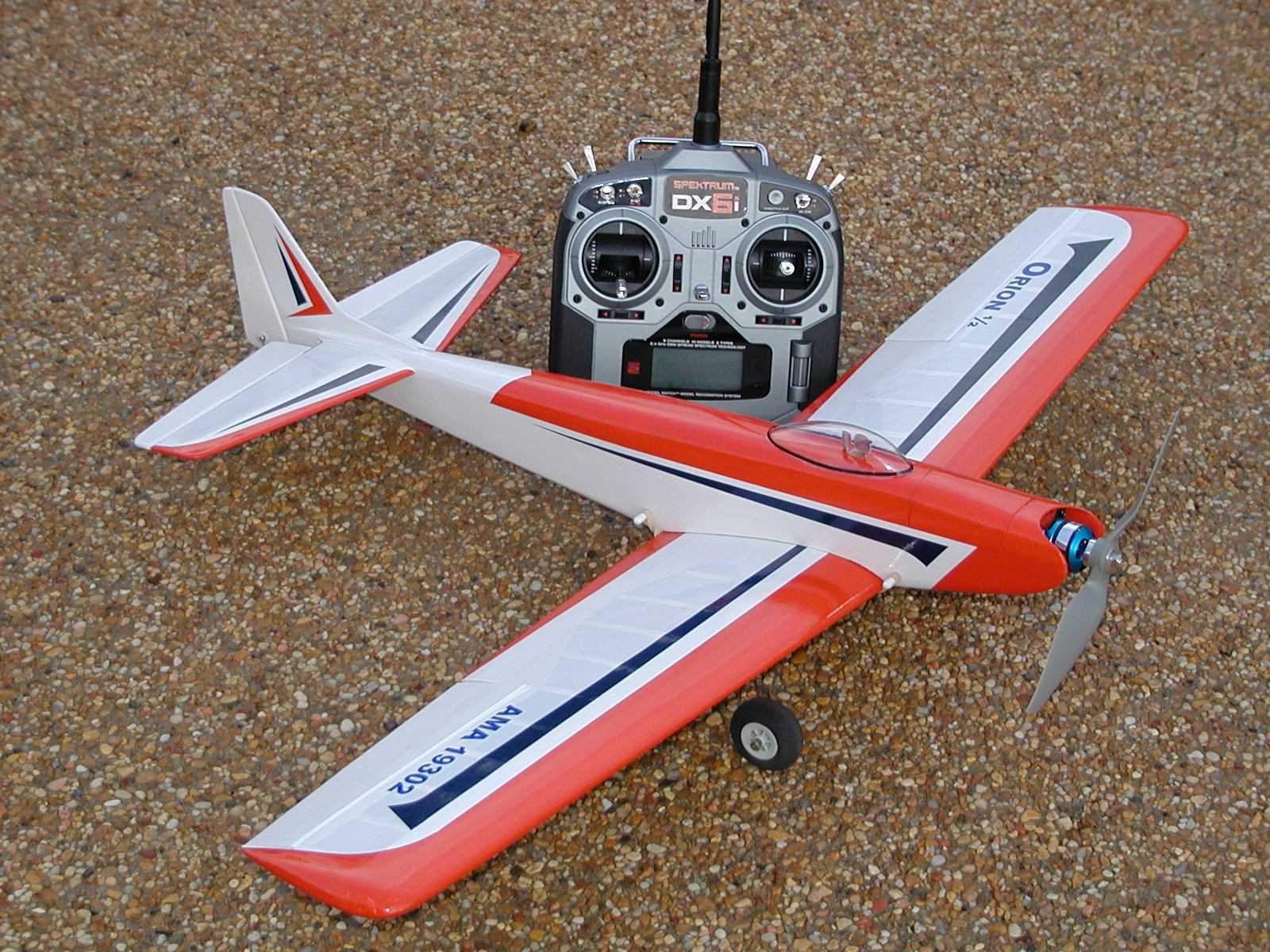
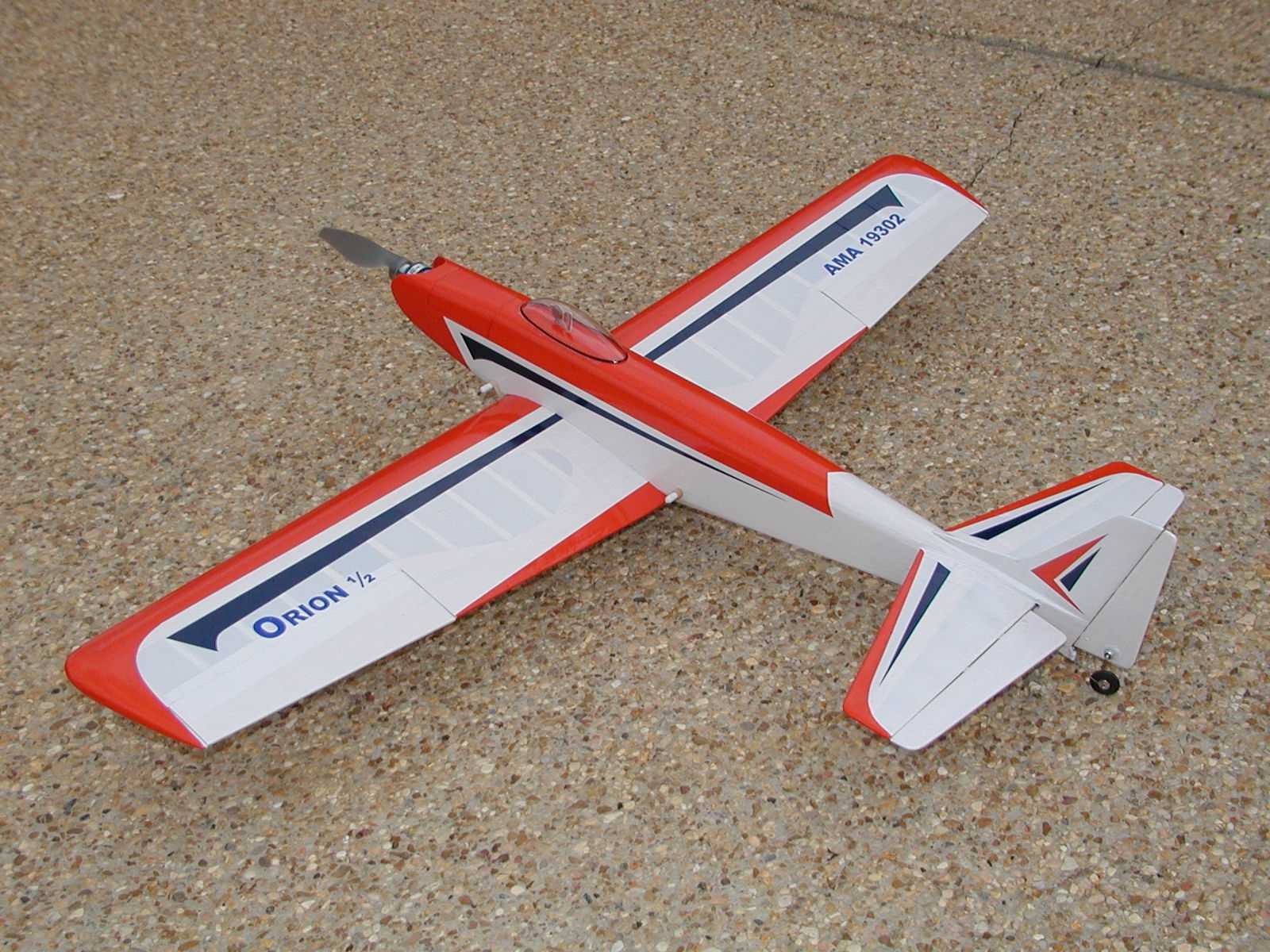
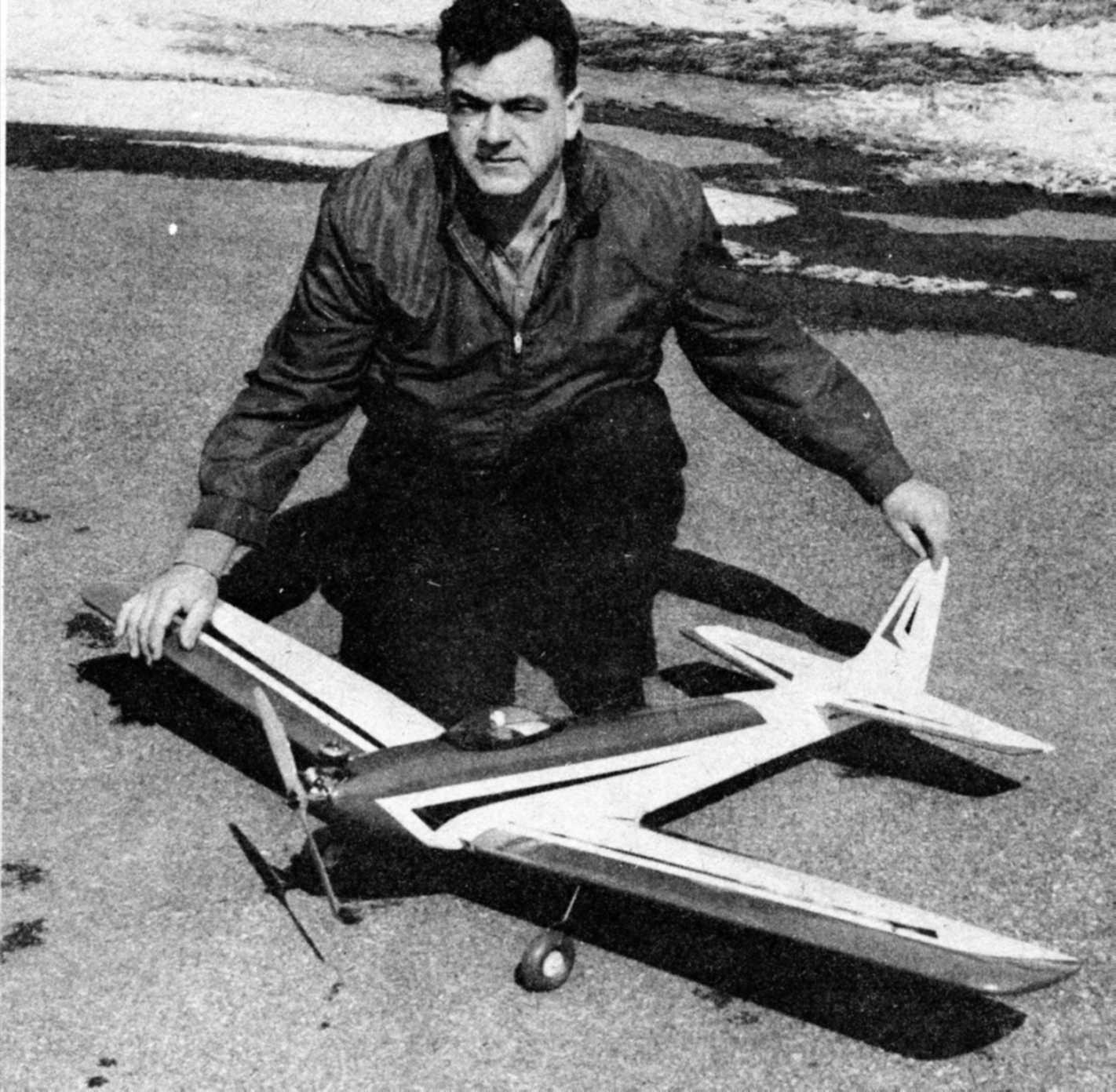
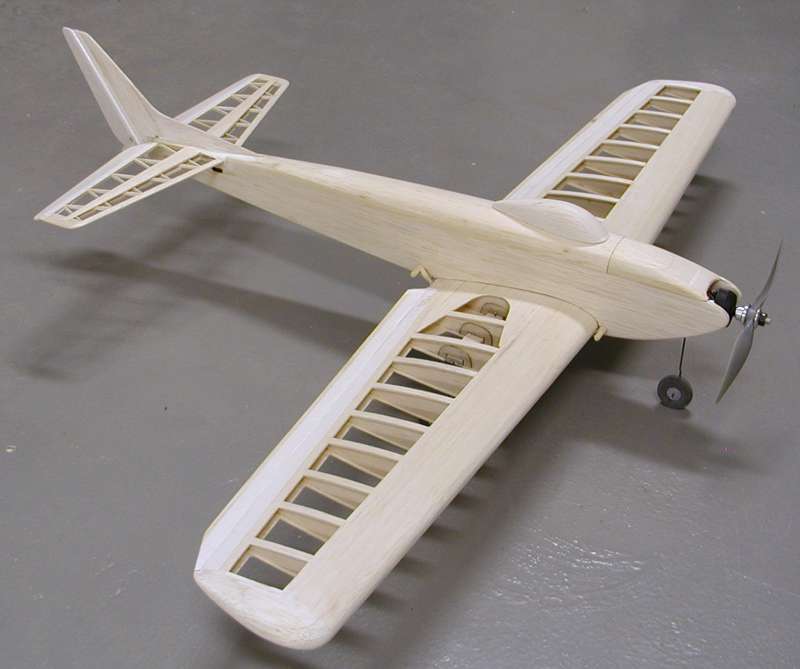
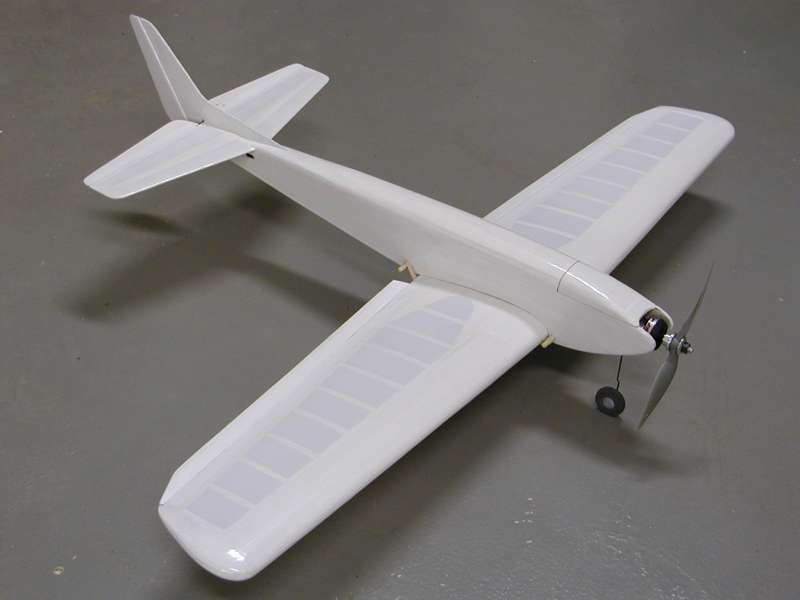
The Astro Hog dominated the pattern competitions from its introduction until 1960. In June of 1960 Model Airplane News published the Orion by Ed Kasmirski. The Orion quickly took over the top spot in terms of being the preferred pattern model design of the era. As noted in the construction article by Ed, the Orion was derived from the Astro Hog. He had been flying a modified Astro Hog and wanted to make some improvements to the precision of the rolls and landing approaches over the Astro Hog. He achieved that goal and his design became a Top Flite kit. The model shown here is a half size version of the Orion as it appeared in the June 1960 issue of Model Airplane News. It has a 36" wing span and is powered with an Atlas 2308/34 brushless outrunner electric motor turning an APC 8x6 electric prop. Energy comes from a three cell 1320 mah lipo battery pack. The finish on the model is Coverite Microlite film. The half size model has the same control functions at the full size original (ailerons, rudder, elevator, and throttle). Flying weight is 16 ounces. A copy of a photo from the original construction article of Ed Kasmerski and the original Orion is presented for reference. This model is now available as a kit from BMJR Model Products. |
|
|
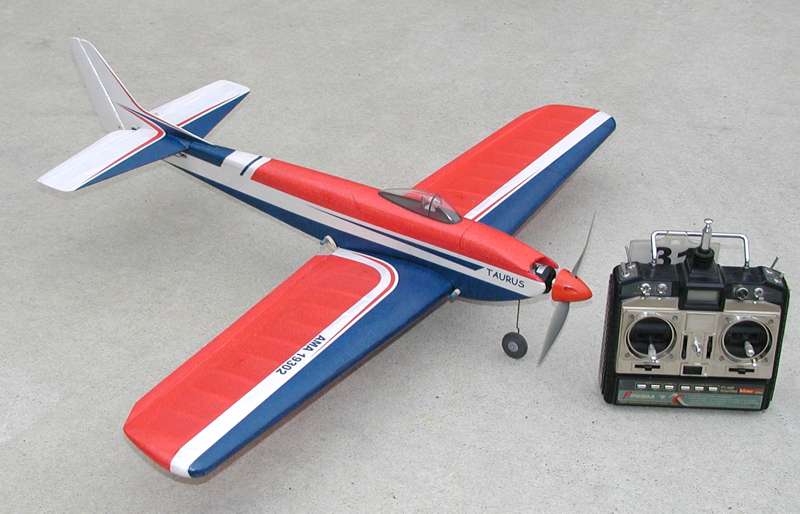
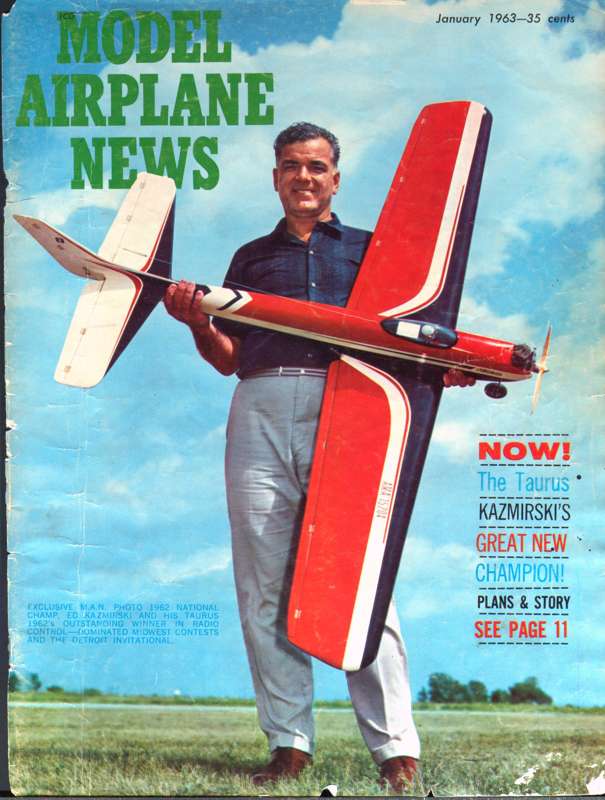
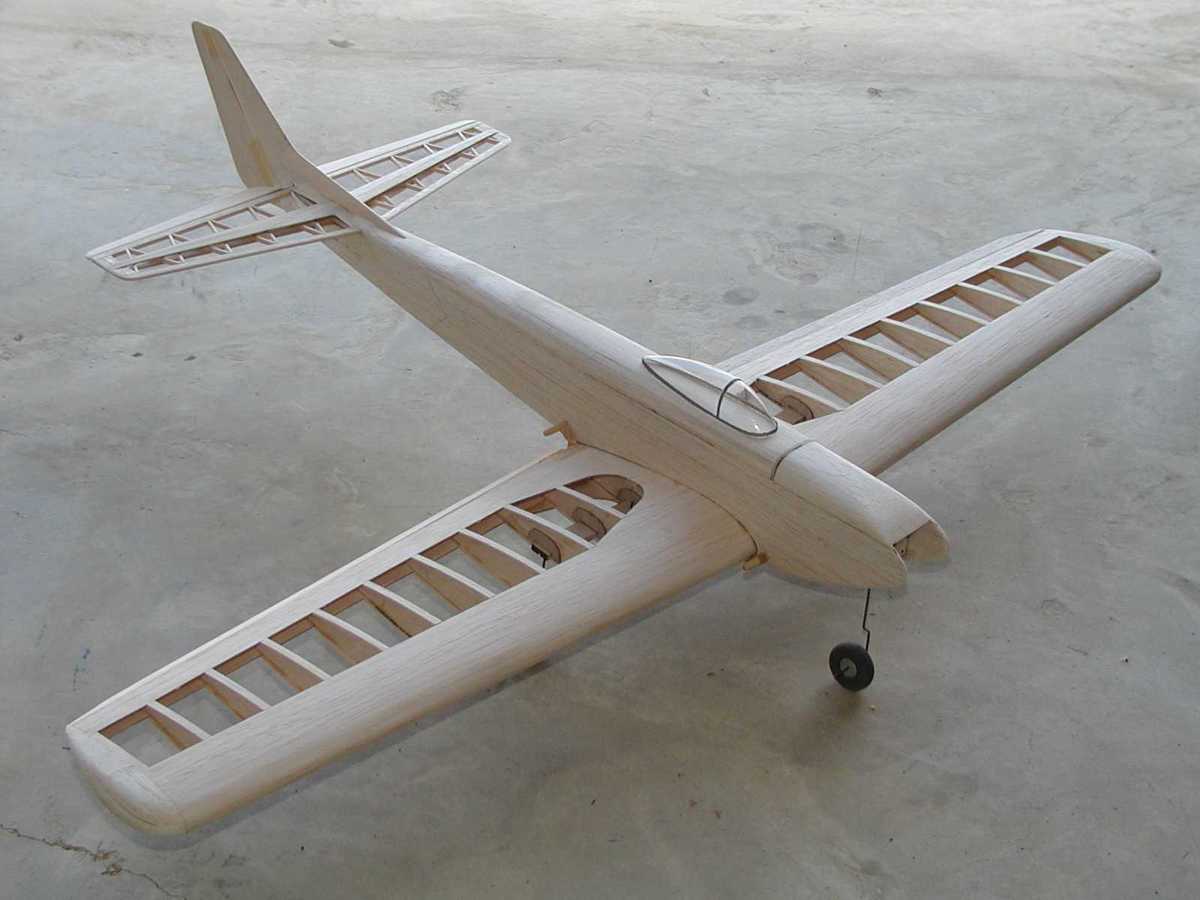
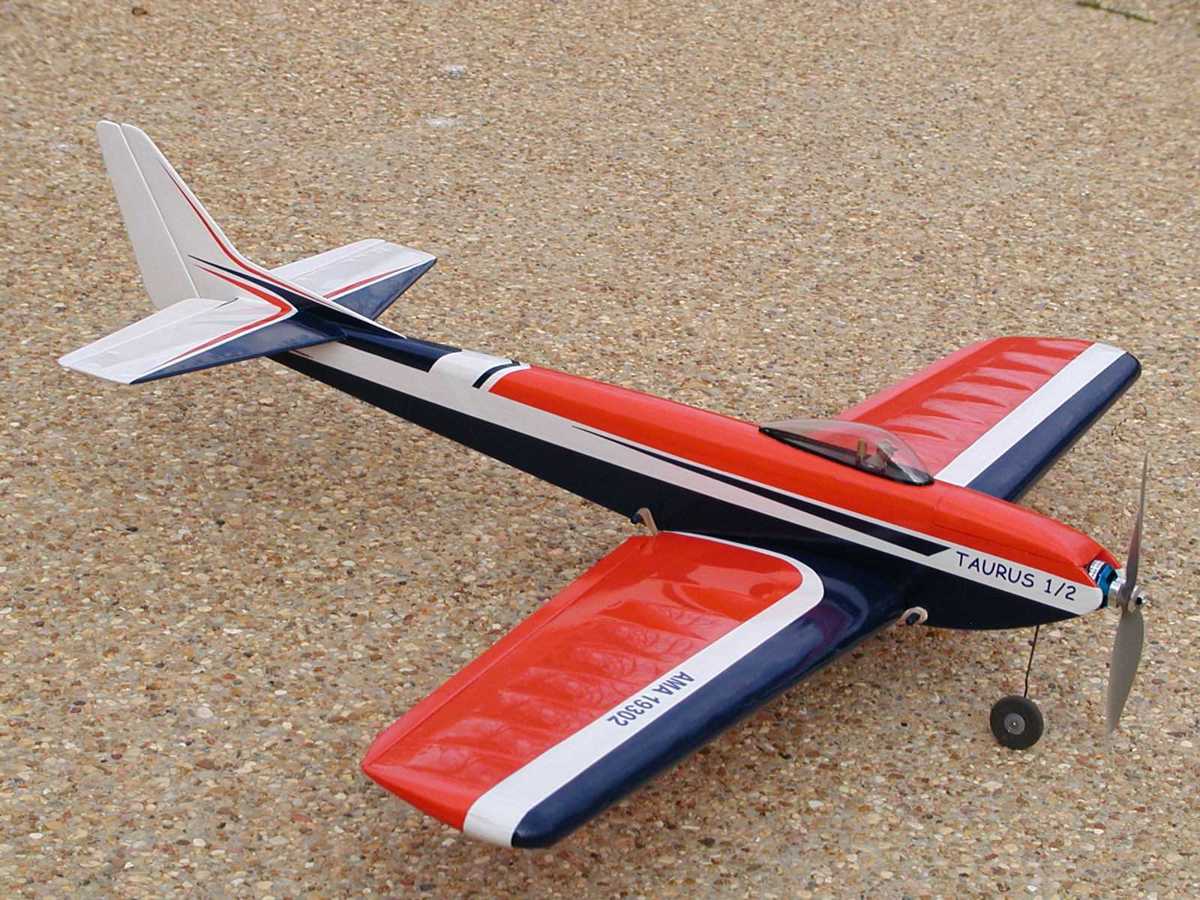
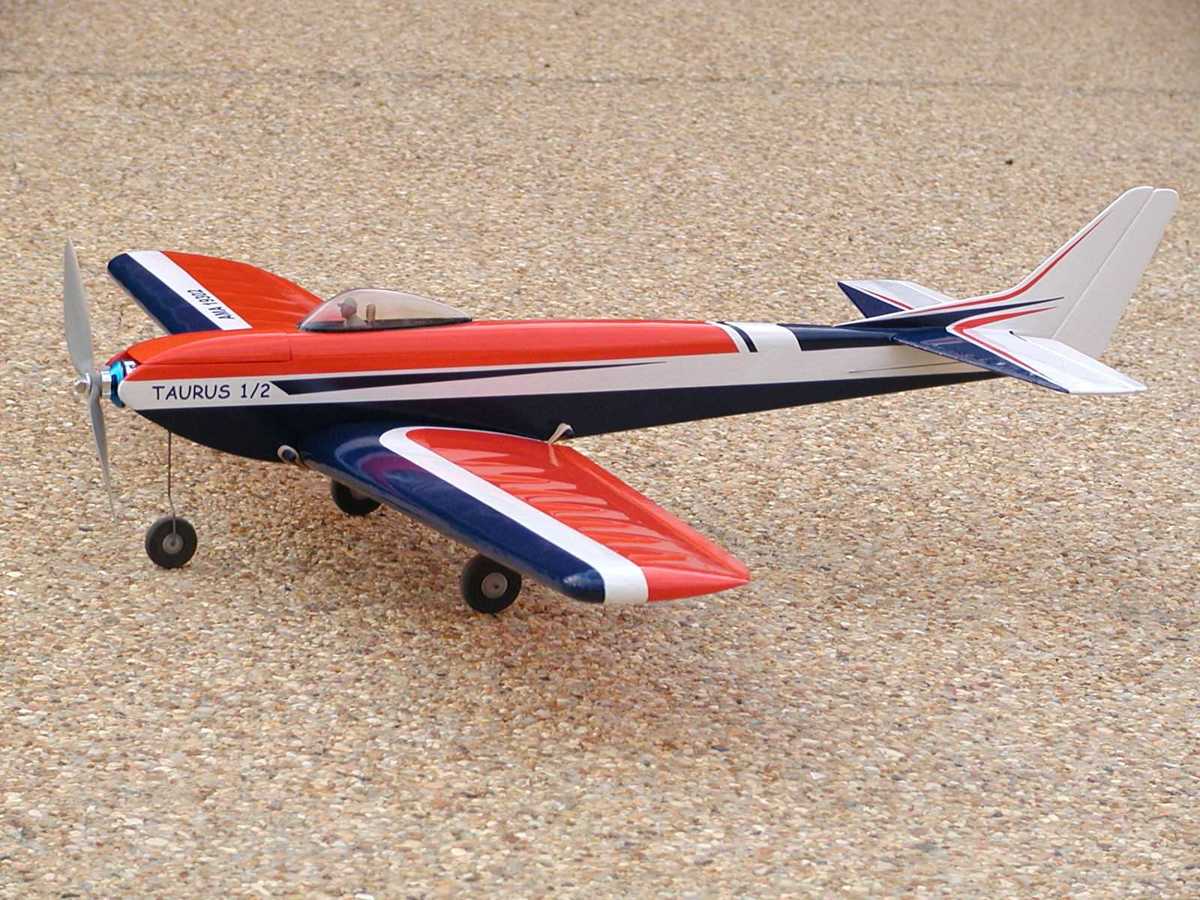
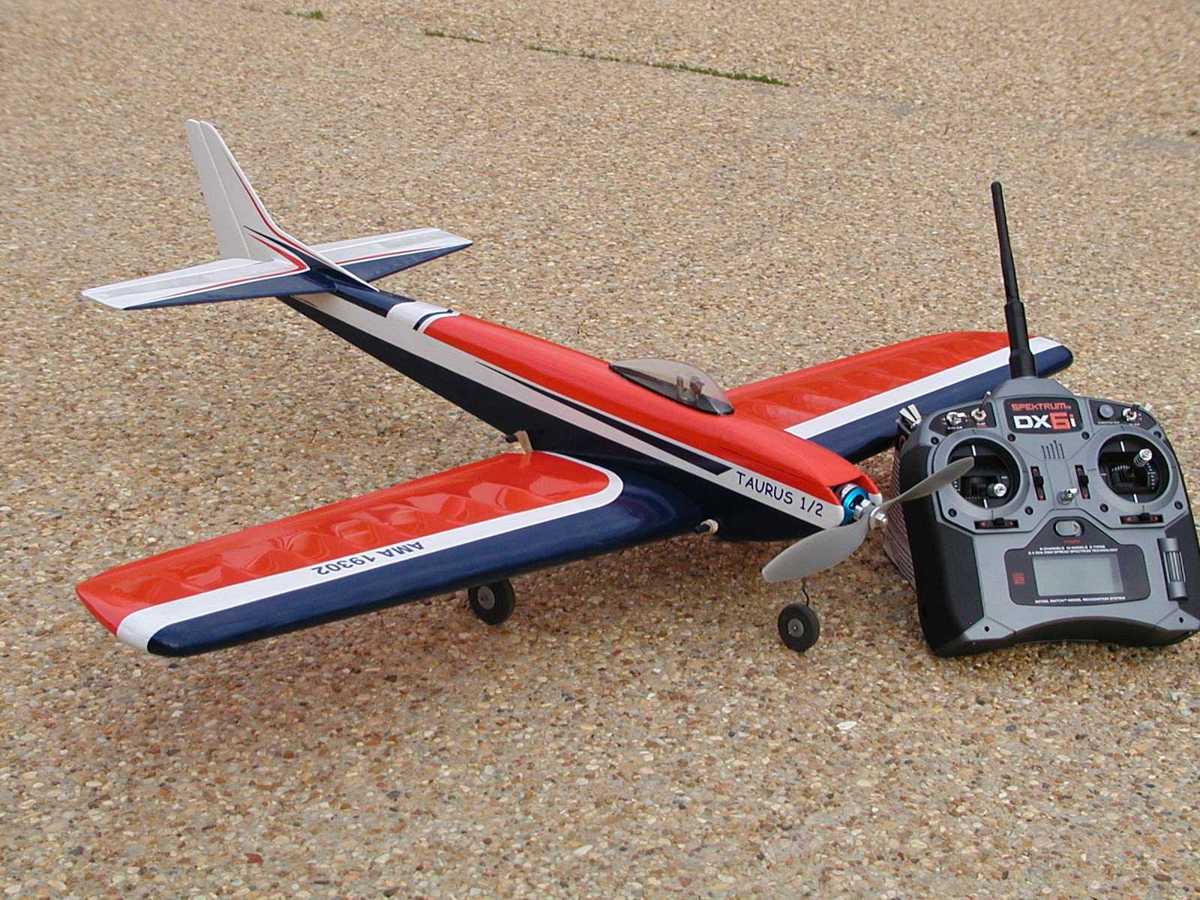
In the January 1963 issue of Model Airplane News a ground breaking pattern model design called the Taurus was presented. Designed by Ed Kazmirski, this model became the standard in the world of pattern aerobatic competition in that era. A very nice kit from Top Flite was made available for a number of years following the publication of the design. I fell in love with the model when it first appeared on that MAN cover. At the time I only had single channel equipment using an escapement for rudder control. Undaunted by that limitation I set out to design an build a reduced size Taurus for 1/2A glow power. I got the model framed up, but life events kept me from finishing that project. Now some 43 years later (2006) I have finally completed the project that was started so long ago. The model shown in the pictures is a new airframe and has been set up for electric power. The model has a 35 3/4" wing span with an area of 200 square inches. Power is supplied by a PJS-300 SFR outrunner brushless motor driven by three 1320 lithium polymer cells in series. Total flying weight is 16 ounces. The model is finished using the ink jet printed tissue over white Solite process described in the Neighvion description above. For reference, a scan of the original January 1963 MAN cover has been presented. |
|
|
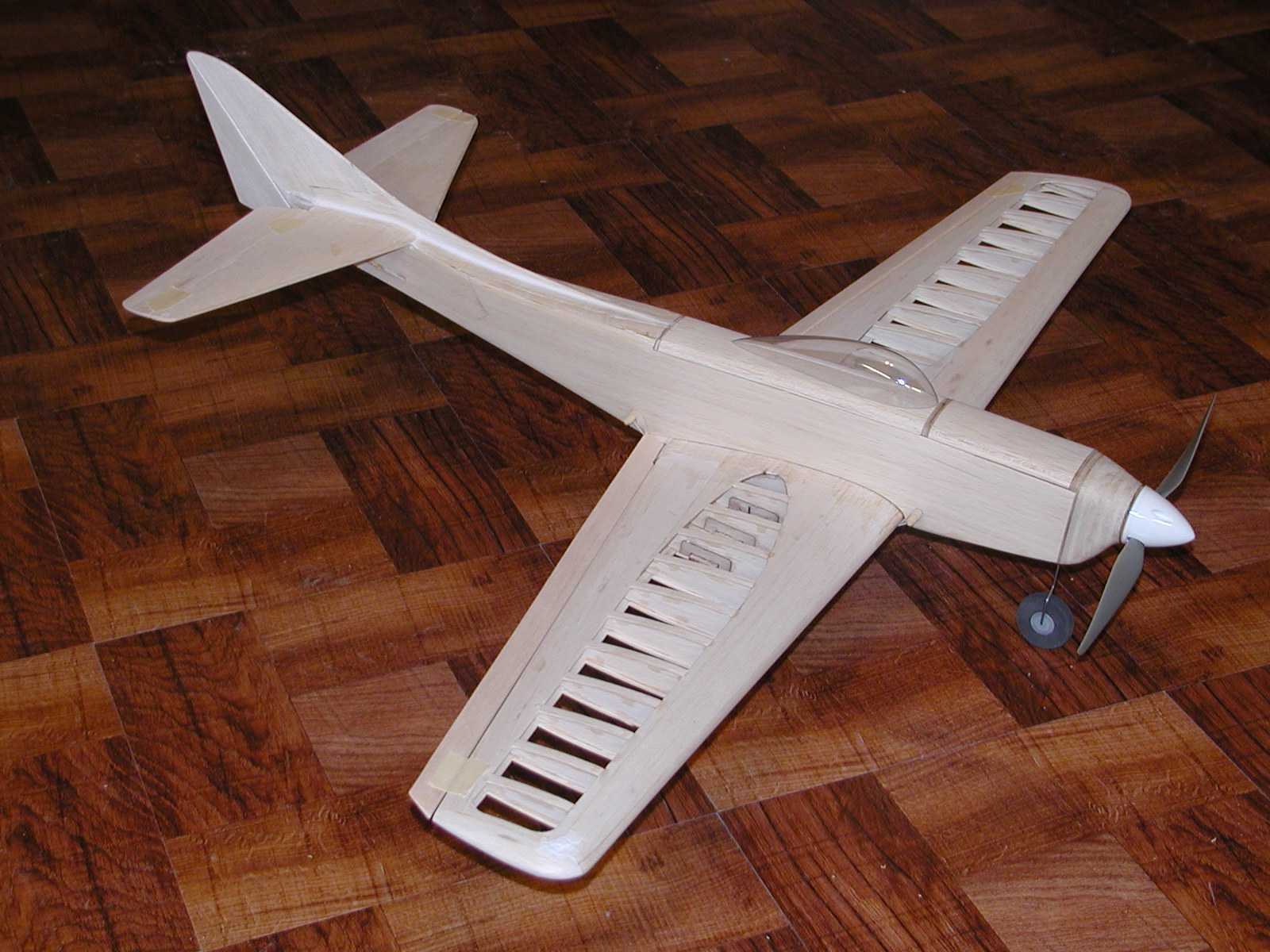
This is an updated version (2009) of the half scale Taurus. This model was built from a prototype kit from BMJR Model Products. It has a few changes to the internal structure that take advantage of laser cutting for the parts as opposed to the razor cutting that was used for the 2006 version. Power comes from an Atlas 2308/34 turning an APC 8x6 electric prop. The updated model is also using a three cell 1320 mah lipo battery pack as was used in the 2006 version The updated model is covered with Coverite Microlite film. A photo build log for the model can be found in RC Groups. |
|
|
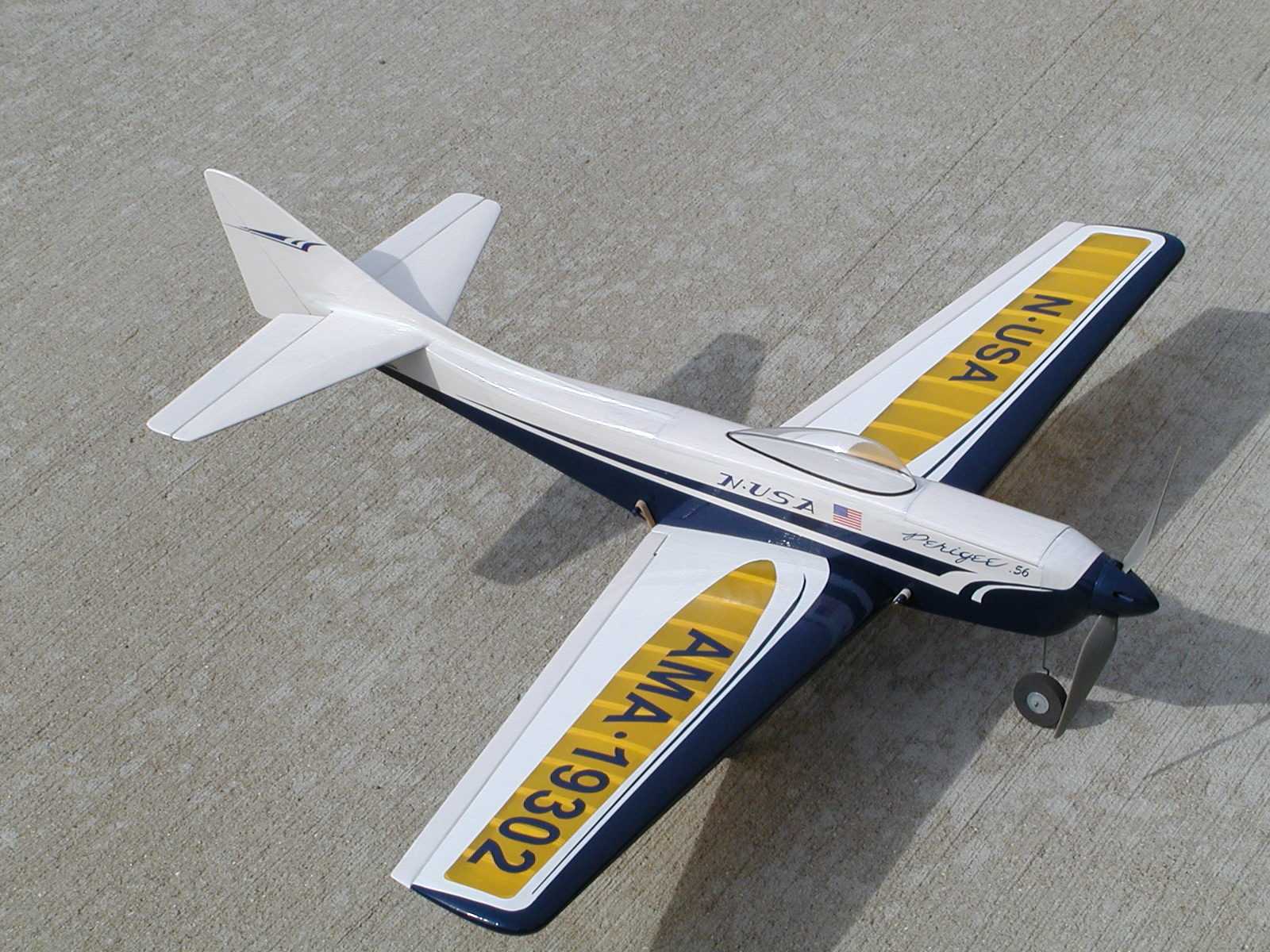
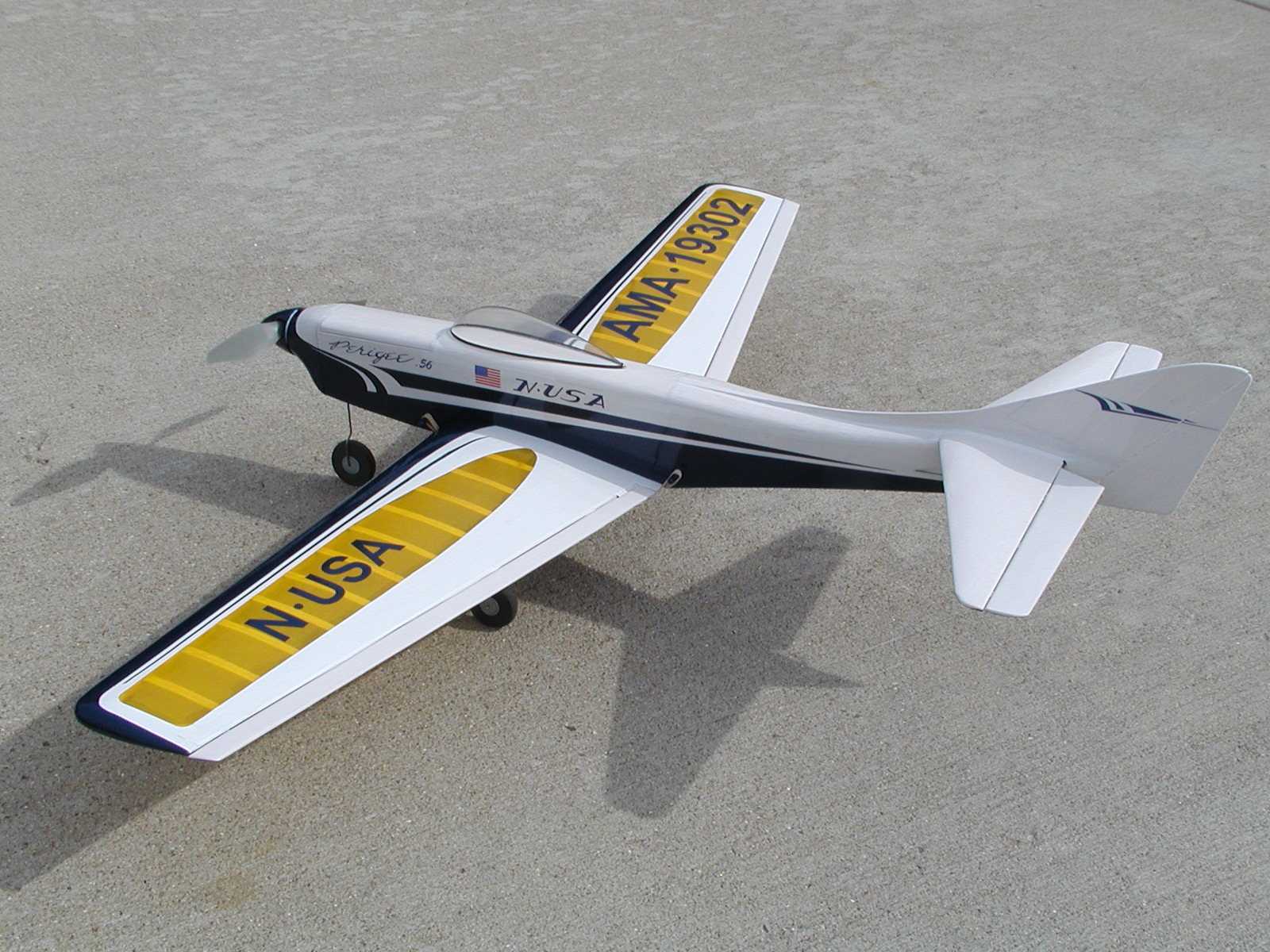
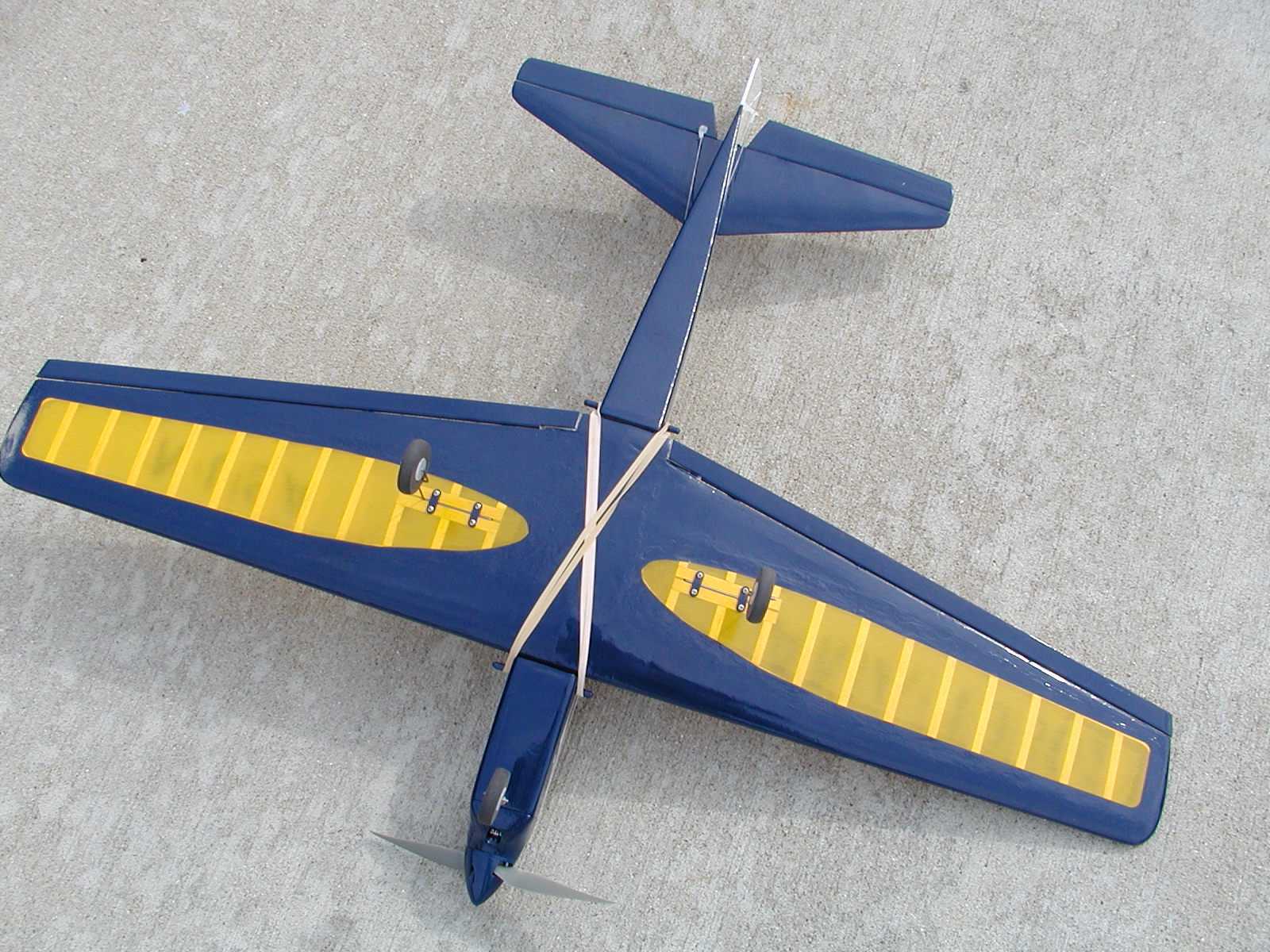
This is a 56 percent size Tom Brett Perigee. Tom used the Perigee to win the 1962 World Championships for pattern flying. The model shown here is based on the plan that was included with the construction article printed in the January/February 1963 issue of American Modeler. The 56 percent size was selected to keep the wing area in the 200 square inch range. That is the wing area of the 1/2 size vintage pattern models I had developed previously and seemed perfect for the power system being used. The original Perigee was slightly smaller than other pattern models being flown in that era. That is the reason for the difference in scale factor for this model. Power comes from an Atlas 2308/34 turning an APC 8x6 electric prop driven by a three cell 1320 mah lipo battery pack. The white and blue covering are Coverite Microlite film. The yellow covering on the wing is Coverite Coverlite with two coats of thinned nitrate clear dope applied. The original Perigee is on display in the Academy of Model Aeronautics museum. I followed the color and markings on that model with the exception of the white. The original is light blue where mine is white. A light blue film was not available in the material I wanted to use. The script model name and flags are ink jet water slide decals. All up flying weight is 16 ounces. This model is available as a kit from BMJR Model Products. |
|
|
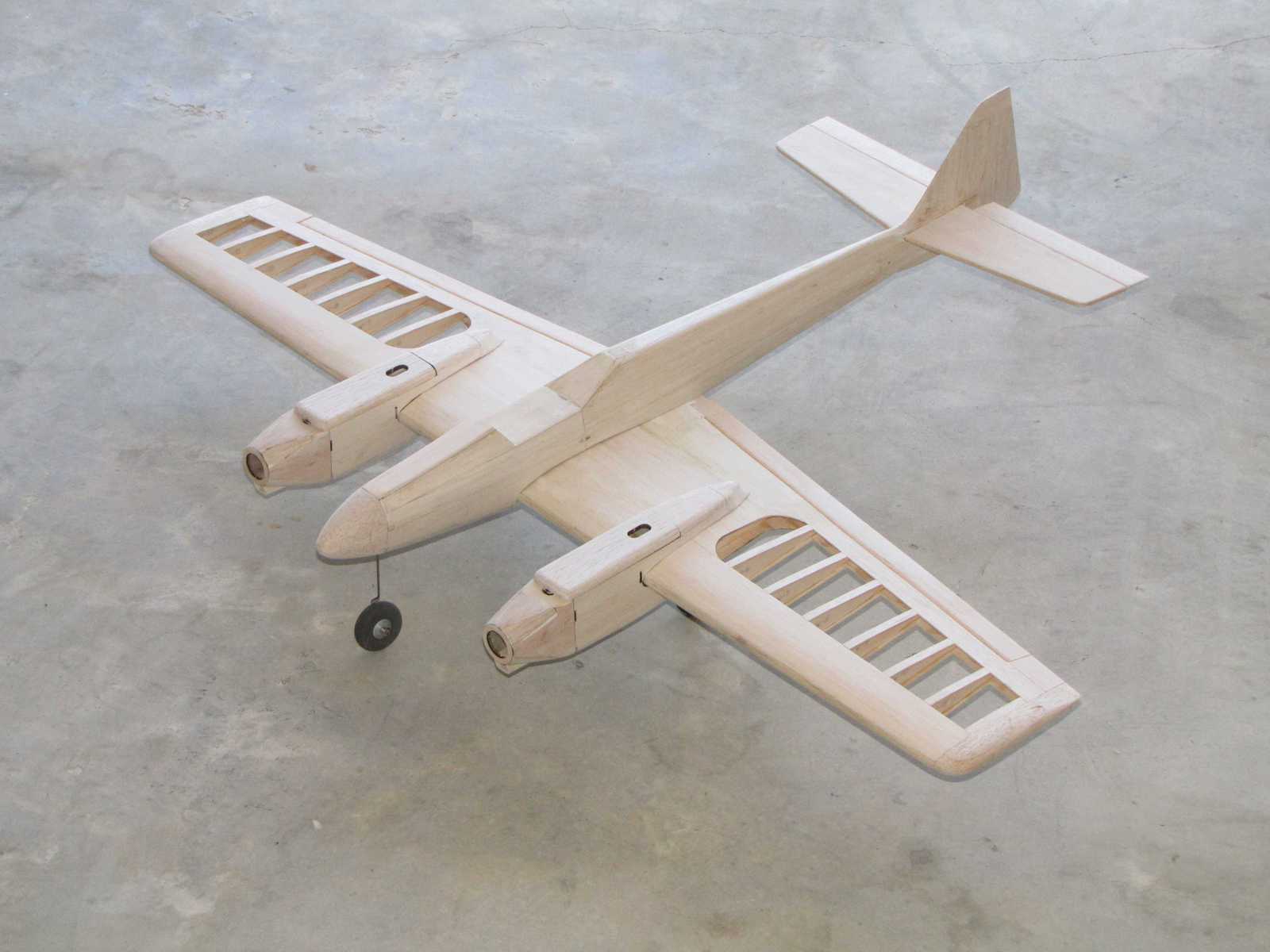
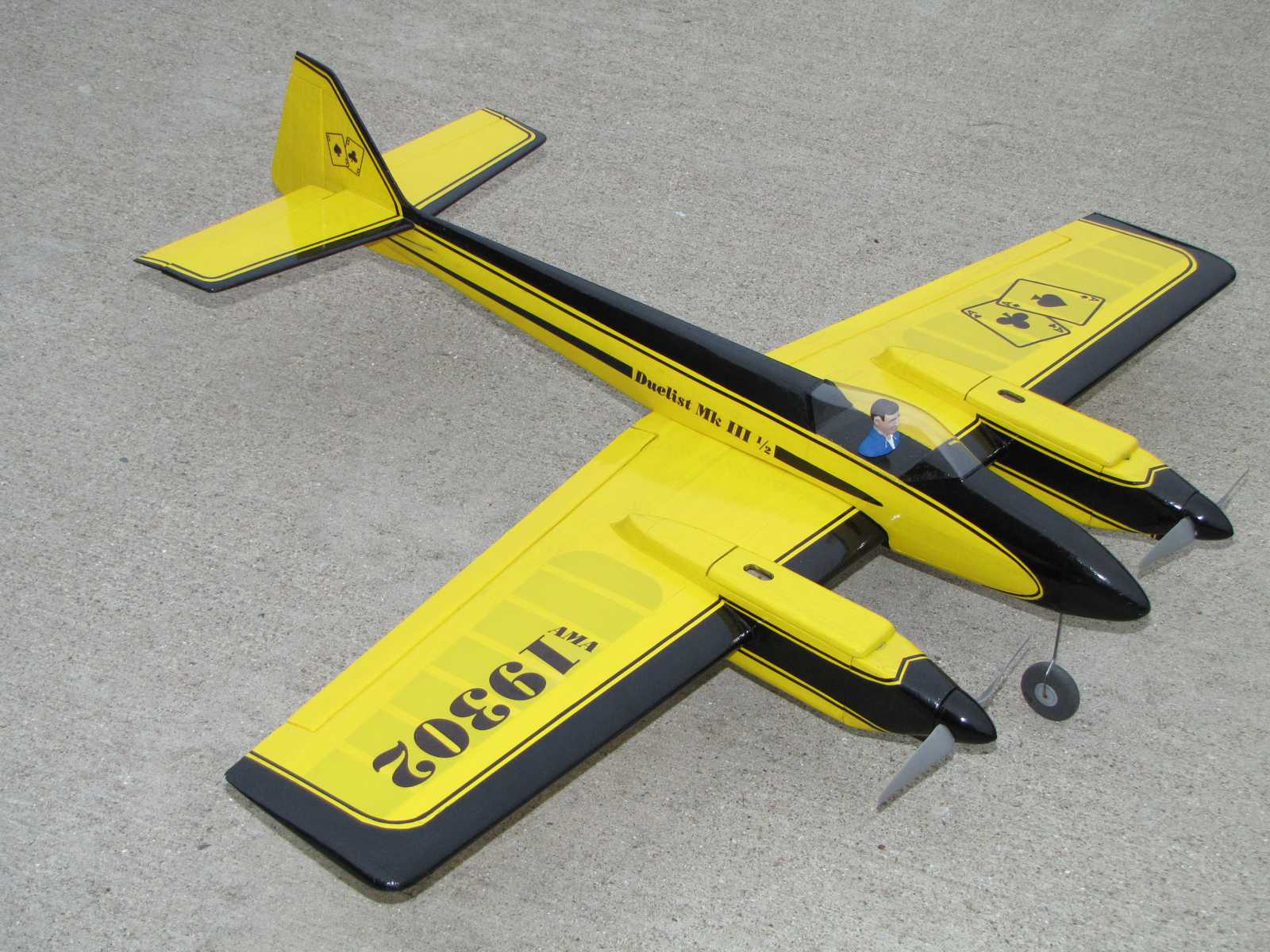
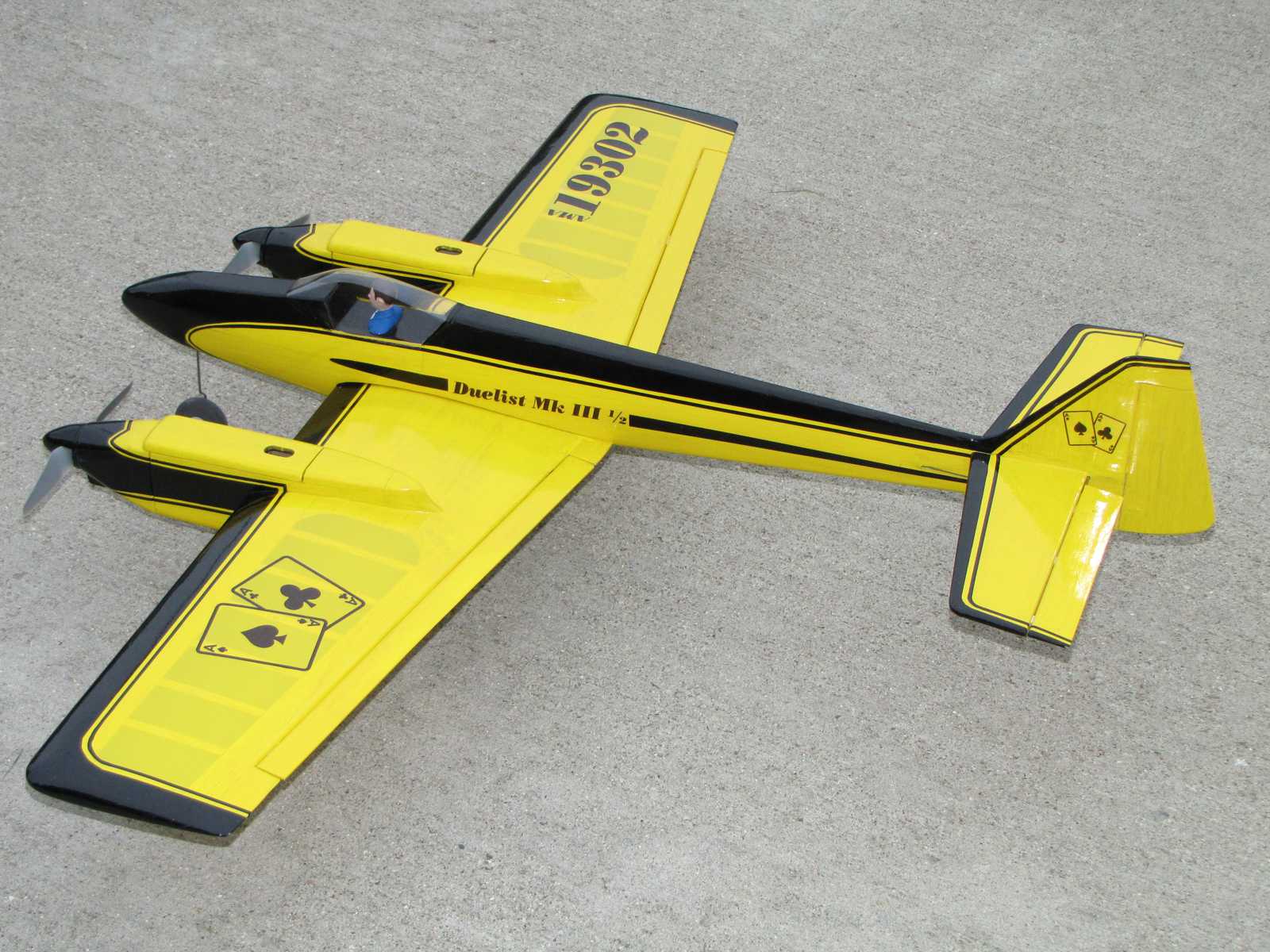
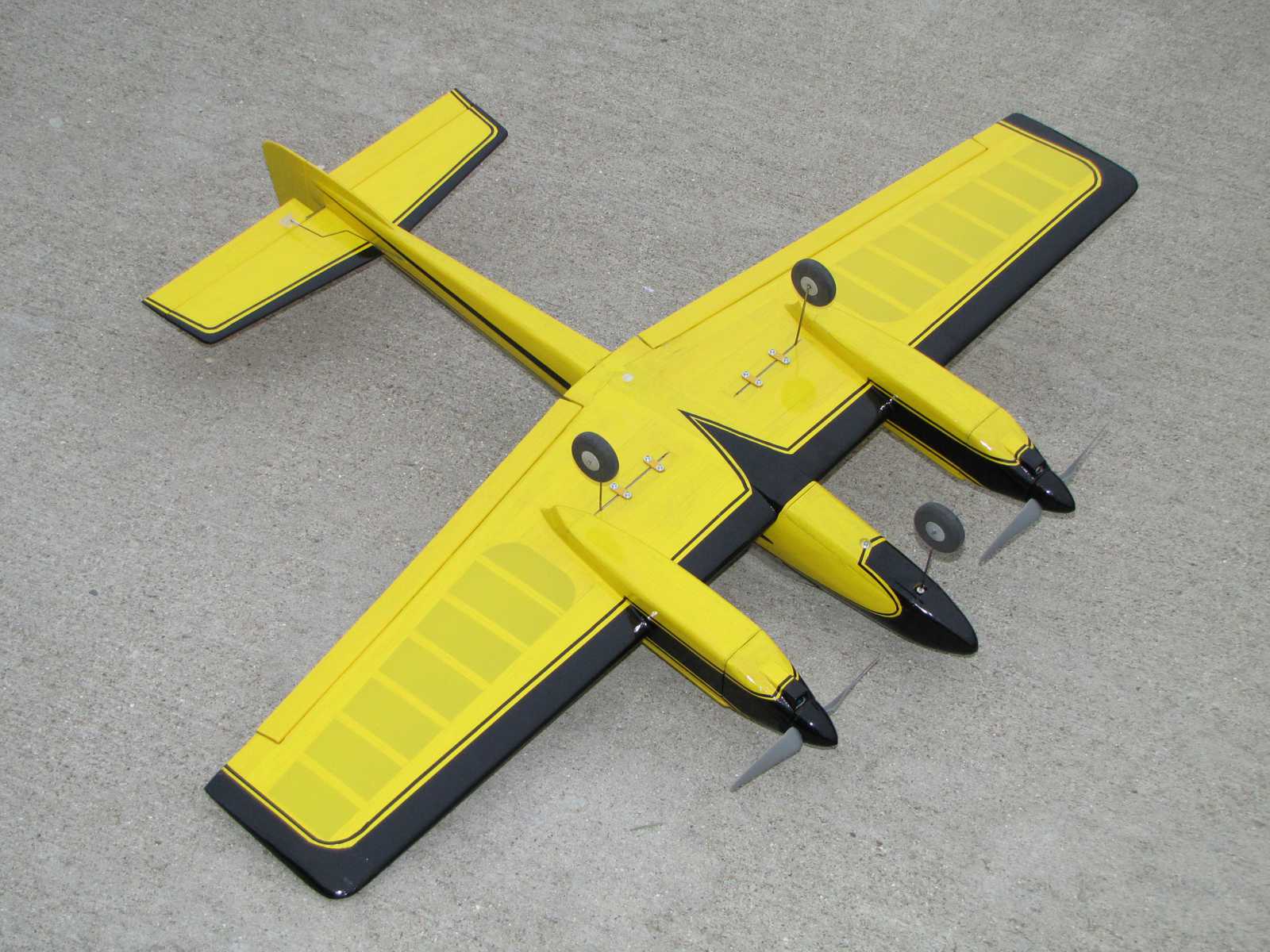
This is a half size version of Dave Platt's Duelist Mk III. It has a 35" wing span with 223 square inches of area. Power is provided by two Himax 2208-1260 electric motors that turn APC 6x5 electric props. Each motor is driven by its own battery pack located in the nacelle behind the motor. The battery packs are three lipo cells. Packs that fit the nacelles can be 460 to 800 mah in capacity. Covering is Coverlite Microlite for both the yellow base color and black trim. Lettering is water slide decal made using ink jet printer decal paper. The all up flying weight with 460 mah battery packs is 18 ounces. When using 800 mah packs the flying weight is 20 ounces. Flight performance is basically the same at either weight. The higher capacity packs provide longer flight duration. This model is available as a kit from BMJR Model Products. |
|
|
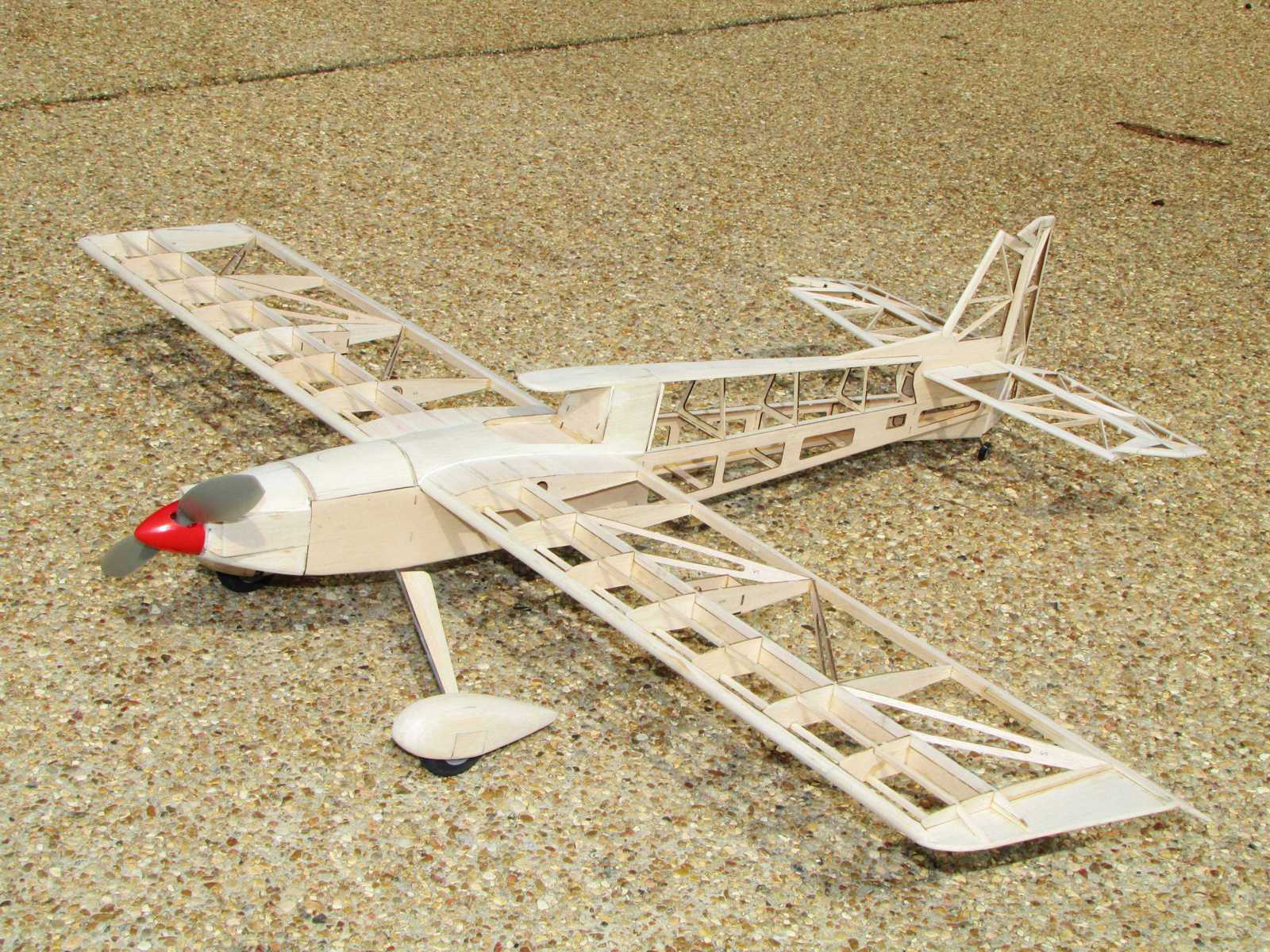
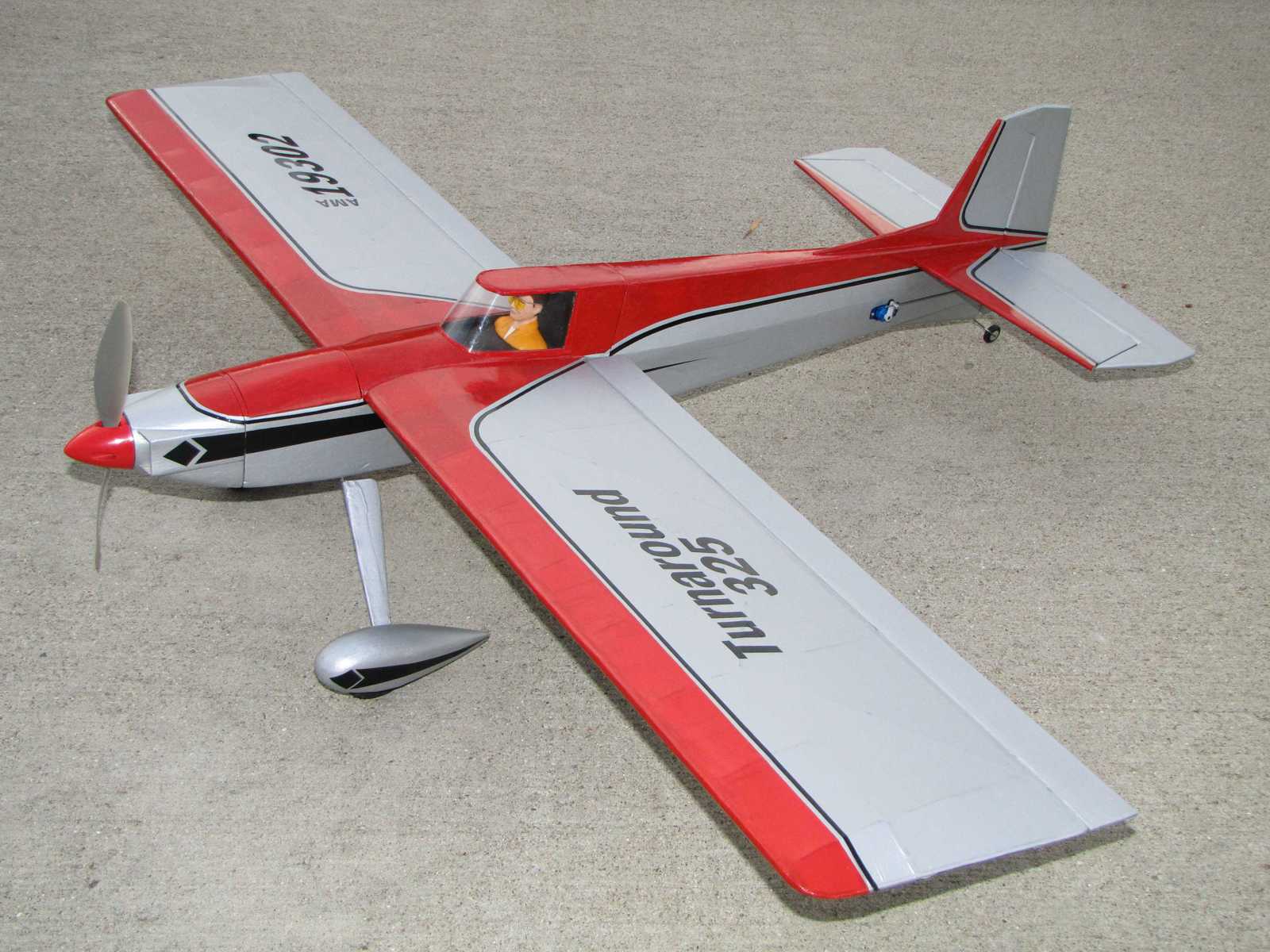
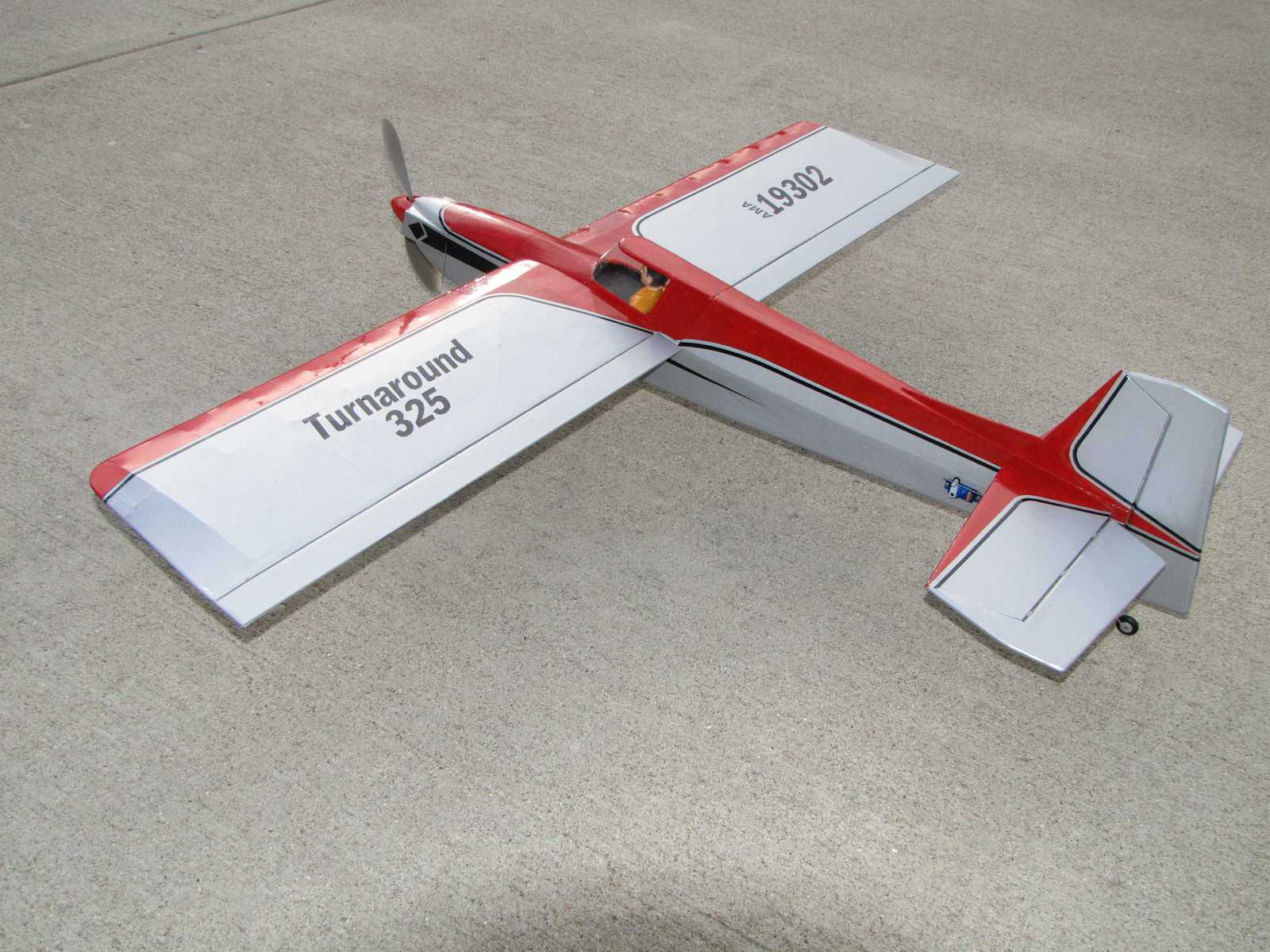
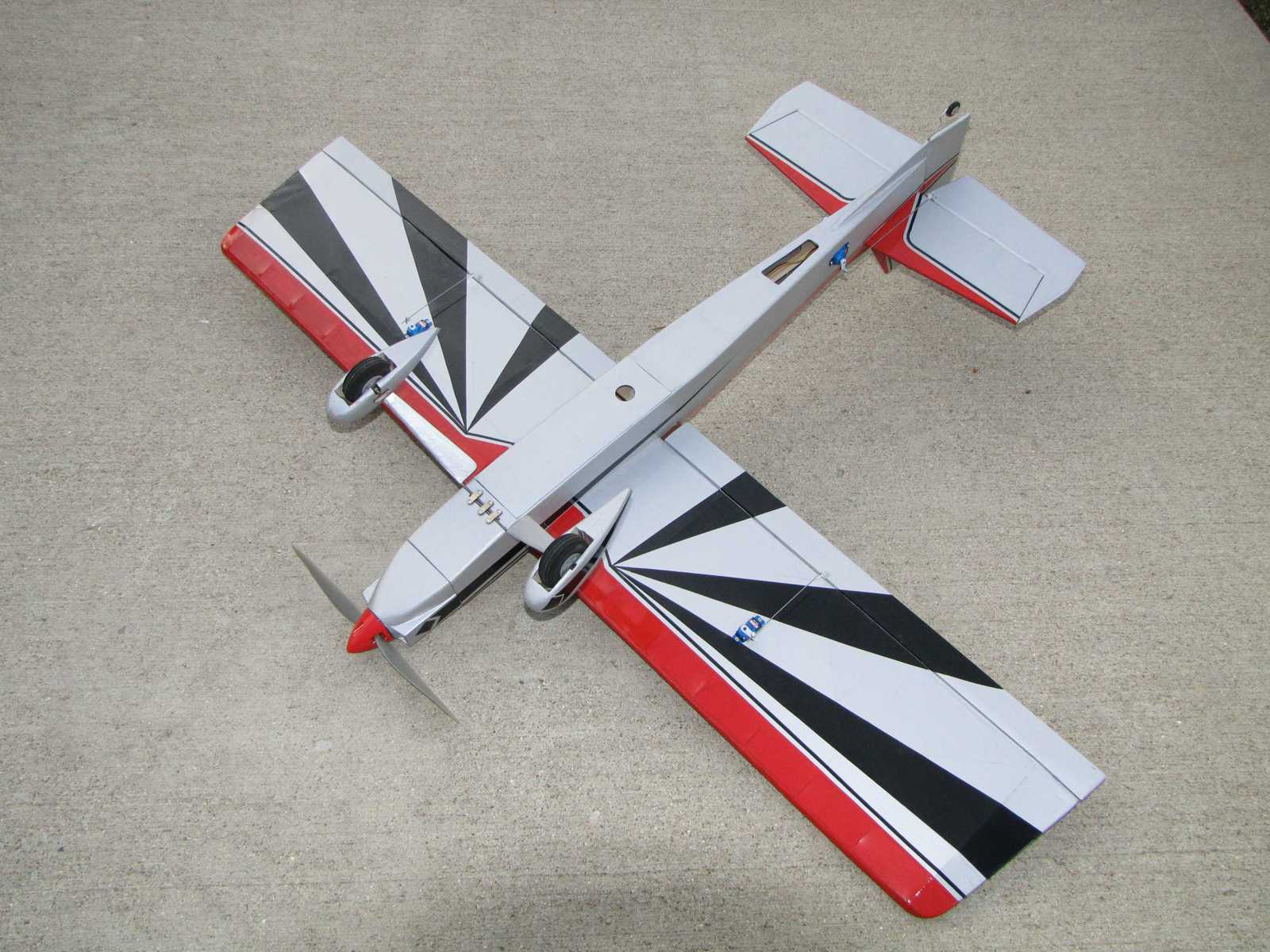
This is an original design called the Turnaround 325. It has a 43.5" wing span and 325 square inches of wing area. It is powered with a 180 watt motor turning a 10x7 prop. Energy comes from a three cell 2250 mah lipo battery pack. The models has a flying weight of 26 ounces. The model is intended for non 3D style aerobatics and can be flown in smaller flying sites like parks and soccer fields. Covering is silver Coverlite with red Microlte trim. This model is now available as a kit from BMJR Model Products. A video of a kit prototype model flying can be found here. |
|
|
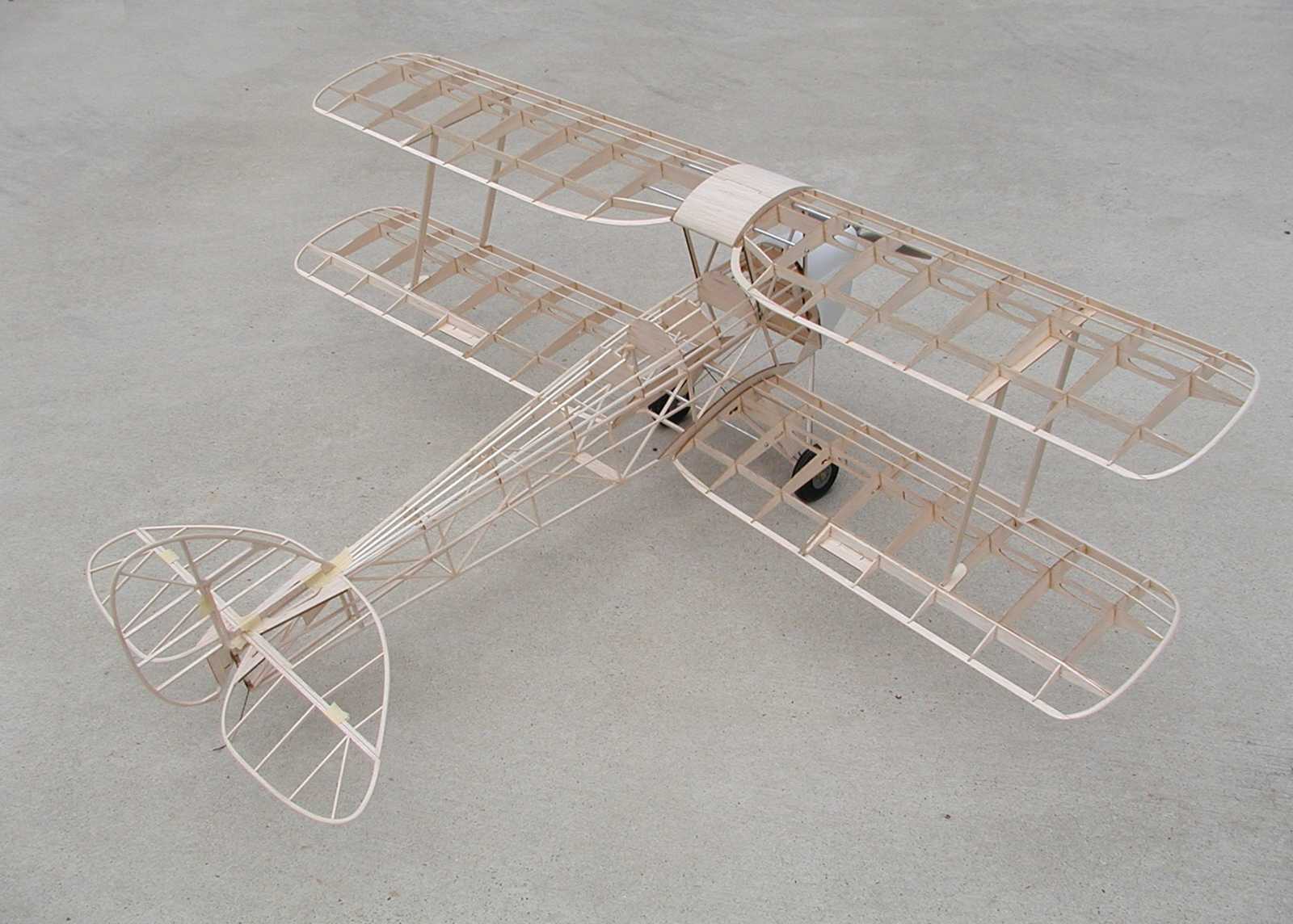
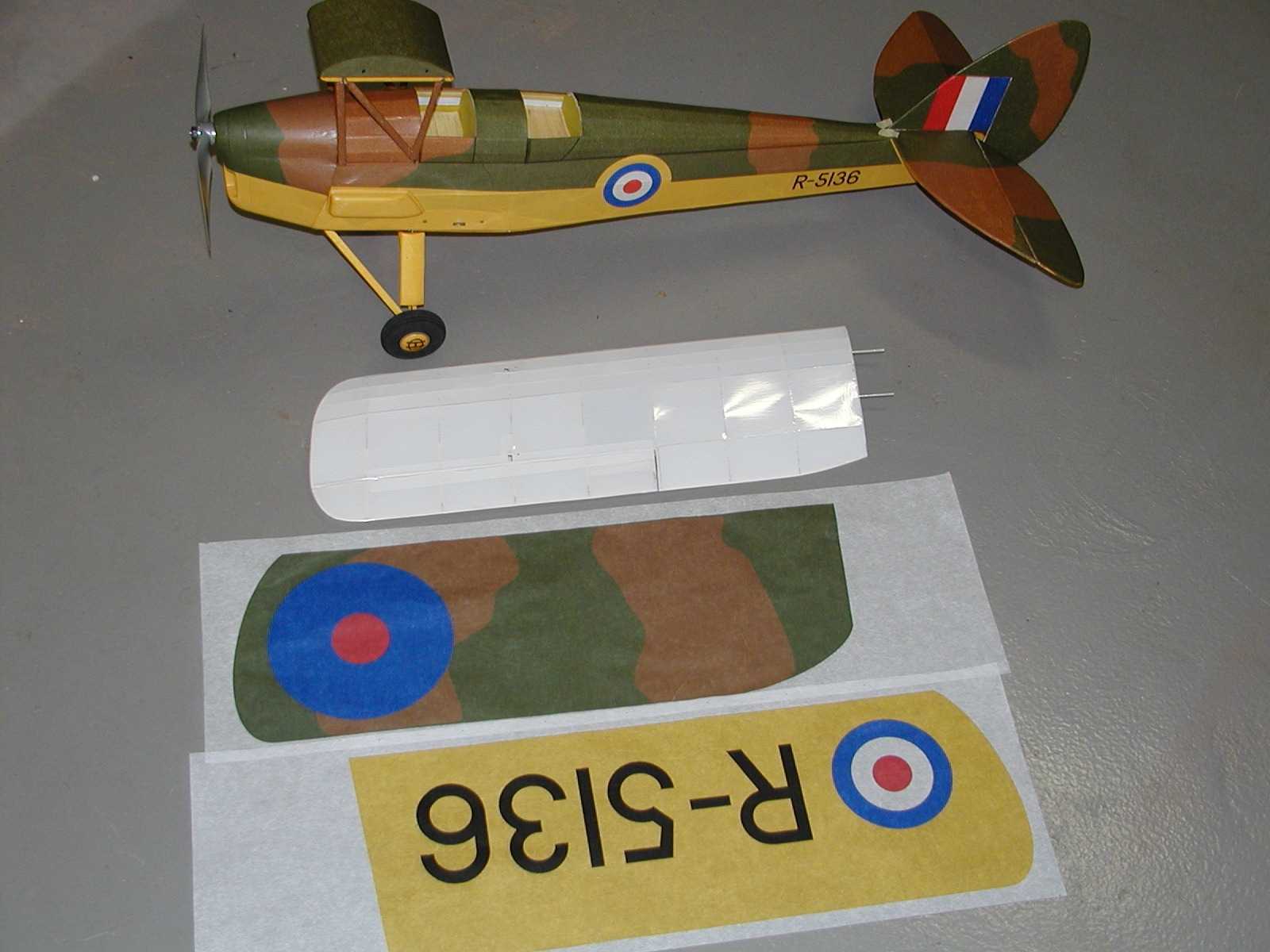
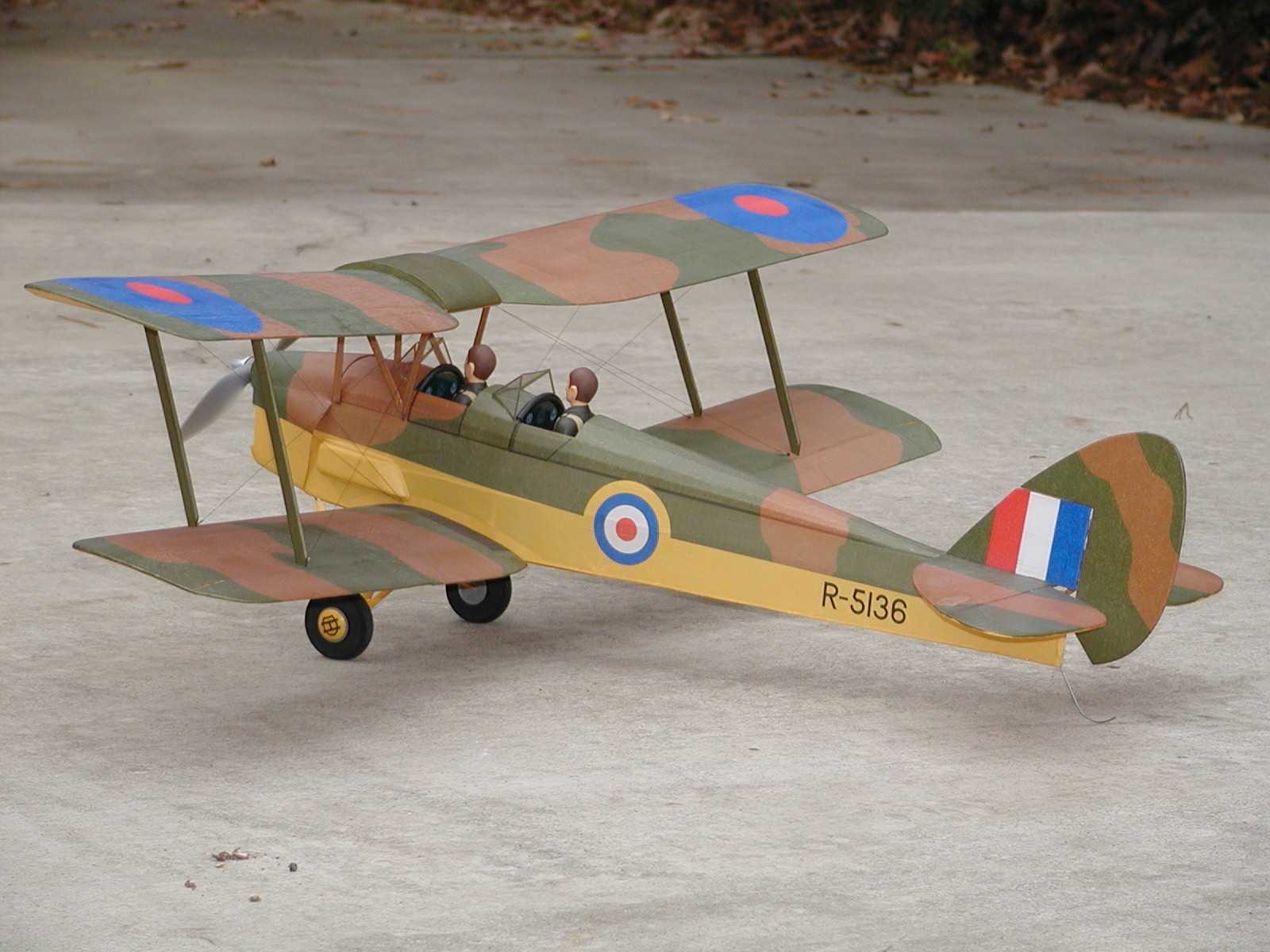
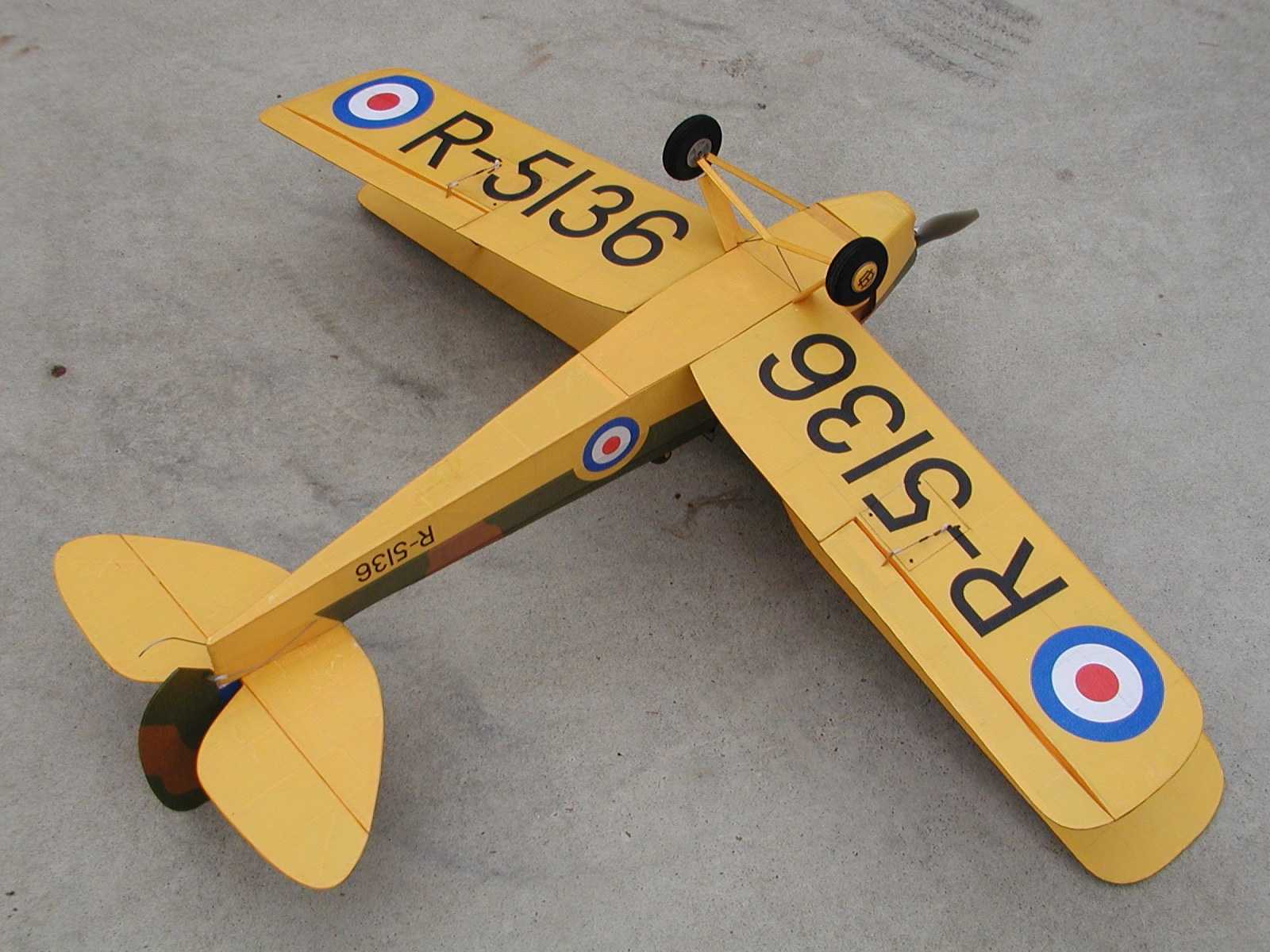
Pat Tritle is a model airplane designer who excels at developing light weight designs that are perfect for flying in smaller fields. He designs models for Dumas, DARE, and also sells directly to the public from his Pat's Custom Models operation. All of his designs are great flying models. Shown here is a 44 inch span Tiger Moth built from a short kit purchased from Pat's Custom Models. The color and markings are ink jet printed tissue over white SolLite as describe above for the Neighvion and half scale Taurus. This method of finishing a model is especially well suited to a subject like the Tiger Moth done in the W.W. II trainer motif. The prototype of this model built by Pat weighed 20 ounces. Mine is a bit heavier at 24 ounces. My increased weight came from the tissue that was applied over the white film, Pat only used SoLite, and I elected to use a three cell battery pack where he used two. I needed the added weight of the three cell pack in the nose as my model was heavier at the tail due to the tissue over film covering. Even with the added weight, my model flies very comfortably in a small local park. For power I used the AXI 2212/26 turning a 10x7 prop. The model is over powered but it is fun to fly big loops and then cruise at half throttle. This model is a real joy to fly. |
|
|
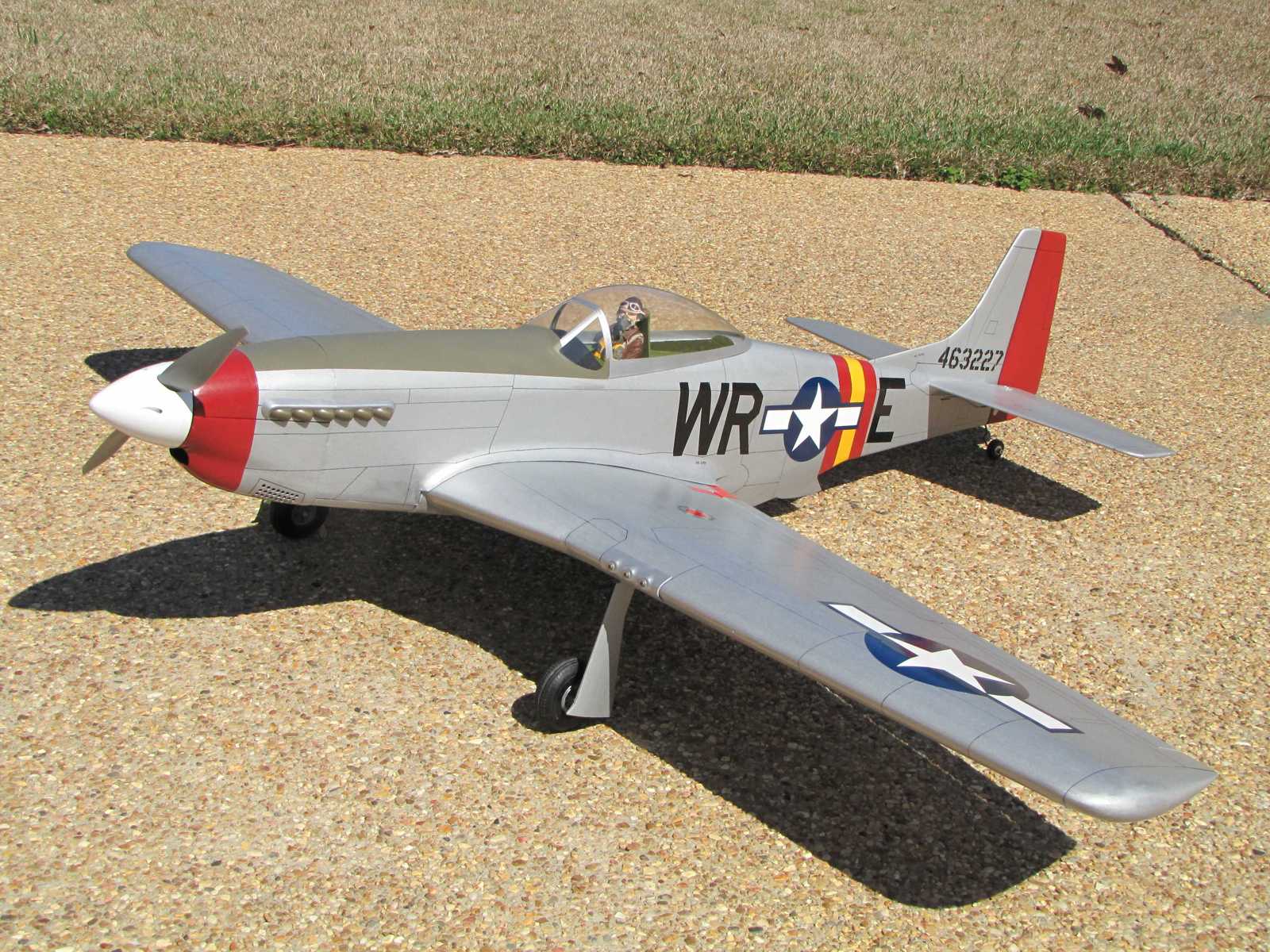
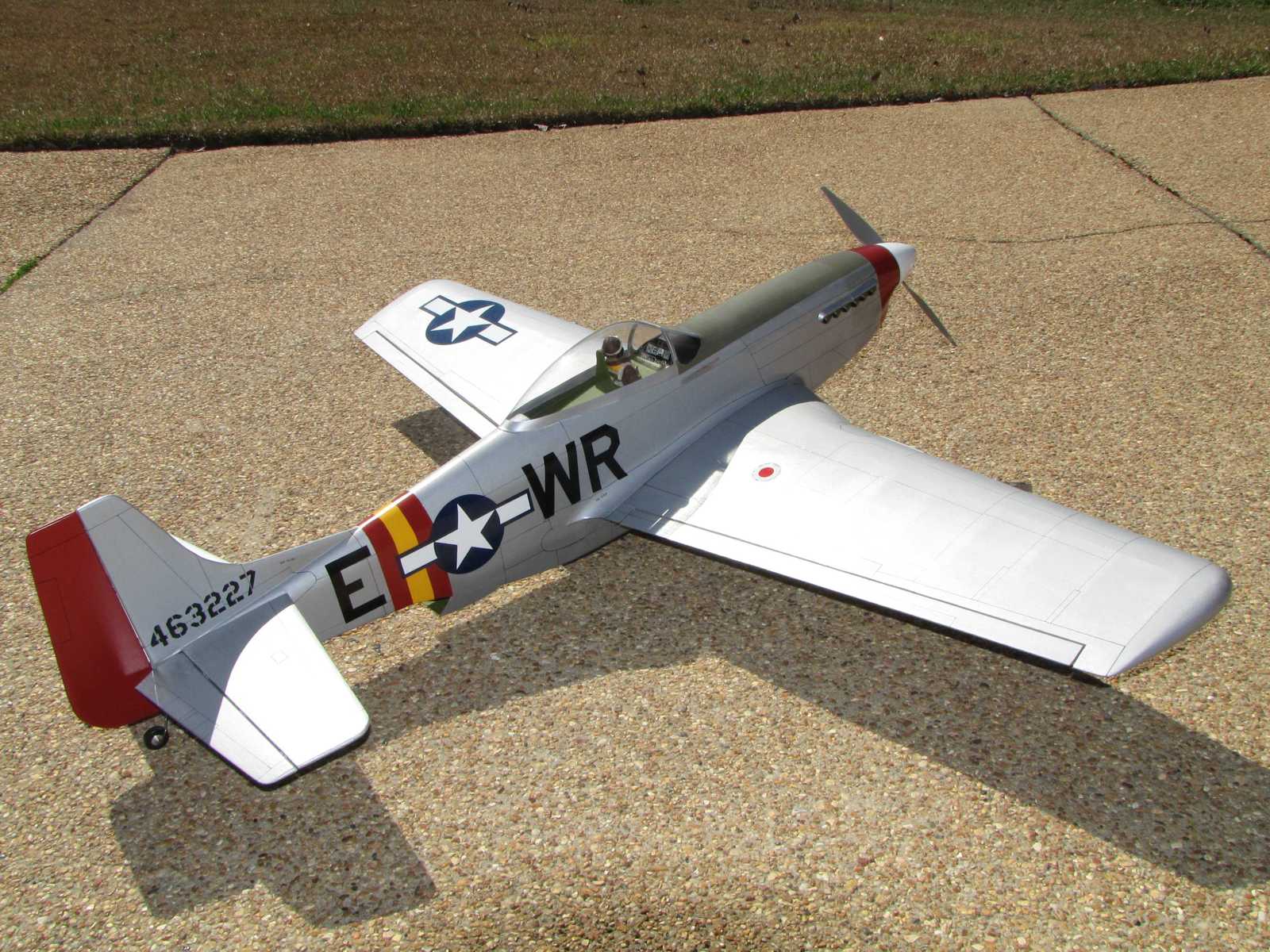
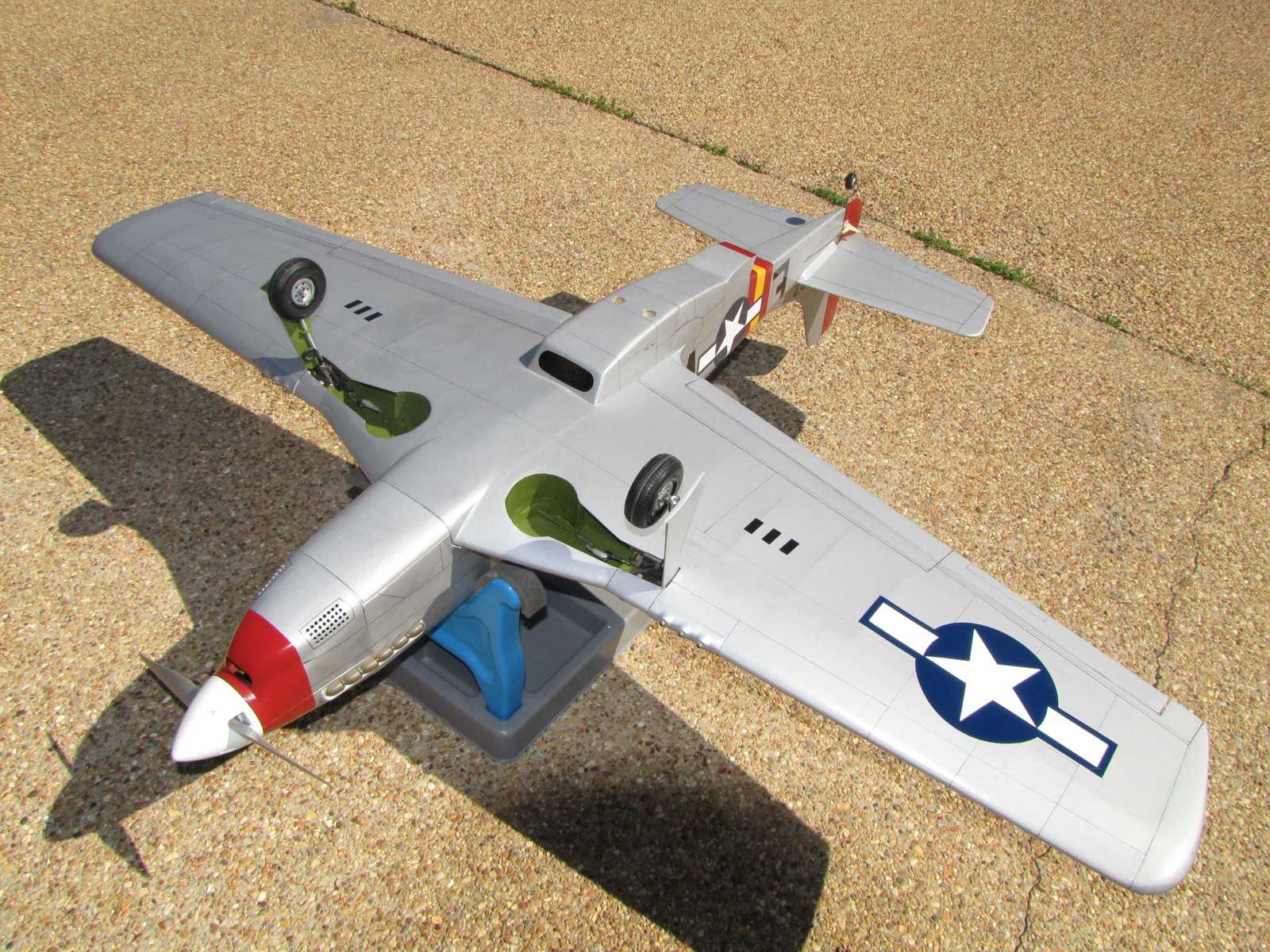
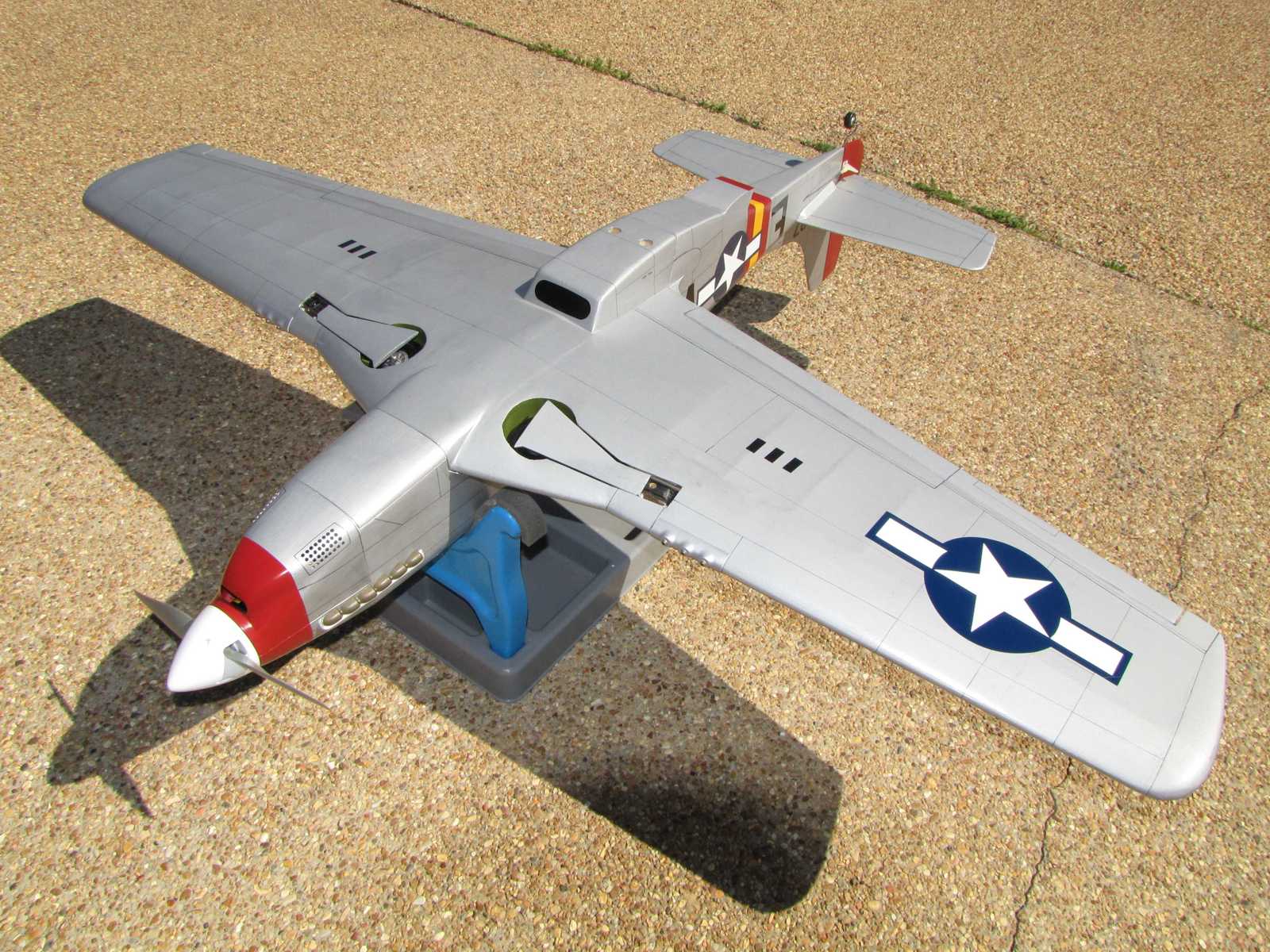
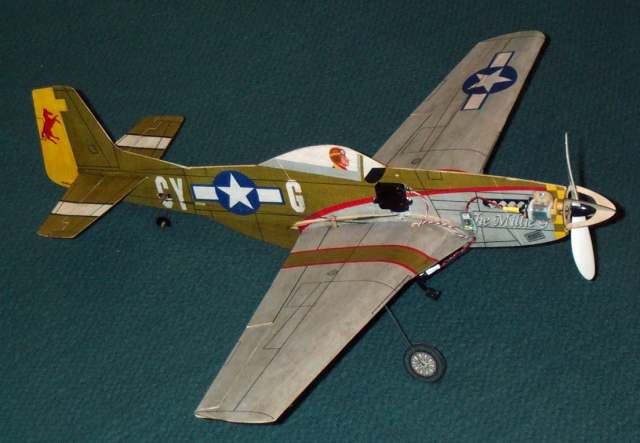
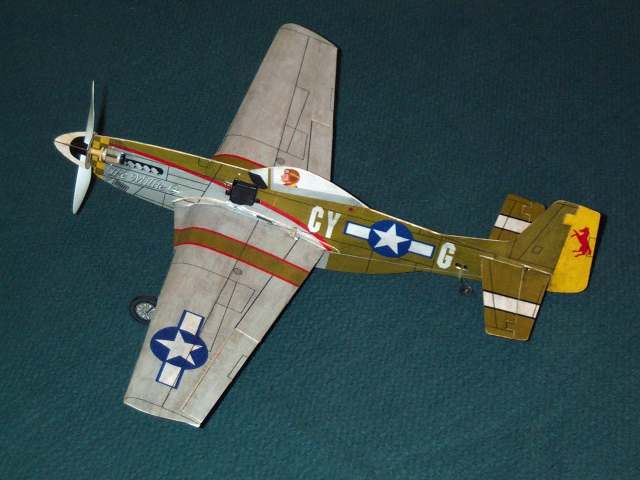
This is a sport scale model of the North American P-51D. It was built from the Great Planes "Sweet Thing" kit. It has a wing span of 57" and a flying weight of 6 pounds (96 ounces). Power is supplied by an e-Flite Power 46 brushless outrunner electric motor turning an APC 12x8 electric prop. The flight battery is a 4 cell 3250 mah lithium polymer pack. In addition to flight controls consisting of ailerons, rudder, elevator, and throttle the model also has retractable landing gear. The covering is silver Coverlite (LiteSpan) with painted trim colors. The markings are those of the 354th Fighter Squadron of the 355th Fighter Group. The markings are the occupation markings seen in the early post war period. The Sweet Thing kit markings were not used. |
|
|
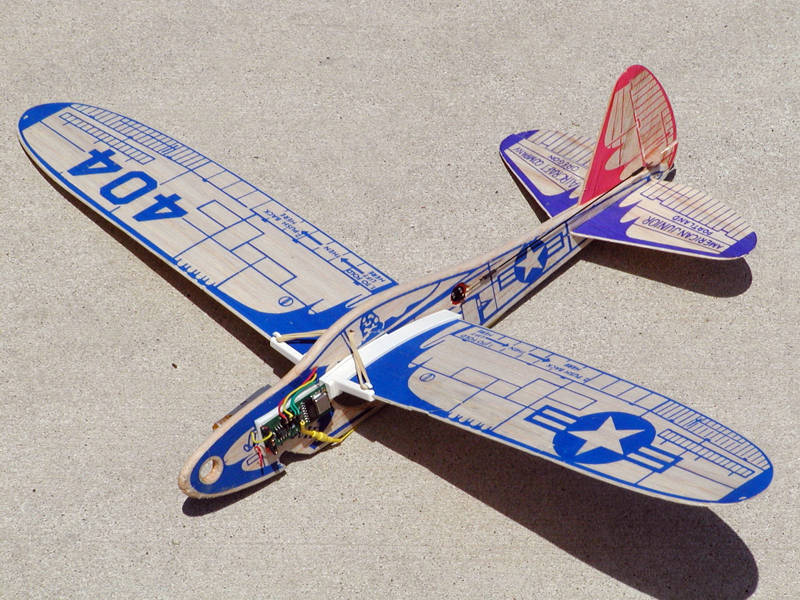
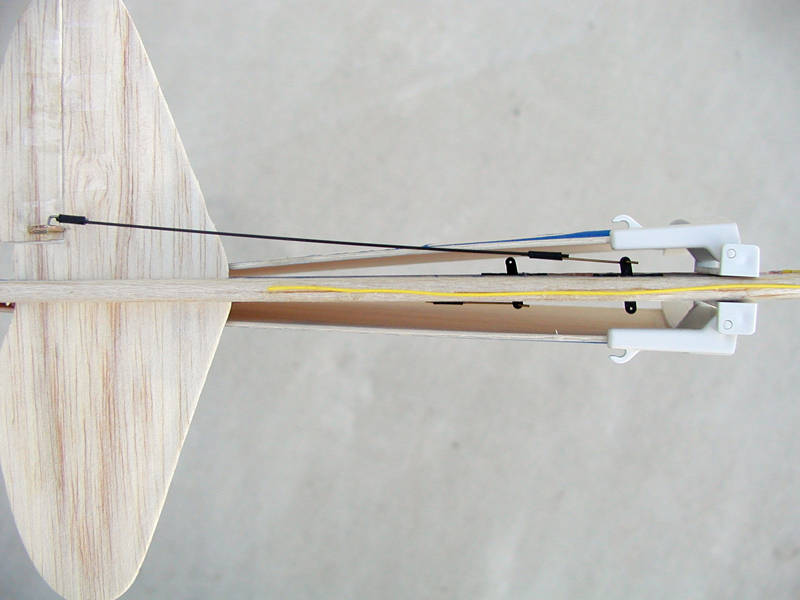
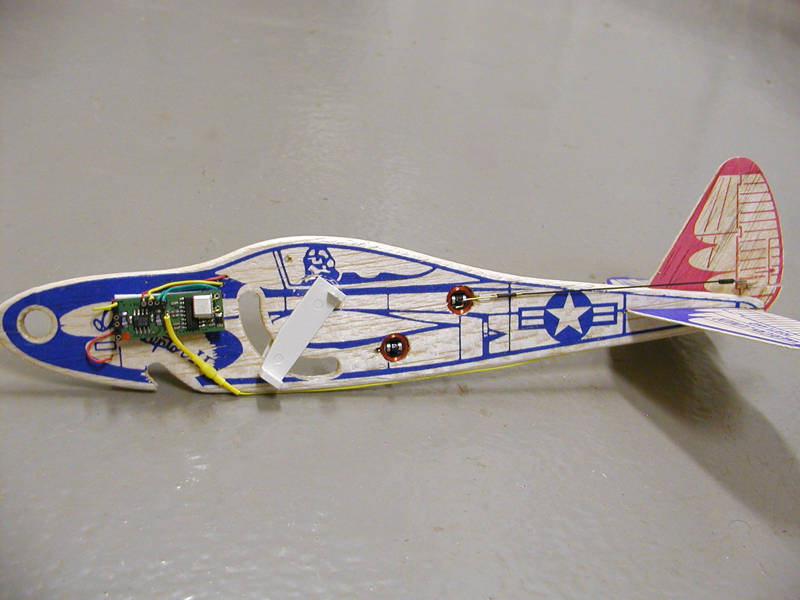
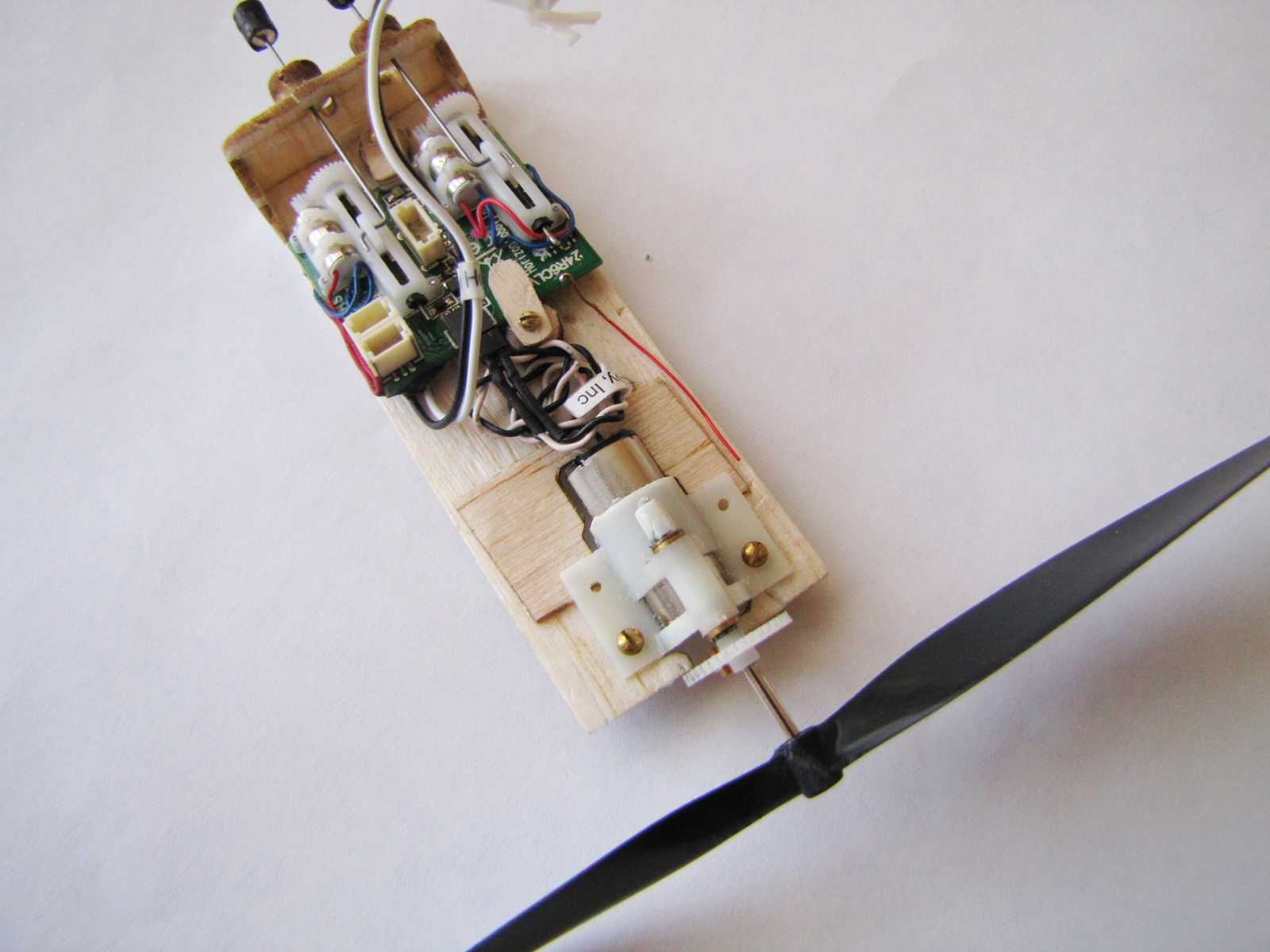
Back in the 40's, Jim Walker introduced a model that would become an everlasting classic -- the folding wing 404 Interceptor. This model is launched via a rubber band tied to a short stick (a catapult). When launched, the wings are folded back. At the top of the climb the wing unfold and the model starts gliding. The original Jim Walker Interceptors have long been out of production. Several people have introduced reproductions of this great model. Currently, a very high quality reproduction is being offered by Frank Macy, 1501 SW Baker St. #53; McMinnville, OR 97128. I decided to convert one of the reproduction models to radio control. This was done using a micro RFFS-100 receiver from Dynamic Web Enterprises and two mini magnetic actuators from Bob Selman. The model flys nicely in my backyard in this configuration. |
|
|
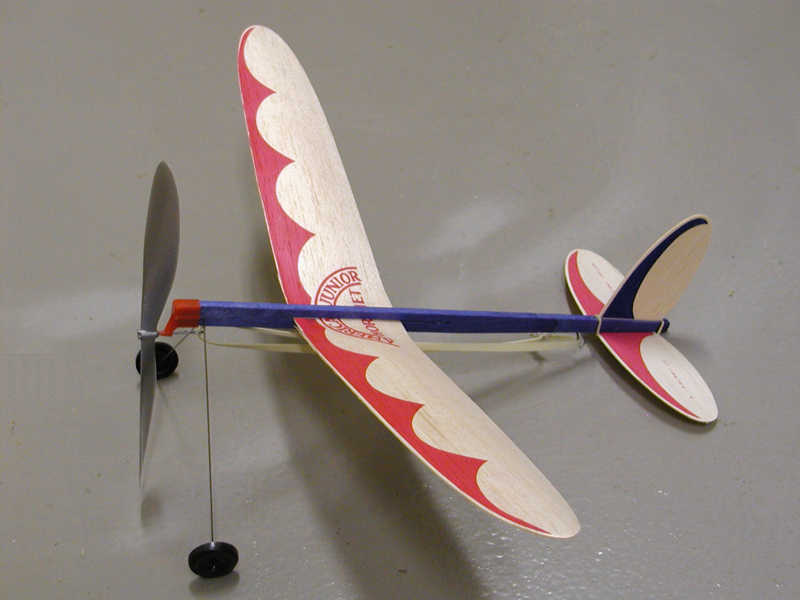
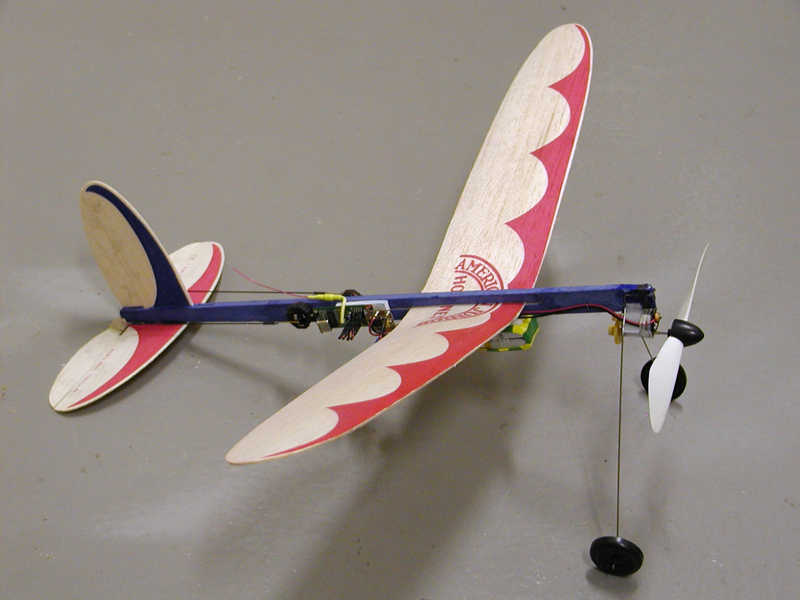
In addition to the 404 Interceptor, Jim Walker also introduced another model that would become an everlasting classic -- the Hornet. This model is a rubber powered Free Flight that introduced many youth to the world of model aviation back in the 50's. Currently, a very high quality reproduction is being offered by Frank Macy, 1501 SW Baker St. #53; McMinnville, OR 97128. I decided to convert one of the reproduction models to radio control. This was done using a micro RFFS-100 receiver from Dynamic Web Enterprises and two standard magnetic actuators from Bob Selman. The model has proven to be a great small space flyer. The motor is an N-20/gear drive package from Bob Selman. turning a 5" Gunther prop of the type used on the Speed 400 powered Zagi. Energy is provided by two lithium polymer 190 mah cells in series. Flight duration is in the 15 to 20 minute range depending on wind conditions. The model will handle a fair amount of wind when flown outdoors. |
|
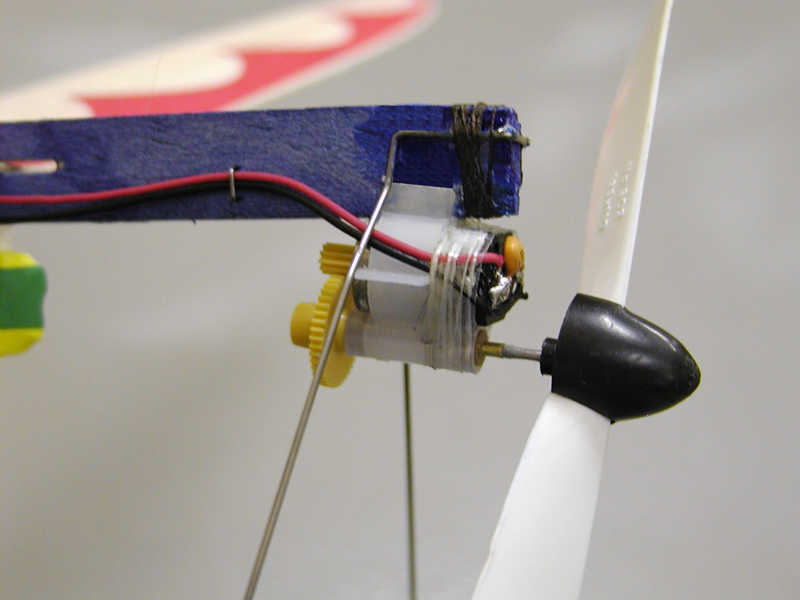
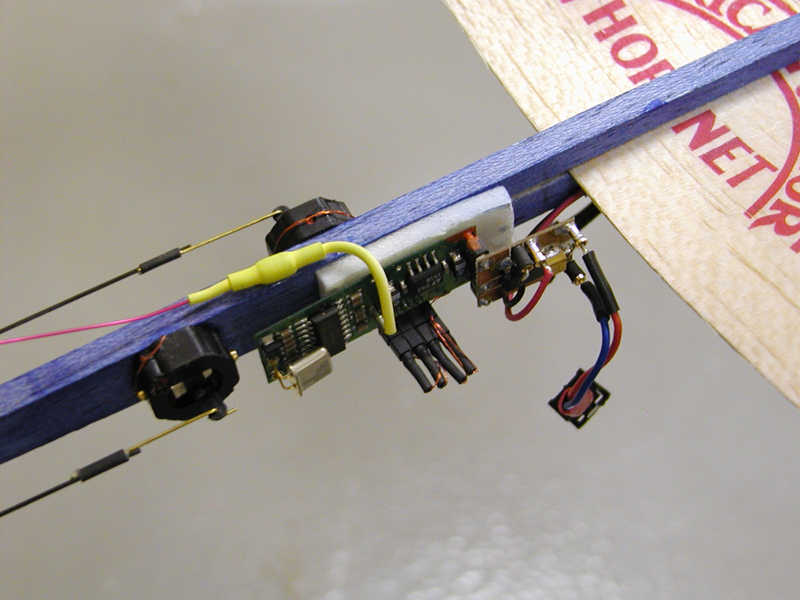
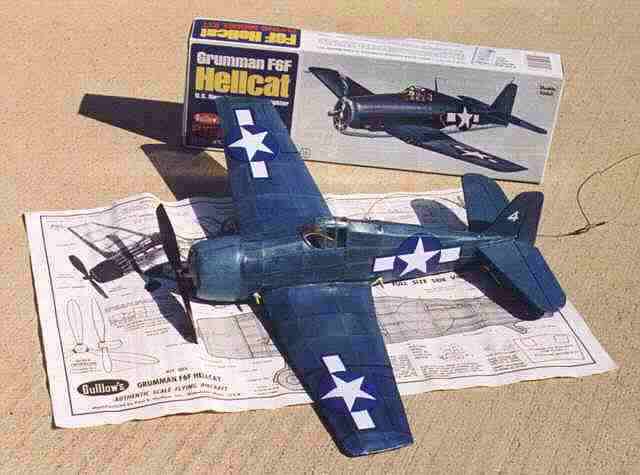
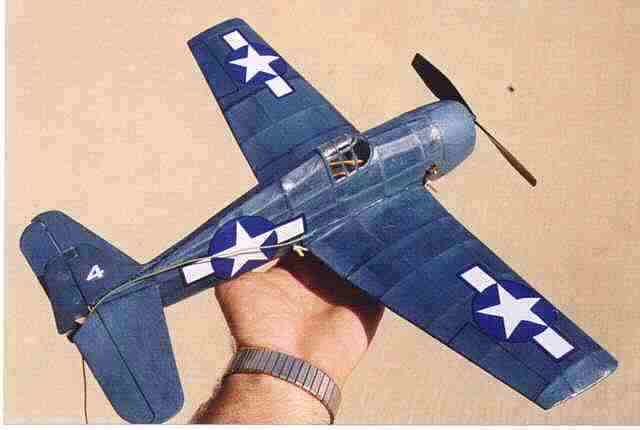
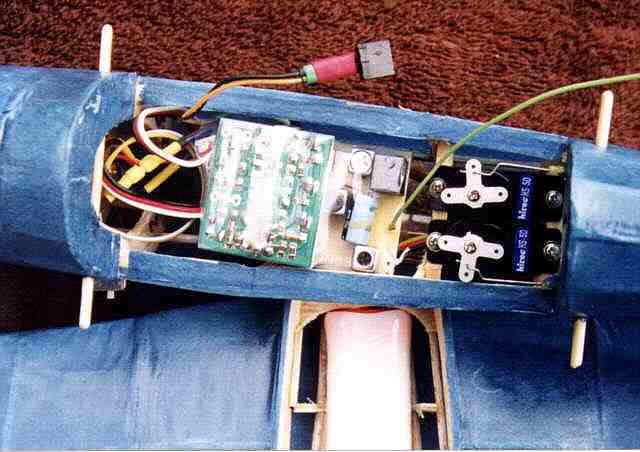
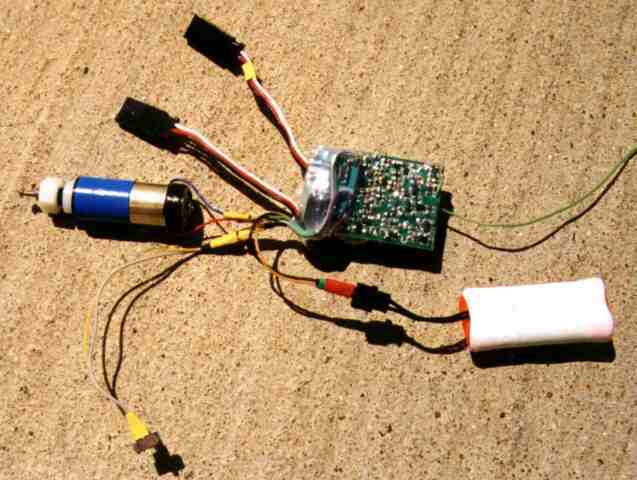
This is a model of the World War II Hellcat Navy fighter. It was built from a Guillow's Free Flight kit intended for rubber power. It has a 16" wing span and a wing area in the range of 47 square inches. The availability of smaller RC components and electric motors made it possible to convert this model to an electric RC model. It's flying weight is 4 ounces. The motor is a VL Products HY50D. The battery pack is 6 50 mah cells. The receiver is a 4 channel AM Futuba that has been lightened. Servos are Hitec HS-50 feather weight units. Note: This model was built in 1998. Components available to day would allow the same model to be built well below the weight of the one in the pictures. |
|
Roll the clock forward from 1998 to 2005. The Guillows Hellcat pictured above was lost due to a structural failure of the right wing during one of many nice flights on the model. It was decided to revisit that project to see what could be done with more recent equipment and battery technology. Pictured here is my 2005 version of the Guillows 500 series Hellcat (16.5" wing span). This version weighs 2.4 ounces and uses a two cell 250 mah lithium polymer battery pack. The motor is a brushless disk motor designed and built by Gary Jones as sold by Bob Selman. The receiver is not as new or as small as can be had but works fine at 6 grams. It is an Alpex unit. Control set up is throttle, elevator, and coupled ailerons and rudder. The servos are 1.75 gram Falcon units from Bob Selman. The model is covered with 1/4 mil Mylar with computer inkjet tissue on top of the Mylar applied with clear dope. Flight duration is 10 minutes as opposed to 1.5 minutes for the 1998 model. It is a very nice flyer. Here is a short video clip of the model flying. |
|
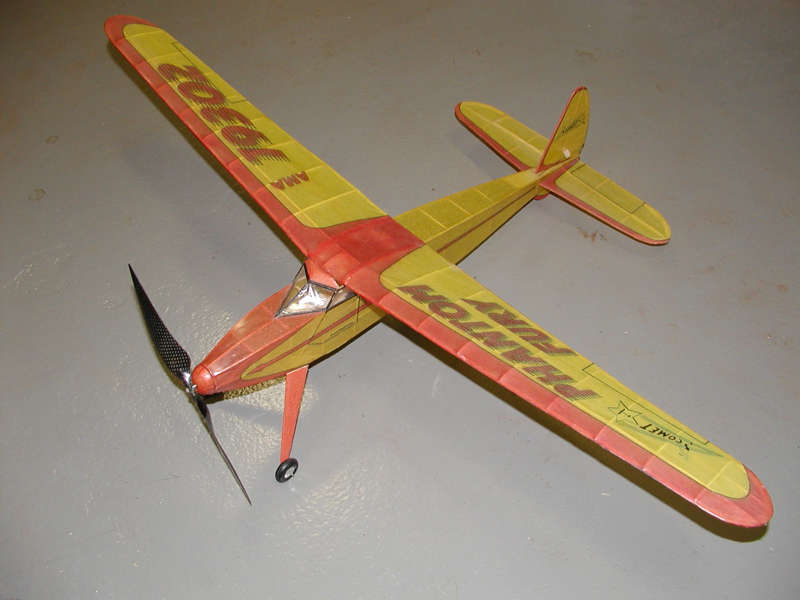
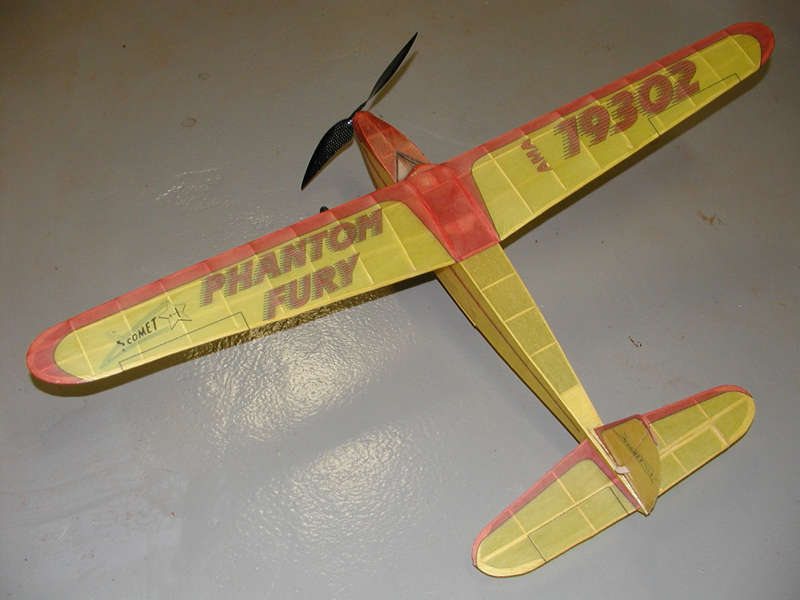
This model is a vintage design by Comet models. It is called the Phantom Fury and was first released in the 30's as a rubber powered Free Flight model. It has a 32" wing span giving a wing area of 90 square inches. I happened to have a kit for this model that was purchased in the '80's while Comet models was still in operation. I thought it might make a nice electric R/C conversion subject for "Slow flying" in my front yard. As shown, the models weighs 103 grams (3.6 ounces). It is powered with an Astro Fire Fly motor geared 16:1. The battery pack is 6 50 mah cells. The receiver is a light weight (6grams) Alpex, the electronic speed control is a JMP-7, and the two servos are unmodified Hitec HS-50's. Controls include throttle, rudder, and elevator. The model flies nicely, but does require careful application of rudder control to keep it from snapping in the turns. Covering is Japanese tissue that has been colored with an ink jet printer. There are two coats of thinned clear dope on the tissue. |
|
|
This model was built from a DJ Aerotech "Roadkill" series kit. It is a profile model with a 20.75" wing span. This type of model is intended to be flown indoors (school gyms and related type facilities), or in very calm conditions outside. The model is covered with tissue paper that has been colored with an ink jet printer (the colored tissue is not included in the kit). Total flying weight is 80 grams (2.82 ounces). It uses 6 50 mah cells for power. The motor, gear drive, and propeller are included in the kit. A more complete review of this model can be found at the Ezone. |
|
|
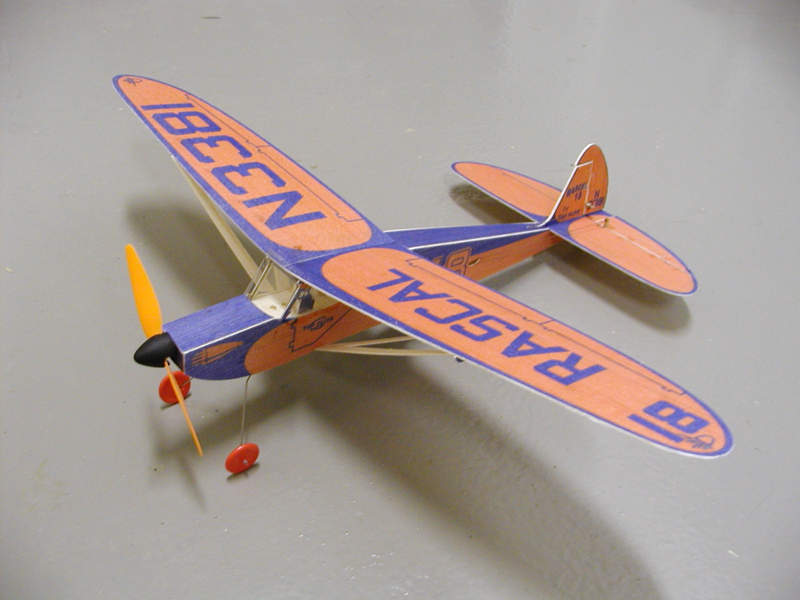
If you happened to visit my Free Flight pages, you will see an all sheet balsa model called the Rascal 18. This is a reproduction I did from an old kit that was purchased on E-Bay. The kit is about 50 years old and represents a starting point for me in my youth. I decided to see how the airplane would do as an electric powered R/C model using modern micro R/C gear. All of the markings are printed directly on the balsa with an HP ink jet printer. It has an 18" wing span and the flying weight is 30 grams. Power is a Mabuchi M-20 motor with a gear drive built by Ralph Bradley. The motor/gear assembly simply plugs into a piece of dowel that has been glued to the nose piece. It holds firm for flying, but can be easily removed if desired. The receiver is a Dynamics Unlimited RFFS-100. Two magnetic actuators are used to control the rudder and elevator. The actuators come from Bob Selman. Energy comes from a 190 mah lithium polymer cell. The models flies nicely indoors or out. When flown outdoors, it can handle a surprising amount of wind. |
|
|
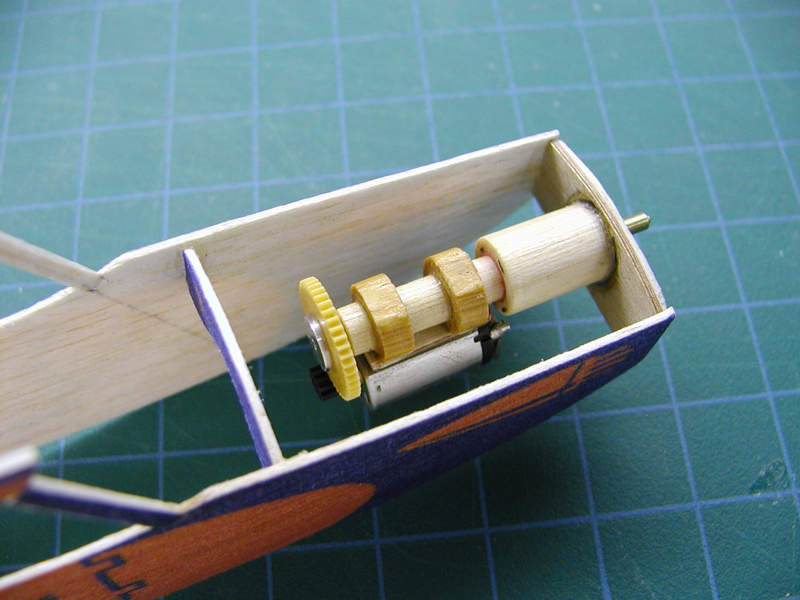
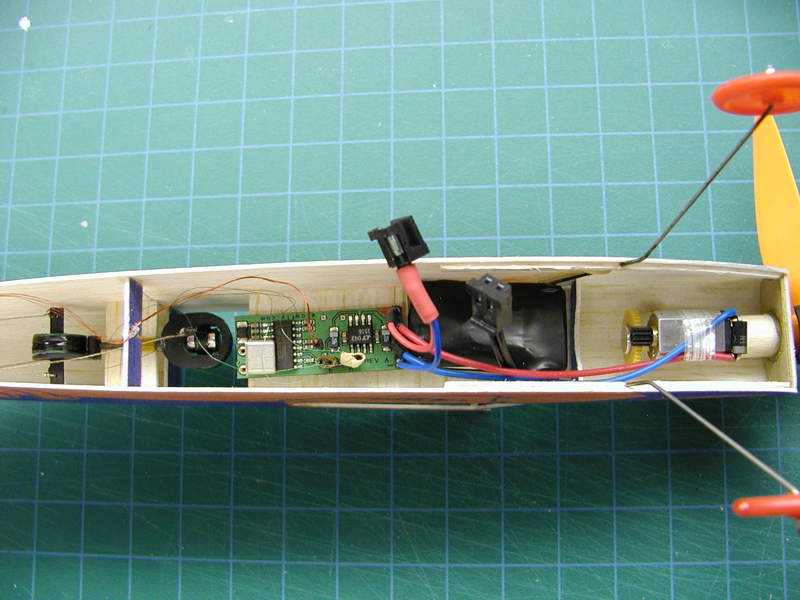
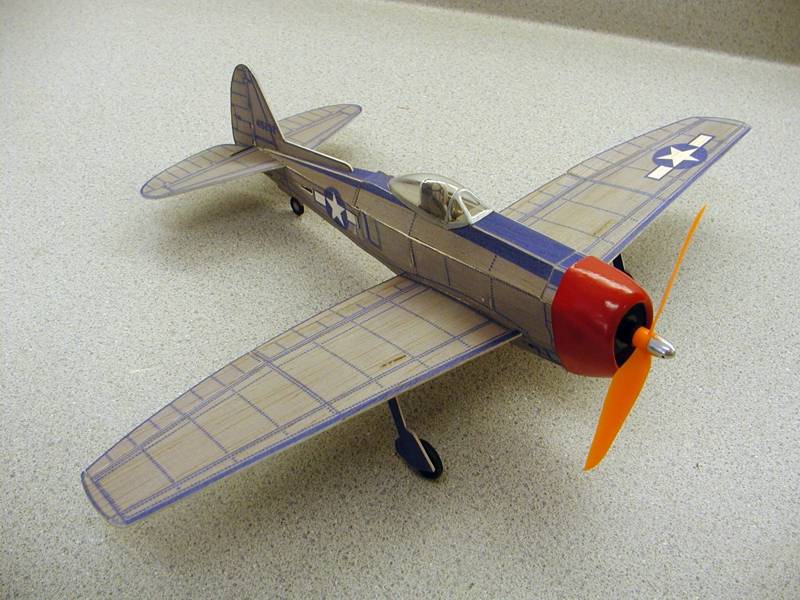
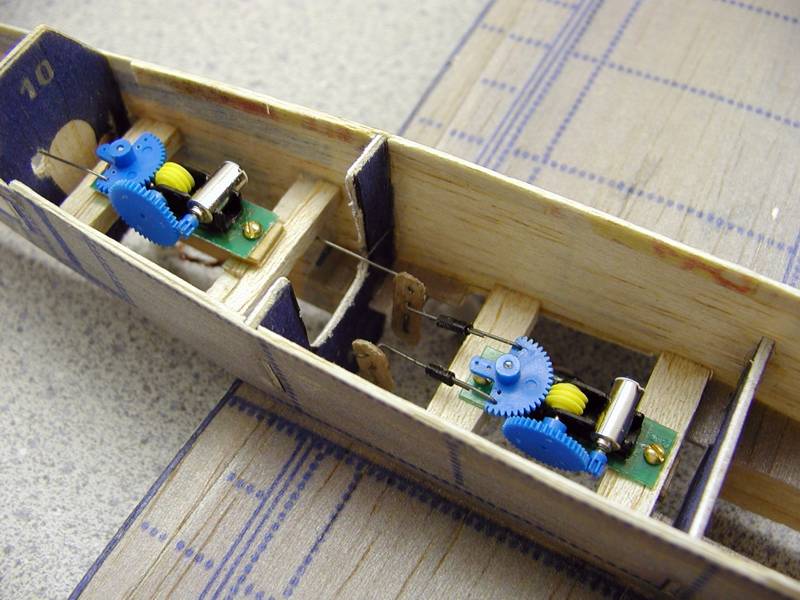
The Top Flite Jigtime model reproductions found in the Free Flight and Plans section of this web site make nice micro R/C conversions. In addition to the Rascal 18 shown above, the Jigtime P-47 has also been converted to an electric powered R/C model. Like the Rascal 18, this model is powered with a Mabuchi N-20 geared motor. The gear drive is a GWS unit that was modified by Ralph Bradley so the spur gear is to the rear. The motor installs like the Rascal by plugging into a dowel that has been drilled to accept the prop shaft support. This model uses a JMP servo micro receiver and two Falcon servos. The servos weigh 1.75 grams each. Controls are throttle, elevator, and coupled ailerons and rudder. Energy is supplied by a two cell 145 mah lithium polymer battery. Flying weight is 45 grams. The radio gear is available from Bob Selman. |
|
|
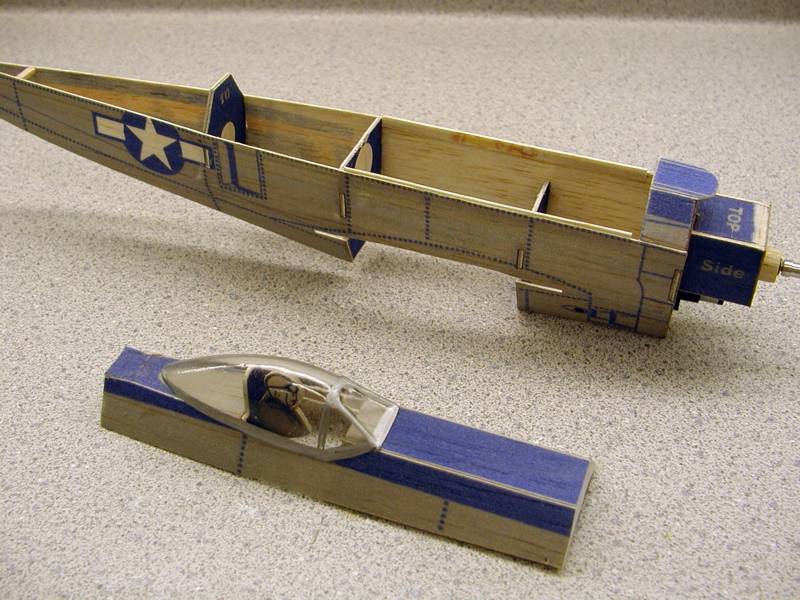
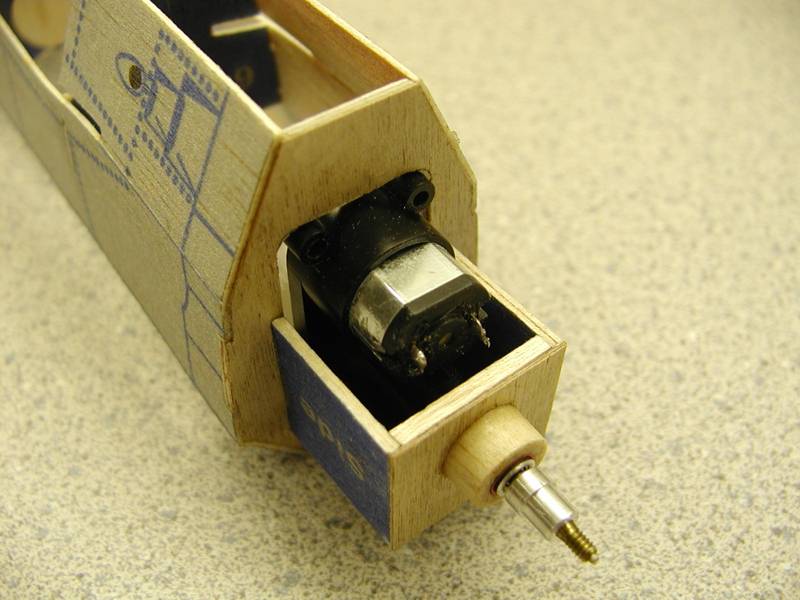
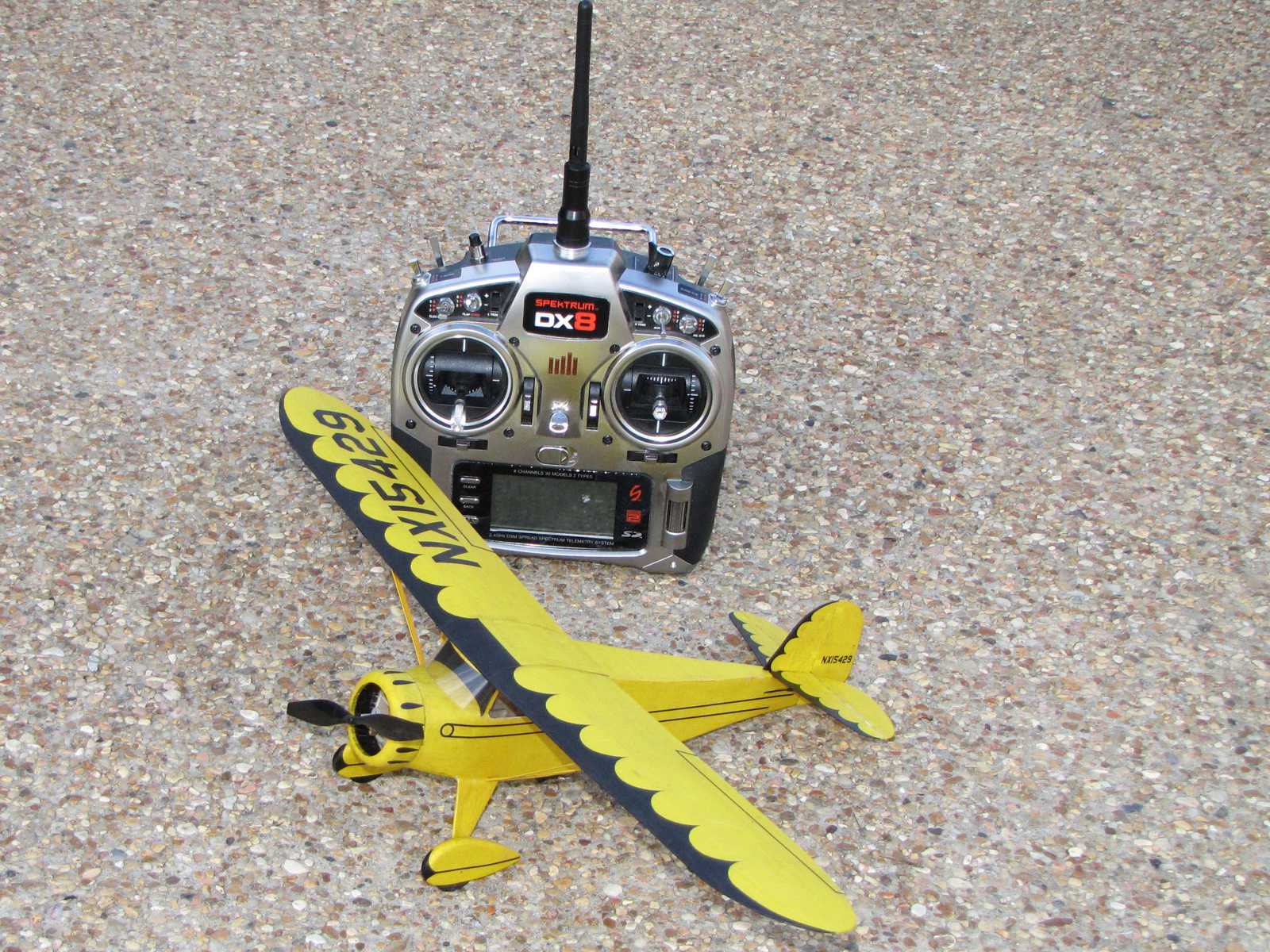
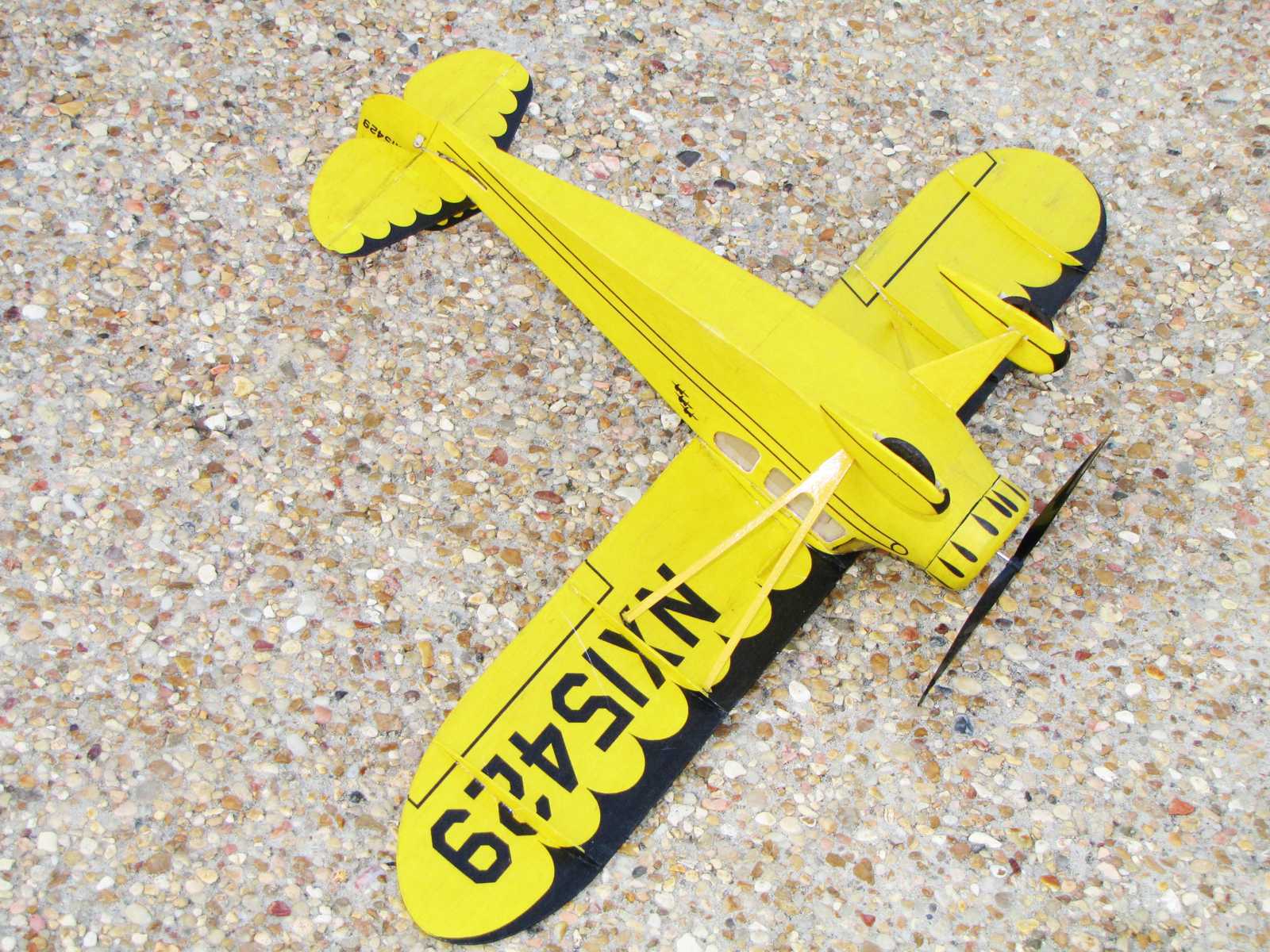
This is a micro Monocoupe 90a from Park Scale Models. It has a 19.25" wing span. It is powered with a motor and gear drive from a Parkzone Micro Mustang. covering is ink jet printed tissue. Flying weight is 42 grams. Controls include rudder, elevator, and throttle. The kit is designed for the compact "brick" style AR6400 receivers from Specktrum. The equipment is mounted on a slide out tray. The push rods are connected via magnets. |
Radio controlled models are great fun. They are even more fun when powered by electric motors. In this form they are very quite which allows them to be flown in parks, school yards, of even your front yard. They are also very clean since they do not emit any exhaust fumes or residue from the combustion process associated with internal combustion engines.